1. Home
  2. Mobile
  3. Android
  4. Apple
  5. Computing
  6. Emerging Tech
  7. Legacy Archives

Ready for an emotional Siri? Computer voices are learning how to sound scared or excited

Add as a preferred source on Google

Fujitsu has announced the development of speech synthesis technology that can tell you information in an appropriate tone, thereby doing away with the chore of determining what emotion to feel.  In case of emergencies, the technology will deliver messages in an alarming tone, which in turn will give you a clue that you should freak out. In less stressful conditions, the technology will convey messages according to your preference. According to a press release sent out by the company, messages can be conveyed through “voices that are perceived to be endearing, or distinctive voices for particular characters.” No word yet if it can do an angry James Earl Jones voice. Our fingers are crossed.

“Current speech synthesis technology, widely employed in society, is able to read-out a variety of texts, but in a monotone voice,” said Fujitsu. “For this reason, there is a need for synthesized speech to be able to convey spoken text to listeners in accordance with the given circumstances, making it easy to understand.”

Recommended Videos

Speech synthesis technology is commonly used for broadcasting traffic conditions, disaster prevention announcements, museum audio guides, and car GPS systems. Existing speech synthesis tools use large volumes of pre-recorded speech waveforms. Fujitsu uses a different method, focusing instead on voice quality, intonation, and pauses. Aside from the ability to determine the appropriate tone, the technology also conveys messages in a clear voice despite noisy environments. There’s no solid timeline for releasing the technology, but Fujitsu says practical applications could come by the end of 2014. 

Christian Brazil Bautista
Christian Brazil Bautista is an experienced journalist who has been writing about technology and music for the past decade…
Snapchat Planets: What’s the order, and what do they mean?
Snapchat Planets turns your best friends list into a solar system, and yes, your orbit says a lot
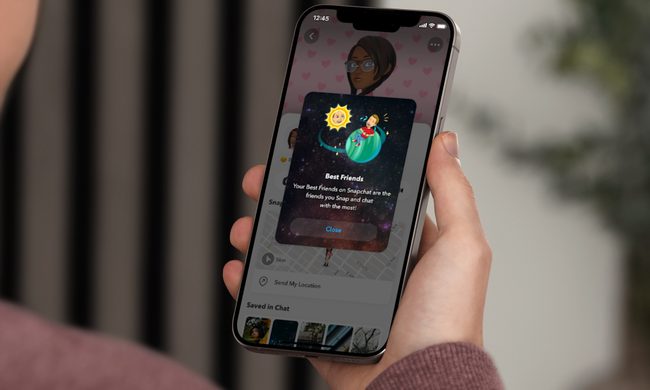
Snapchat Planets being shown on the Snapchat app on iPhone.

Snapchat is already packed with little symbols that can be weirdly hard to decode. You have streaks, emojis, badges, scores, Best Friends, and if you use Snapchat Plus, a tiny solar system that shows where you sit in someone’s closest-friends list.

The feature is called Friend Solar System, though most people just call it Snapchat Planets. It takes your position in a friend’s Snapchat orbit and turns it into a planet. From Mercury to Neptune, these celestial bodies signify how close a person is to you.

Read more
How to use WhatsApp Web
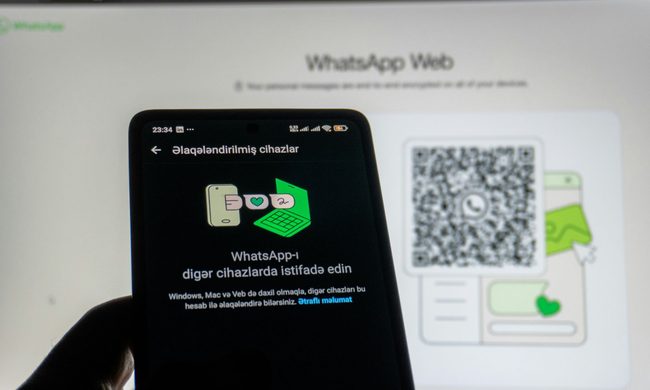
We'll show you how to use WhatsApp on your desktop or laptop
WhatsApp Web

As one of the most popular messaging services, you’ve already heard of WhatsApp. From its humble beginnings in 2009—two years before Apple introduced iMessage—to its acquisition by Facebook (now Meta) in 2014, WhatsApp has become the dominant messaging platform around the globe.

In recent years, it's grown even more potent with new features like video messages, self-destructing voice messages, the ability to edit sent messages, and more. We even finally got an WhatsApp iPad app in May 2025.

Read more
What is WhatsApp? How to use the app, tips, tricks, and more
From setting it up to mastering hidden features, here is your complete guide to WhatsApp.
Electronics, Phone, Mobile Phone

There's no shortage of messaging apps out there. The past decade has given us more options than we know what to do with, largely because smartphones demanded something better than plain old SMS.

Both the App Store and the Play Store are packed with apps that promise to revolutionize the way we communicate. Most of them didn't make it. The truth is, a messaging app is only as good as the number of people using it, and most apps never cross that threshold.

Read more