  1. Home
  2. Computing
  3. Smart Home
  4. News

Laser chips promise faster, greener indoor wireless at gigabit speeds

New optical system tackles crowded Wi-Fi networks with high-speed links and lower energy use.

Add as a preferred source on Google
Electronics, Hardware, Screen
The image conceptually represents the compact, chip-scale platform integrating the 5x5 VCSEL array and custom beam-shaping optics to create a structured grid of uniform square spots. H. Safi (University of Cambridge)

Indoor wireless is hitting limits as more devices crowd the same spectrum. Streaming, video calls, and smart home gear are pushing networks harder while power use rises. A new class of laser chips offers a different path by moving data onto light.

Researchers built a chip-scale optical link that delivers ultra-fast indoor connections with lower energy use. Instead of broadcasting signals widely, it sends data through controlled infrared beams, opening more usable capacity while avoiding interference in dense spaces.

Recommended Videos

At the core is a chip with 25 microscopic lasers, each carrying its own stream. Working in parallel, they push throughput far beyond a single source. In testing, the setup reached more than 360 gigabits per second across a short indoor link.

The gains are not just speed. Power use drops significantly, offering a more efficient way to handle rising demand.

Laser array proves the speed

Performance comes from a 5 by 5 array of vertical-cavity surface-emitting lasers, each acting as its own high-speed channel.

In tests over two meters, individual lasers delivered about 13 to 19 gigabits per second. With 21 active channels, total throughput reached 362.7 gigabits per second, among the fastest chip-scale optical results so far.

The limit came from the receiver hardware, not the transmitter, suggesting higher speeds are possible with better components.

A custom optical setup also shapes each beam into a defined square, limiting overlap so multiple links can run side by side without interference.

Why light changes the equation

Radio networks struggle in crowded spaces where signals interfere and capacity gets stretched. Light avoids those limits by offering more bandwidth and precise control over where signals go.

Instead of blanketing a room, the system creates a grid of targeted beams with minimal spillover. Measurements show uniform coverage across the target area, helping maintain stable performance for multiple devices.

The setup runs at about 1.4 nanojoules per bit, roughly half that of comparable Wi-Fi systems. The tradeoff is range, as the current setup works over short distances and depends on line of sight.

Where this goes next

This approach is meant to complement existing networks by offloading heavy traffic in high-demand indoor spaces.

The hardware fits on a sub-millimeter chip built with standard processes, making integration into fixtures or access points plausible, though no commercial timeline is given.

As demand rises, combining radio and light-based links could become standard, with laser systems handling the heaviest traffic.

Paulo Vargas
Paulo Vargas is an English major turned reporter turned technical writer, with a career that has always circled back to…
Excited for macOS Golden Gate? Check out all the supported Mac models
Apple's macOS 27 Golden Gate officially marks the end of Intel Mac support.
macos-27-golden-gate-compatible-models

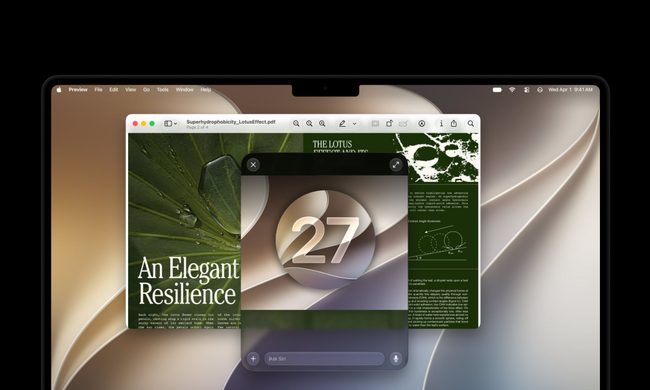
Apple just unveiled macOS 27 Golden Gate at WWDC 2026, and there is one thing every Mac owner needs to know right away — Intel Macs are officially out. macOS 27 will only run on Apple silicon machines, which means the transition Apple started in 2020 has now fully closed the door on its older processors.

If you are still on an Intel Mac, you will receive Apple security updates through 2029, but the era of major software upgrades for those machines is over.

Read more
Apple unveils macOS 27 Golden Gate with standalone Siri AI app and smarter Apple Intelligence features
Spotlight search is apparently graduating into a full-time AI assistant now
macOS 27 Golden Gate

Apple has officially previewed macOS 27 Golden Gate at WWDC 2026, introducing one of the biggest AI-focused updates to the Mac in years. The upcoming operating system brings a dedicated Siri AI app, expanded Apple Intelligence features, redesigned Liquid Glass visuals, and deeper integration across apps like Spotlight, Mail, Photos, and Messages.

The company says macOS 27 Golden Gate will launch publicly later this fall, while the first developer beta is already available. A public beta is expected to roll out in July. One of the biggest additions is the new standalone Siri AI app for Mac. According to Apple, the upgraded Siri experience is designed for more conversational and open-ended interactions instead of simple voice commands. Users will be able to ask follow-up questions, reference personal information stored across apps, and interact with on-screen content more naturally.

Read more
iPadOS 27 brings a smarter Siri, permanent Menu Bar, and iPhone app resizing to your iPad
iPadOS 27 follows one of the most ambitious iPad updates in years with something quieter but arguably more useful.
Computer, Electronics, Tablet Computer

iPadOS 26 was Apple's most ambitious iPad update in years. It was a sweeping productivity overhaul that redesigned multitasking and made the iPad feel closer to a laptop replacement. 

iPadOS 27, announced at WWDC 2026, takes a different approach. This one is more about doing the existing things better and faster, along with a few notable upgrades. 

Read more