
Today’s growing number of Internet of Things (IoT) and other smart devices need really small PCs to power them. The more intelligent they are, the more powerful the PC needs to be. That is where small, single-board PCs like Raspberry Pi come in handy.
While there is a place for complete PCs like the Raspberry Pi with a full complement of ports and storage options, some applications can get by with even simpler versions. The Raspberry Pi Foundation’s Compute Module is the perfect solution and the organization just released another version, ZDNet reports.
The Compute Module 3 is built on the latest Raspberry Pi 3, with a 64-bit Broadcom PCM2837 processor running at up to 1.2GHz, and with 1GB RAM and 4GB flash storage. The Compute Module 3 saves space by eschewing some ports and it is a good solution for smart TVs, industrial devices, and others that don’t require complete connectivity.
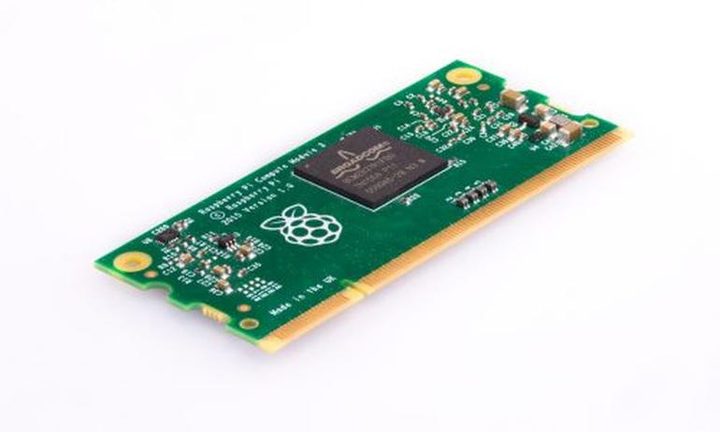
In order to fully accommodate the newest components, the Compute Module 3 is a bit larger than its predecessor, at 31mm high versus 30mm high. It offers the same pin-out configuration, however, and so it can easily plug into the same solutions.
For designers who want to create their own storage solutions, the Raspberry Pi Foundation offers the Compute Module 3 Lite, which is the same basic design without the storage. The design allows for an eMMC device or SD card to be added. If anyone needs some connectivity, the Compute Module Board 3 can be plugged in that offers power, HDMI and USB connections, and the ability to program the unit’s flash memory.
Some typical applications for the Compute Module 3 include large-format displays from NEC’s European division. Mini-satellites and signage represent to other potential applications. As Raspberry Pi Foundation Chief Operating Officer James Adams put it, “The thought was to provide the ‘team in a garage’ with easy access to the same technology as the big guys. The Module takes care of the complexity of routing out the processor pins, the high-speed RAM interface, and core power supply, and allows a simple carrier board to provide just what is needed in terms of external interfaces and form factor.”
The Compute Module 3 is available from distributors at a price of $30, and the Lite version is available at $25. The original version of the Compute Module is now available for $25. You can pick up the new devices at Element14 and RS Components today.


