
A new water heater is a significant investment, and it’s important to research different products to find a water heater adapted to the needs of your family. One of the first things to consider is whether you should get a tank or tankless water heater.
Tankless water heaters are more compact and can heat up water as you use it. Water heaters with tanks are a better option for large families since they can store hot water and reduce energy use if you use a lot of hot water.
Looking to upgrade your home? We’ve also put together guides outlining the best dishwashers, best refrigerators, best dryers, and best bathroom heat lamps along with other appliances.
Tank storage water heaters

Price with installation: The cost to install a tank water heater varies widely depending on the type, size, and the specifics of your home. Home Depot reports that it costs between $952 to $2,098 (with the average cost being $1,308). This price estimate includes the cost of a basic tank water heater, installation, materials, removal of the old unit, and the cost of any permits.
Installation: Tank water heaters are relatively easy to install, and installation typically only takes a few hours. You generally have to install a tank water heater indoors, as they cannot tolerate harsh weather conditions. People often choose inconspicuous locations like closets or garages to install them. However, in older homes especially, you may find a tank water heater in a kitchen. The tanks come in electric, natural gas, and propane models. The gas models will still work during a power outage.
Lifespan: Between 10 and 15 years
How they work: Tank water heaters typically hold between 20 and 80 gallons of hot water (around 120 degrees Fahrenheit) in a storage tank. They are fairly large and require a bit of space within your home. But, if you manage to deplete what is in the tank, you have to wait until your water heater produces more hot water.
According to Home Depot, the chart below can help you determine how big of a tank water heater you need for your household.
| Household size | Tank size |
| 1-2 | 26-36 gallons |
| 2-4 | 36-46 gallons |
| 3-5 | 46-56 gallons |
| 5 or more | 56 or more gallons |
Benefits:
- More affordable upfront cost
- Easy installation
- Tried and true system
- In an emergency, you have a fresh water supply in the tank
- You can often install an electric tank water heater without making major changes to your home’s electrical system or purchasing expensive additional equipment
Drawbacks:
- Energy waste from “standby loss” — that is, the energy you waste on keeping a tank full of hot water at all times
- Shorter lifespan
- If the heater malfunctions, gallons of water could leak or escape from the tank
- If you empty the tank, you have to wait for more hot water
Who should buy a tank water heater: If you have a timeline or budget constraints that prevent you from getting a tankless system, a tank heater may be the way to go. If your home runs strictly on electricity, you have to carefully consider whether going tankless is really worth it. The average household capacity is around 200 amps, which may not be enough to support a tankless electric heater. If you have gas, you have to factor in the costs of venting systems and additional gas lines. According to Energystar.gov, a tankless water heater is probably going to save you (at most) $1,800 over the life of the system. If the extra costs of installing a tankless system are going to outweigh your potential savings, you may want to consider a tank system or a high-efficiency tank system.
The data in the chart below from Energystar.gov compares the energy and cost savings on the various types of water heaters.
| Type of water heater | Energy savings vs. minimum standards | Expected energy savings over equipment lifetime |
| High-efficiency tank systems | 10-20% | Up to $500 |
| Tankless (gas or electric) | 45-60% | Up to $1,800 |
| Heat pump | 65% (compared to electric resistance) | Up to $900 |
| Solar with electric backup | 70-90% | Up to $2,200 |
Our choice for tank heater
Rheem Performance Platinum Hybrid-Electric

The Prestige is an impressive amalgamation of features and efficiency. This Energy Star certified titan of a tank delivers up to 72 gallons of hot water per hour (dependent on tank capacity), which is a rate much faster than the normal electric water heater. With easy access to major components including the all-essential electrical box, Rheem has made it as simple as possible to swap an old or defective unit for a Prestige upgrade.
Of course, us tech hounds are the most excited about how we can control the tank with our phones. A companion app lets you connect your Prestige tank to Wi-Fi, unlocking a whole slew of smart features, such as temperature adjustments, system monitoring options, and five different heating modes you can choose from, including a programmable vacation mode. It even works with Google Assistant.
Tankless water heaters

Price with installation: Varies dramatically depending on the type, brand, your home, and whether you are installing a new heater or replacing an old one. According to Home Depot, it costs between $2,044 to $5,898 (with the average being $2,979) to have a tankless water heater installed (accounting for the heater, installation, materials, any permits, and removal of the old heater).
Installation: Tankless water heaters are smaller, so they require less space in your home. You can even install a tankless unit on your outside wall. Installation can be more difficult for a tankless water heater, as you may need to upgrade your home’s electrical system to support an electric tankless unit, or you may need to run a dedicated gas line to your gas-powered unit. Depending on the type of unit, you may also need to install other equipment like new exhaust vents or new pipes.
Lifespan: 20 or more years for most units
How they work: Tankless systems heat your water on demand using gas or electric coils. Although tankless water heaters heat water on demand, they do have output limits on their flow rate. This means, if you’re running the dishwasher, doing the laundry, and taking a shower simultaneously, your heater may not be able to produce hot water fast enough. The flow rate for tankless water heaters is measured in gallons per minute of hot water the machine can produce. Gas units typically heat water faster than electric ones.
Benefits:
- Efficiency (you don’t have to pay to constantly keep a tank full of water hot)
- Longer lifespan
- Space saving
- Tankless heaters typically offer longer warranties
Drawbacks:
- Expensive upfront equipment and installation costs
- May need to make major changes to your home to accommodate a tankless unit
- In some cases, the increased upfront cost may be larger than your long-term savings
Who should buy a tankless water heater: If you have gas available in your home and you can install an optimal tankless unit without too much additional cost, a tankless unit can be a great money saver. Also, if you live in an area where most of the homes are upgrading to tankless units, it may be a good idea to do the same so your property remains in competitive with the rest of the area homes (from a real estate standpoint).
Point-of-use tankless heaters that go under sinks, near showers, or near washing machines can also be essential options for those who live in tiny homes or RVs.
Our choice for tankless water heater
EcoSmart ECO 27 Electric Water Heater
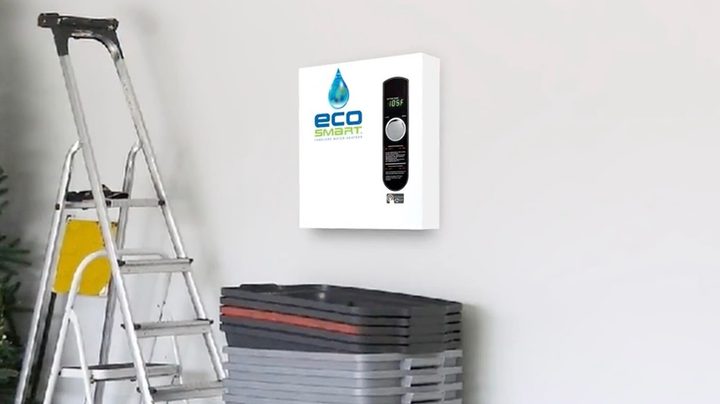
The compact, Energy Star-rated ECO 27 is a prime tankless choice for homes of all sizes. The heater is about the size of a regular cable connection hub and measures only 17″ W x 17″ H x 3.63″ D. Its size makes it a natural choice for homes with little utility space. It may be small, but its output is anything but – it can heat almost 4 gallons every minute in winter and up to 6 gallons during warmer months. The ECO 27 can handle multiple hot showers at once with no issues, making it an ideal option for multi-person households.
Its copper and stainless steel connections reinforce durable, long-lasting A-to-B pathways from your home’s water main to your water lines. You can adjust the temperature in one-degree increments using its convenient digital control.
Thi tankless heater initially cost almost $600, but it’s currently available on Amazon for around $465. Pro tip: check out auction sites if you don’t mind buying second hand.
$415 FROM AMAZON $520 FROM WALMART


