Do you remember tricking out your Myspace profile with purple flaming wallpaper and deciding which of your friends would make your top eight? Or, creating that super-secret circle in Google+? Were you one of those people sending a “yo” to everyone you knew, a few summers ago?
There are loads of social networks out there, with new ones popping up all the time — each attempting to be the next big thing. The problem is that social media trends come and go, and popularity is never guaranteed. But there are a few sites that are hanging around way past their expiration dates. When Facebook, Twitter, Instagram, and Snapchat dominate the social scene, we wonder how these five particular social networks continue to hang on.
Google+
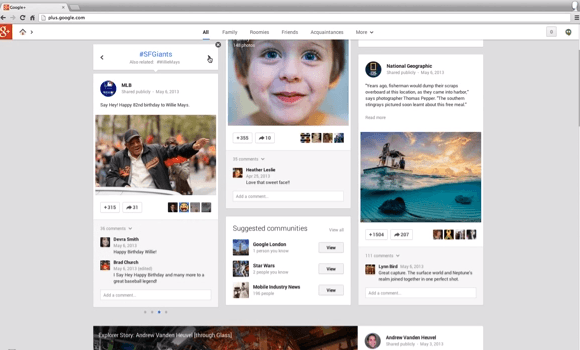
When it launched in 2011, people thought Google+ would be a Facebook killer. In this social network, you’d create different circles for all of the various friends in your life. Alas, Google+ never came to be a full-fledged competitor to, well, anything.
While there are billions of Google accounts, the number of active Google+ users is likely far less (everyone who signs up for a Google account also receives a Google+ account). A 2014 report from Stone Temple Consulting placed the number of active users at around 100 million, and the number of users posting frequently over a one-month period was even less, at 3.5 million. Compare that to Facebook, which claims 2 billion active users per month.
Google+ is the latest in a series of tried and failed social media sites for Google. Orkut, Google’s earliest social media site where users could rate you (on a scale of 1-10) based on coolness, sexiness, and trustworthiness, closed up shop in 2014. Google Wave, the short-lived social media site that did just about everything, lasted just a few years before it was replaced with Google+. But Google, so far, is keeping Google+ going. We hope the company either transform the network into something awesome, or, like Orkut and Wave, just put it out of its misery.
Path
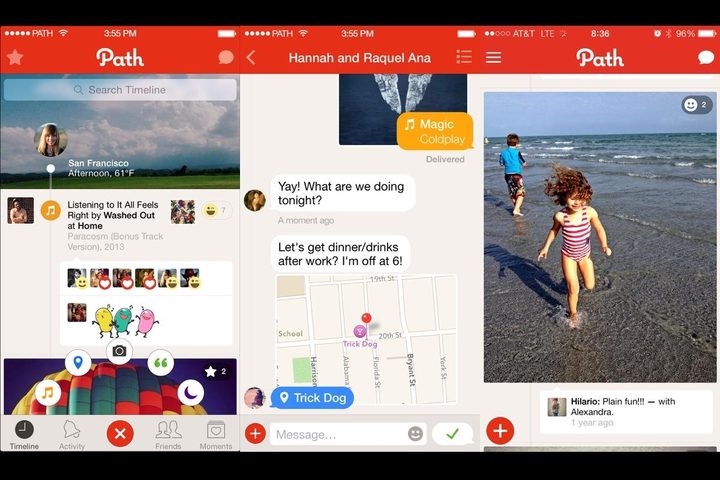
Do you know anyone who still uses Path? Rephrase: Do you know anyone who even uses Path? The site originally launched in 2010, positioning itself as a companion to other social media sites, like Facebook. Path originally limited your social network to 50 friends, with the thinking that you’d share more personal information within a smaller group. The site eventually raised the friends limit to 150, before removing it entirely.
Because Path wanted people to divulge personal information, users were shocked to learn that the company was accessing and storing phone contacts without permission. After apologizing for the practice, the site was hit again in 2013 for storing data from underage users. After its privacy snafus, the FTC fined the company $800,000 and required the site to have its privacy practices review bi-annually until 2033. If the latest numbers are accurate, Path has less than 5 million active users.
Gab
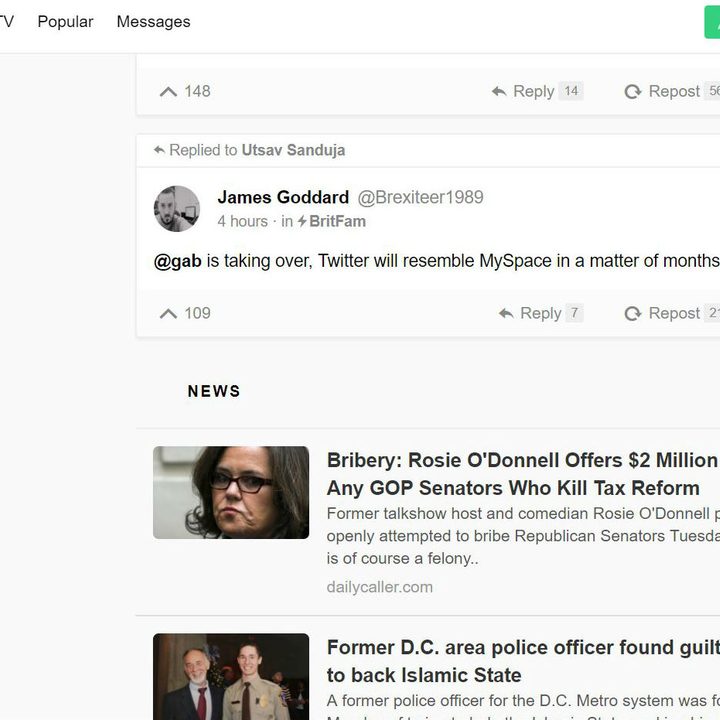
Dubbed “Twitter for Racists,” Gab was launched in 2016 as a social network that eschewed “the entirely left-leaning Big Social monopoly.” Gab, which looks very similar to Twitter, allows users to send updates without having to worry about being suspended for hate speech — and that is troublesome for many obvious reasons.
Featuring controversial personas like Tila Tequila and Milo Yiannopoulos, Gab currently has over 225,000 users, with some opting to pay for premium features that help keep the site ad-free. It’s not a big group, but it’s loyal. Since Apple never allowed Gab to put an app in the iOS store, and Google pulled the Android app from Google Play Store, users have to rely primarily on its web-based sites. In September 2017, Gab’s registrar said it would seize its domain due to threats of violence from a user, according to Business Insider. However, an anonymous registrar took over hosting responsibilities.
Myspace
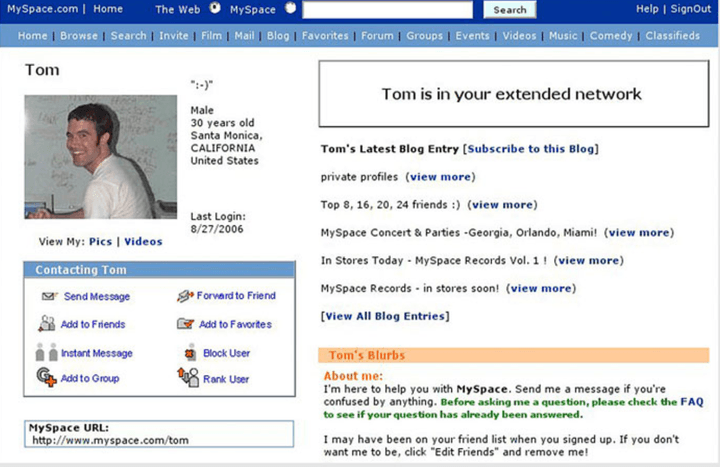
Before Facebook, there was Myspace. Once upon a time, it was the biggest social media platform in the world. The site allowed users to create highly customized pages — replete with flashy gifs and background music — where you could muse about all of your personal struggles via the built-in blog.
Launched in 2003 as a competitor to Friendster, Myspace spent nearly a decade as the top social media site in the world. According to Sean Percival, former VP of online marketing for Myspace, the site was actually launched as an ecommerce company to sell “junk” like diet pills and cheap toys to its users.
The Myspace that exists today is nothing like the original. Once users jumped to Facebook and other social media sites, Myspace went through multiple rebrandings and owners. The site is currently a social media network that focuses on music and culture, although with 15 million monthly visitors, we aren’t sure how influential it is.
Yo
Originally launched on April Fool’s Day in 2014, Yo seems to be a total joke. It serves just one purpose: it allows you to send a “yo” to other users on the network.
Fascination with the app dwindled quickly after its launch. It didn’t help that it was plagued with serious security issues. After several updates, users can now send location pins, links, and even photos, but almost every social network lets you do that. Since it launched, Yo has been downloaded over 3 million times, with more than 100 million “yos” sent — a far cry from the billions of users of other social networks.