
What is a mirrorless camera and what sets it apart from a DSLR? If you’re new to the world of interchangeable lens cameras, it can be confusing trying to figure out which type is best for you. Here’s how a mirrorless camera works and what sets it apart from its mirror-laden counterparts.
Defining a mirrorless camera

As the name suggests, a mirrorless camera is one that doesn’t require a mirror, a key component of a DSLR (which stands for Digital Single Lens Reflex, the word “reflex” referring to the reflective nature of the mirror). The mirror in a DSLR bounces it up to the optical viewfinder. In a mirrorless camera, there is no optical viewfinder. Instead, the imaging sensor is exposed to light at all times. This gives you a digital preview of your image either on the rear LCD screen or an electronic viewfinder (EVF). Mirrorless cameras are called “mirrorless,” rather than DSLRs being called “mirrored,” simply because they came second.
Now, the term “mirrorless” is a little confusing. It didn’t really become used until the advent of mirrorless digital cameras with interchangeable lenses, but many styles of camera lack a mirror. Technically, a point-and-shoot is a mirrorless camera, as is a Leica rangefinder. However, the term “mirrorless” is generally used to describe digital interchangeable lens cameras (ILCs) that either have electronic viewfinders or simply no viewfinder, and that’s how we’ll be using it here.
Without the beefy mirror box taking up space inside the camera body, mirrorless cameras can be made much smaller than their DSLR counterparts. Originally popular with beginners and casual photographers, mirrorless cameras have now grown on professionals as they offer additional advantages not found on DSLRs.
Lenses
Keep in mind, just because the camera is smaller doesn’t mean its lens will be. A 300mm lens on a full-frame DSLR will be around the same size on a full-frame mirrorless camera.
Smaller sensor formats, however, can get away with smaller lenses. Micro Four Thirds, a pioneering mirrorless format co-developed by Olympus and Panasonic, has a crop factor of 2x compared to full frame, so a 150mm lens will yield a 300mm full-frame equivalent field of view — but without the bulk. Larger sensors do produce better image quality, however, so there’s a trade-off.
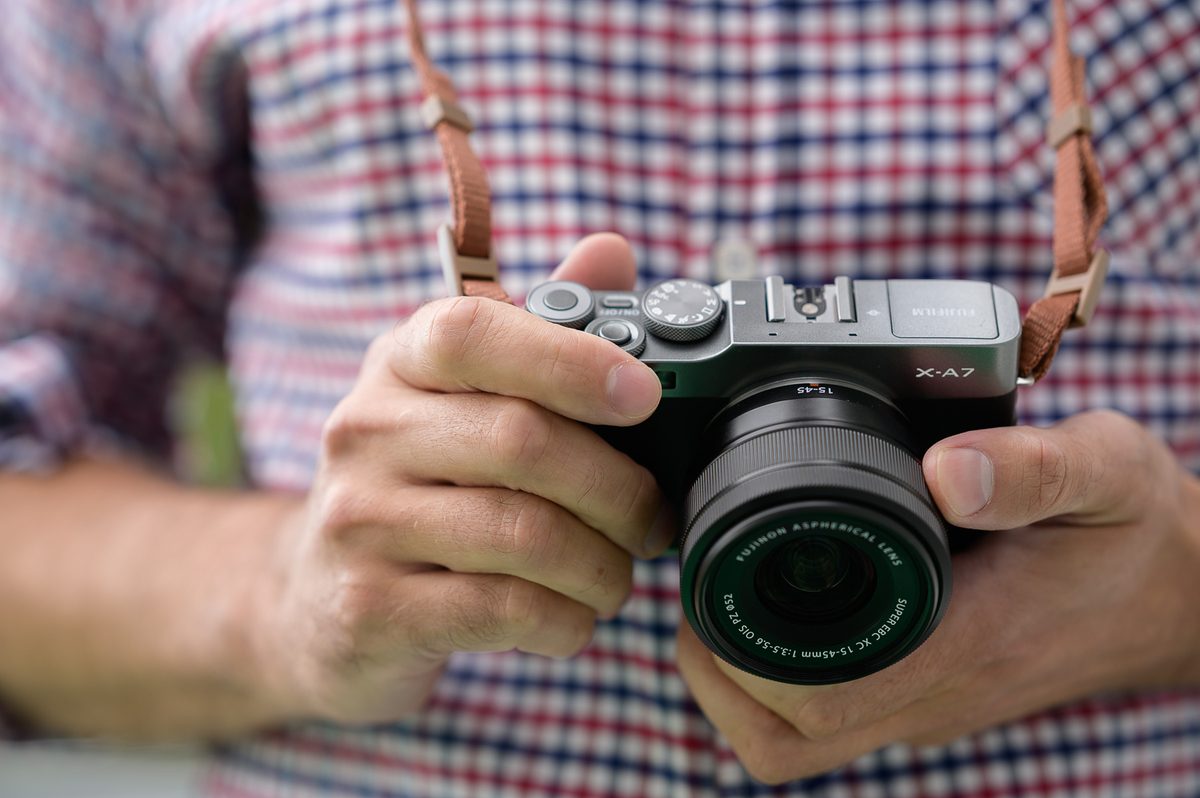
Like DSLRs, mirrorless cameras use a bayonet-style mount for attaching different lenses. Generally, each manufacturer has its own mount, although Micro Four Thirds is shared by Panasonic, Olympus, and a few specialty players like drone maker DJI and cinema camera manufacturer Blackmagic Design. The full-frame Leica L mount is also used by Panasonic and Sigma. Nikon, Canon, and Sony all have unique mounts not shared with other manufacturers. This means you can’t use a Canon lens on a Nikon body or vice versa.
However, one of the neat things about mirrorless cameras is that the flange back distance (the distance between the lens mount and sensor) is much shorter than on a DSLR. This makes it possible to attach a wide variety of lenses from DSLR manufacturers thanks to adapters. Companies like Fotodiox and Metabones sell lens adapters for mirrorless cameras that will let you use everything from the latest Canon lenses to old medium format film lenses on your modern mirrorless camera. You often sacrifice some performance when you do this, but it can be a huge benefit for photographers with existing caches of lenses.
Electronic versus optical viewfinders
Early electronic viewfinders were considered far inferior to their optical counterparts, but this has changed dramatically in recent years. With resolutions now up to 5.7 million pixels and refresh rates as high as 120 frames per second on the best mirrorless cameras, EVFs are sharper and more responsive, closing the gap on optical viewfinders. What’s more, EVFs offer a number of customization options you simply can’t have in an optical viewfinder. These vary from camera to camera, but can include things like the ability to show advanced exposure aids, such as a histogram or waveform monitor, right in the viewfinder.
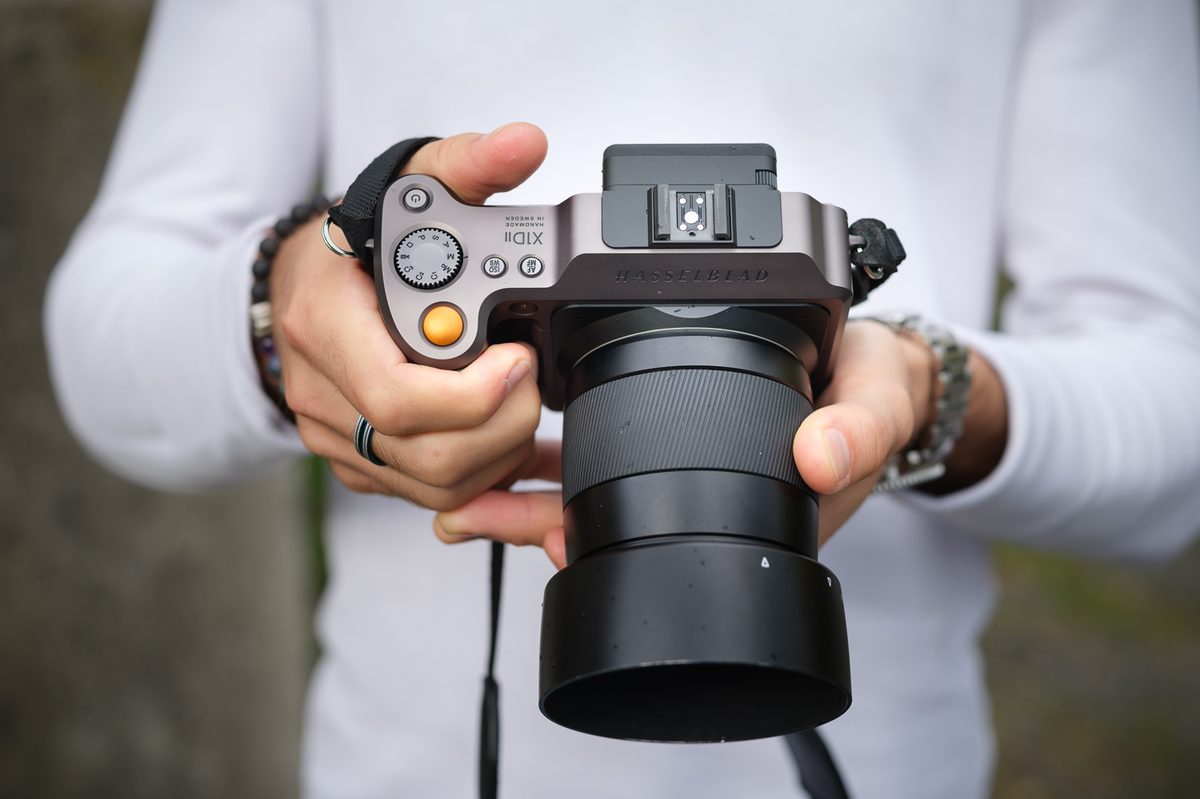
An EVF can also show you exactly what your image will look like — from exposure to depth of field to white balance — before you take the shot, helping you dial in your settings quickly and easily compared to the guess-and-check method of an optical viewfinder.
Finally, EVFs work in video mode, whereas the optical viewfinder of a DSLR is useless here. Video requires constant exposure of the sensor, so a DSLR has to be in live view mode for video to work at all. This is one reason why mirrorless cameras are better for video than DSLRs.
Autofocus
The first mirrorless cameras had pretty pathetic autofocus, but today’s models have mostly caught up to DSLRs — and surpassed them in some ways.
While (most) mirrorless cameras no longer have a slow and clunky autofocus, some DSLRs still offer faster performance in low light. Mirrorless cameras balance it out with more features, however, like eye detection and intelligent subject tracking. Sony leads the field here with its Real-Time Eye AF, but pretty much every mirrorless manufacturer offers some kind of eye-detection.
Battery life
While mirrorless cameras could surpass DSLRs in AF performance in the future, the one area where they are likely to always fall short is with battery life. Where a DSLR’s battery life might be measured in the thousands of exposures, many mirrorless cameras struggle to hit 400 shots per charge. Due to the always-on nature of the sensor and LCD or EVF, mirrorless cameras burn through batteries much faster than DSLRs. Improvements in efficiency have helped, but the all-day battery life of DSLRs remains a big advantage for certain photographers, particularly those covering sports or other live events.
Wrapping it up
Mirrorless cameras are not inherently better or worse than DSLRs, although they have advantages in some areas (like video) and disadvantages in others (such as battery life). Ultimately, it comes down to what type of camera best fits your needs, whether it’s for family vacations or professional fashion shoots. Mirrorless cameras, particularly the more compact models, tend to be a great choice for casual photographers, who may not be bothered by the shorter battery life and who want a camera they can easily take with them. For more advanced users, it’s more of a toss-up, but you should clearly outline your needs before making a decision.


