One of the biggest struggles we face in the new age of technology is having too many options. One prime example is Netflix: We have this vast and robust catalog of entertainment at our fingertips, yet we all find ourselves going down this endless rabbit hole of browsing where most of the time we end up spending more time trying to choose something than watching it.
Are you getting tired of sifting through the same old suggestions on Netflix for the zillionth time? We all know that feeling: Scrolling through interminable rows of the same old shows and movies until fatigue begins to set in, and suddenly nothing that’s being offered looks good.
More Netflix Viewing Options
- The best shows on Netflix right now
- The best movies on Netflix right now
- How to download movies from Netflix
- What’s new on Netflix and what’s leaving
If you use Netflix regularly, you aren’t likely to see a lot of new recommendations, thanks to the algorithm that decides what you’ll like and what you won’t. Fortunately, for everyone who longs for the old days of TV, when flipping the switch called up an unceasing list of random possibilities, there’s Netflix Roulette.
What is Reelgood?
Before we get into Netflix Roulette, those interested in that tool may also want to know about its parent company, Reelgood (the impatient among us can simply skip to the next section). Reelgood launched in 2015 as a sort of movie-focused social media app but eventually pivoted to the model you see today, which is essentially a massive search repository that allows users to find shows and movies filtered by whichever streaming services they use.
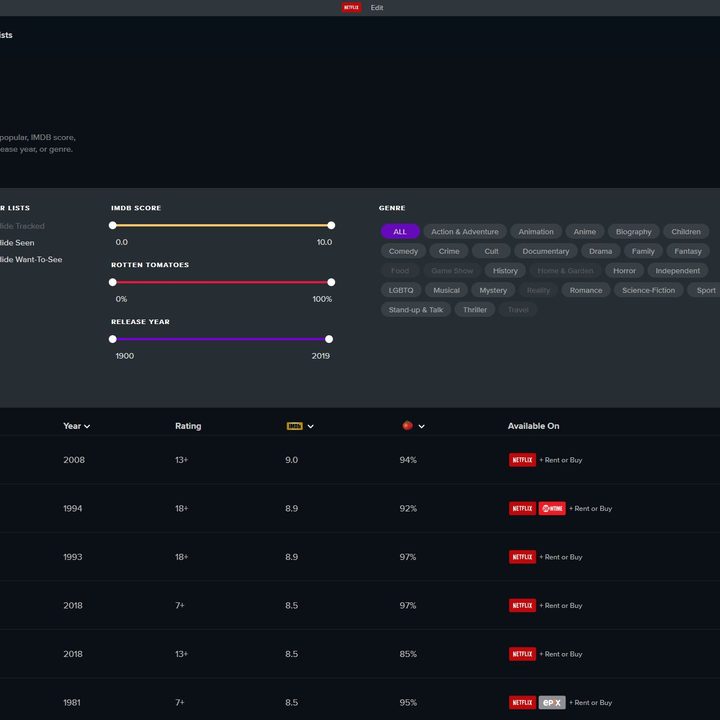
Some streaming devices — like Roku — offer cross-platform search, which is awesome, but Reelgood takes it to another level, letting you add filters based upon genre, IMDB score, Rotten Tomatoes rating, and even release date.
You don’t need to create an account to use the Netflix Roulette feature, but it’s not a bad idea to do so in case you ever want to use the Reelgood search tool — just link through Facebook or sign up the old-fashioned way, with a name, email, and password. Once you’ve registered for an account, you’ll be asked to select all the different streaming services you use. Again, while you don’t need to push forward with this step to use the Roulette tool, we’d recommend it should you decide you want to use Reelgood again in the future (we recommend it).
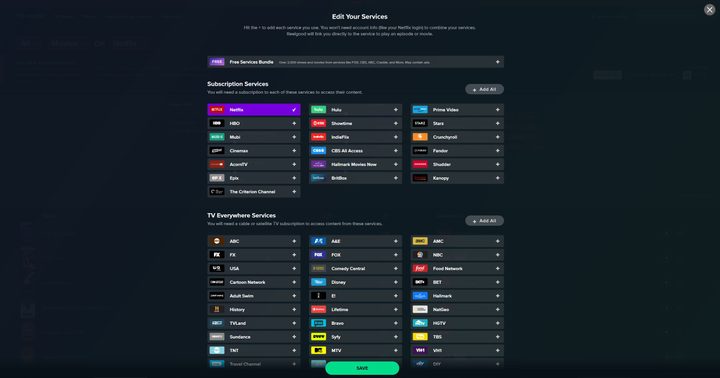
By default, you get access to the “Free Sources Bundle,” which includes content from services like Fox, CBS, and Crackle (beware — these might have autoplay ads, but at least these services are free). Click every service you subscribe to (or every platform you want to be included in your search), then click Save. Next time you search, it will add in movies or shows from each of your selected platforms. When you choose a movie or show, Reelgood will offer you direct watch links for each selected platform to take you straight to your movie or show.
So what about Netflix Roulette?
Netflix Roulette was born in 2014 when 18-year-old Andrew Sampson (u/codeusasoft on Reddit) got tired of browsing Netflix in search of something new. So, he built a basic web app allowing users to choose a genre and a format (either movies or TV shows) before hitting the “Spin” button, which randomly selects something to watch that fits the search criteria.
Despite its extremely basic capabilities, Netflix Roulette became something of a phenomenon and remains a regular tool for many Netflixers to this day. In 2017, Reelgood reached out to Sampson regarding the Roulette API in hopes of working a similar tool into the website, then ended up acquiring the rights altogether when Sampson indicated he was uninterested in continuing to maintain the service.
While Reelgood’s acquisition of the service meant Roulette would no longer have a cool, Netflixian aesthetic, it also meant Roulette became considerably more powerful, thanks to the massive Reelgood search engine, introducing the option to filter by IMDB score as well as Rotten Tomatoes to weed out the content that may not be worth your precious viewing hours.
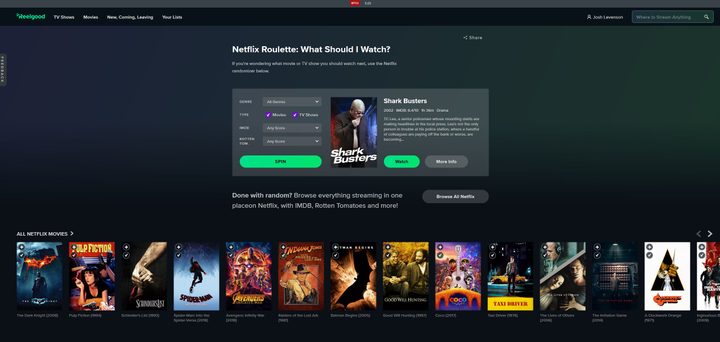
That’s not all: Reelgood’s acquisition cast other streaming services into the mix. While Netflix Roulette can be accessed through a unique link, heading over to the more generic Reelgood Roulette section will let you factor in competitors, such as Amazon Prime Video and Hulu, to choose from a more extensive catalog of content. Want to just search Amazon Prime Video? Click Edit at the top, deselect every platform except Amazon, and hit Save.
Once you’ve found something that looks worthwhile, just click Watch and it will automatically send you to the web player for your chosen platform. If you don’t want to watch on your computer, of course, you’ll need to search for the film or program on your chosen device.
Date night, reimagined
In early 2019, Reelgood released a “Date Night” version of its Roulette tool that confined its library of suggestions to romantic movies — offering an easy way to find the perfect Netflix-and-chill selection.
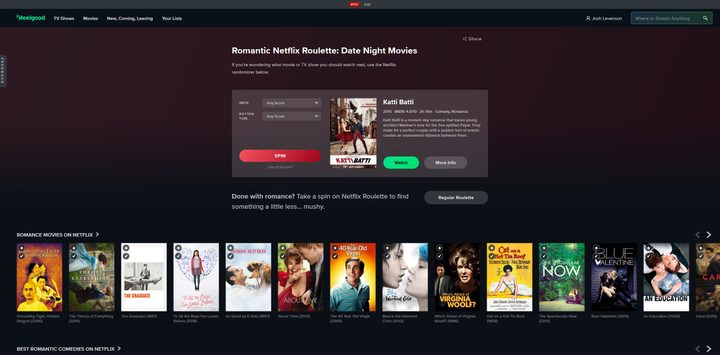
The Date Night Edition of Netflix Roulette lets users specify the film’s IMDb and Rotten Tomatoes ratings, then spin away for a recommendation. Signing in with your Reelgood account allows you to select other streaming services besides — or in addition to — Netflix from the pool of romantic movie sources.