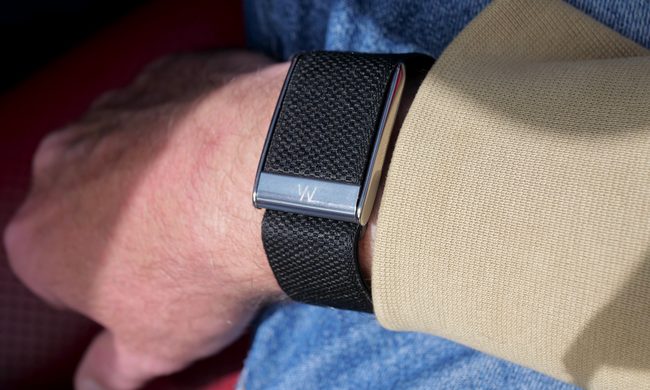
Before you write off the Apple Watch as just another luxury accessory from the iEmpire that you don’t need (which, to be fair, is probably true in most cases), you may want to keep in mind that this is one accessory that has life-saving capabilities. Just a day after a teenager from Tampa Bay, Florida credited her Buy Now with saving her life, yet another story has emerged that casts the wearable in the role of hero.
In early April, a 32-year-old man named William Monzidelis began feeling dizzy at work, and he soon began bleeding. He then received an alert from his Apple Watch telling him that his heart rate had spiked, and recommending that he seek medical attention. His mother took him to the hospital, at which point Monzidelis was bleeding profusely, ultimately losing 80 percent of his blood.
Luckily, doctors were able to diagnose a ruptured ulcer and treat him in time, and they said that without the Apple Watch’s warnings, Monzidelis likely would not have received the medical attention he so desperately needed.
Monzidelis’ story is very similar to that of Deanna Recktenwald’s, the Florida teen. As originally reported by WFTS Tampa Bay News, Recktenwald’s Apple Watch suddenly notified her that her resting heart rate had hit 190 beats per minute. “I didn’t know what was going on at all and it was just out of the blue,” she said when she saw the wearable’s notification. Recktenwald was at church when she received the notification — certainly not engaging in any intensive physical activity that could’ve spiked her heart rate. Moreover, even if she had been exercising or otherwise exerting herself, a normal resting heart rate falls somewhere between 40 and 100 beats per minute, and 190 is nearly double the upper limit.
Stacey Recktenwald, Deanna’s mother and a registered nurse, quickly took action. “It was alarming that the watch was telling us to seek medical attention,” she said. “I didn’t even know that it had the capability of giving us that alert.”
Once the Recktenwalds sought attention at a nearby walk-in clinic, medical professionals confirmed that the 18 year old’s heartbeat was indeed alarmingly rapid. “I was surprised, it was right on,” Stacey said.
The teen was admitted to the emergency room, and doctors at Tampa General Hospital discovered that Deanna has a chronic kidney condition. Both of her kidneys operate at only 20 percent, which means she will likely need a transplant in the near future. Had Recktenwald’s Apple Watch not provided her with an alert, this condition may have gone unnoticed for some time longer, leading to potentially tragic consequences.
“I instantly started to pray and thank God for her having that watch,” said Tom Recktenwald, Deanna’s father.
“Now that we have some answers to why this is happening we can prevent something major from happening down the road,” said Deanna.
The family wrote to Apple’s CEO Tim Cook about the episode, who responded to the email, noting, “This inspires us to keep pushing.”
Updated on May 3: The Apple Watch has been credited with saving yet another life.