
Deep space exploration, in which spacecraft travel to the outer reaches of our solar system or beyond, requires a whole lot of power. For NASA, a valuable source of this power is a radioactive material called plutonium-238. Providing a constant heat source as it decays, plutonium-238 (note: not the kind of plutonium used for nuclear weapons) has been used as a crucial part of more than two dozen U.S. space missions for the past 50 years. Converting its heat into electricity has helped operate the computers, scientific instruments, and assorted other hardware on NASA missions ranging from the Curiosity rover which landed on Mars to the New Horizons spacecraft flyby of Pluto.
Unfortunately, we haven’t produced been steadily producing plutonium-238 for decades; something which poses a problem for continued deep space mission plans that had to rely on the United States’ dwindling stockpile. Perhaps until now, that is.
At Oak Ridge National Laboratory, scientists have discovered a way to automate part of the process for creating this alpha particle-producing radioisotope. This will help boost the annual production of this material, contributing to NASA’s goal of making 1.5 kilograms of the stuff every year by 2025.
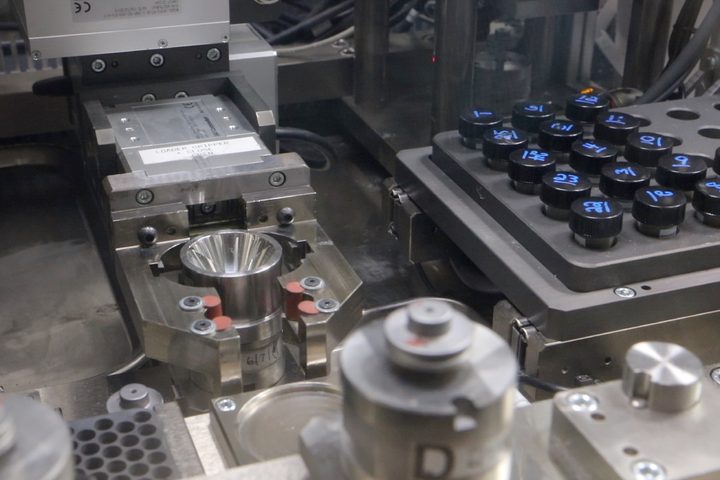
“Last year, we showed NASA that we can make Pu-238 of the right purity to be used in radioisotope power systems,” Bob Wham, project lead on the initiative, told Digital Trends. “However, we were limited in how much Pu-238 we could make in a single year: The limiting factor is how many targets we can make and irradiate in a year. Automation of our target fabrication increases how much we can make by [a] factor of four and gets us into a mode of constant rate production.”
The neptunium oxide-aluminum pellet is the basic building block involved in the radiation process that results in plutonium-238. The previous process for making these pellets was done via manual hand pressing. This can now be achieved using automation in a robotic lab setup. In the process, the number of pellets it’s possible to make increases from 80 to 275 per week.
“We will [next] turn our attention to scaling up the chemical processing effort during 2020,” Wham continued. “We plan to recover about 220g of new plutonium oxide in 2019 and 660g in 2020. We plan to scale up our automated target fabrication again in 2021-2022 so that we are capable of building enough targets to make 1,500 gy of plutonium oxide. We expect to be at that operating level by 2025.”


