  1. Home
  2. Emerging Tech
  3. News

NASA’s Mars 2020 rover passes its tests with flying colors

Add as a preferred source on Google

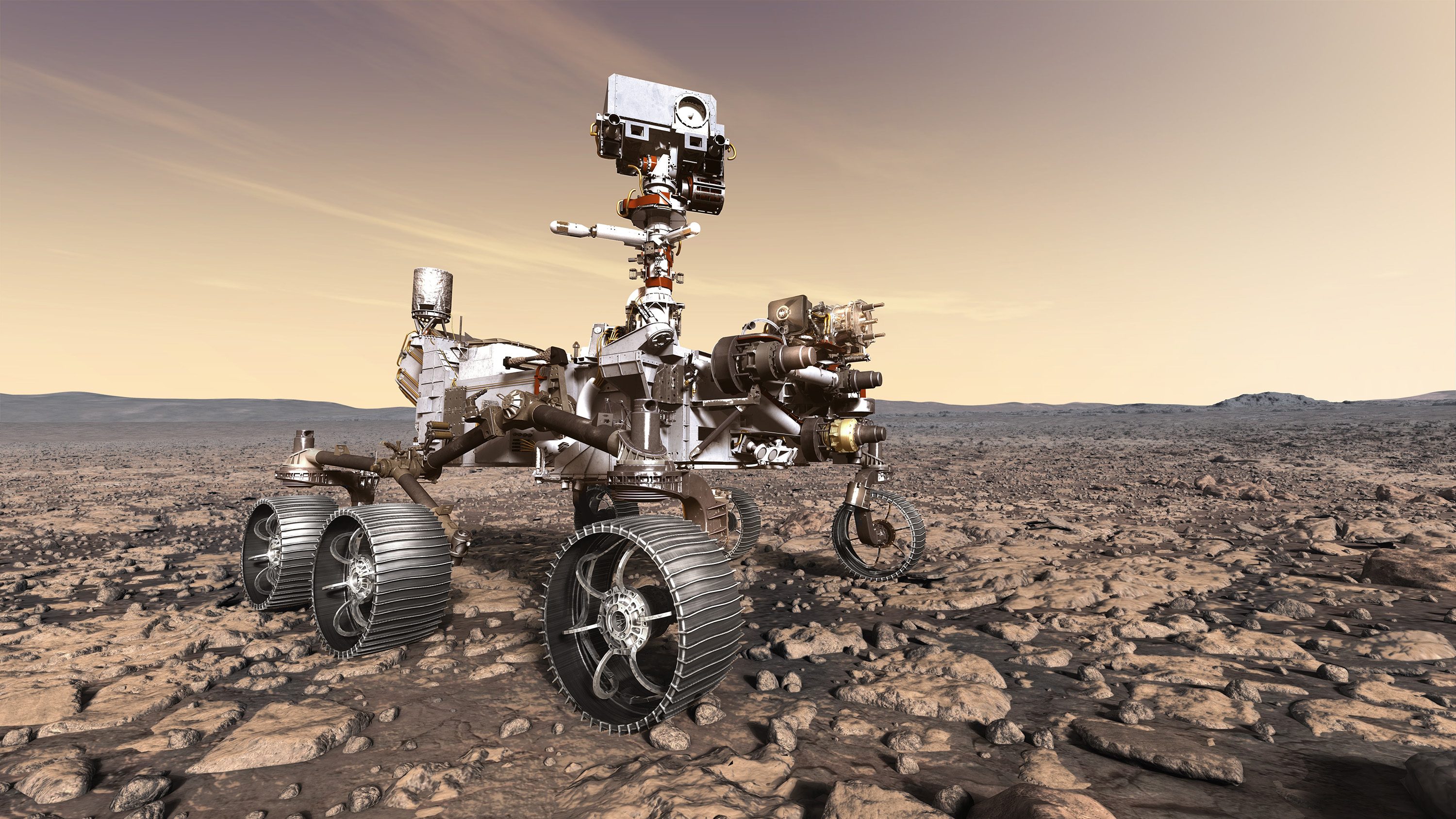
This artist’s rendition depicts NASA’s Mars 2020 rover studying its surroundings. NASA/JPL-Caltech

Preparations are well underway for NASA’s next mission to Mars, when it plans to land the Mars 2020 rover on the surface to look for signs of life and collect samples. Recently, the Mars 2020 rover team has been undertaking a series of tests to see if the craft will be able to launch, navigate, and land on the Red Planet. Called Systems Test 1, or ST1, these tests represent the first test drive of the new rover.

Recommended Videos

“ST1 was a massive undertaking,” Heather Bottom, systems engineer for the Mars 2020 mission, said in a statement. “It was our first chance to exercise the flight software we will fly on 2020 with the actual spacecraft components that will be heading to Mars — and make sure they not only operate as expected, but also interact with each other as expected.”
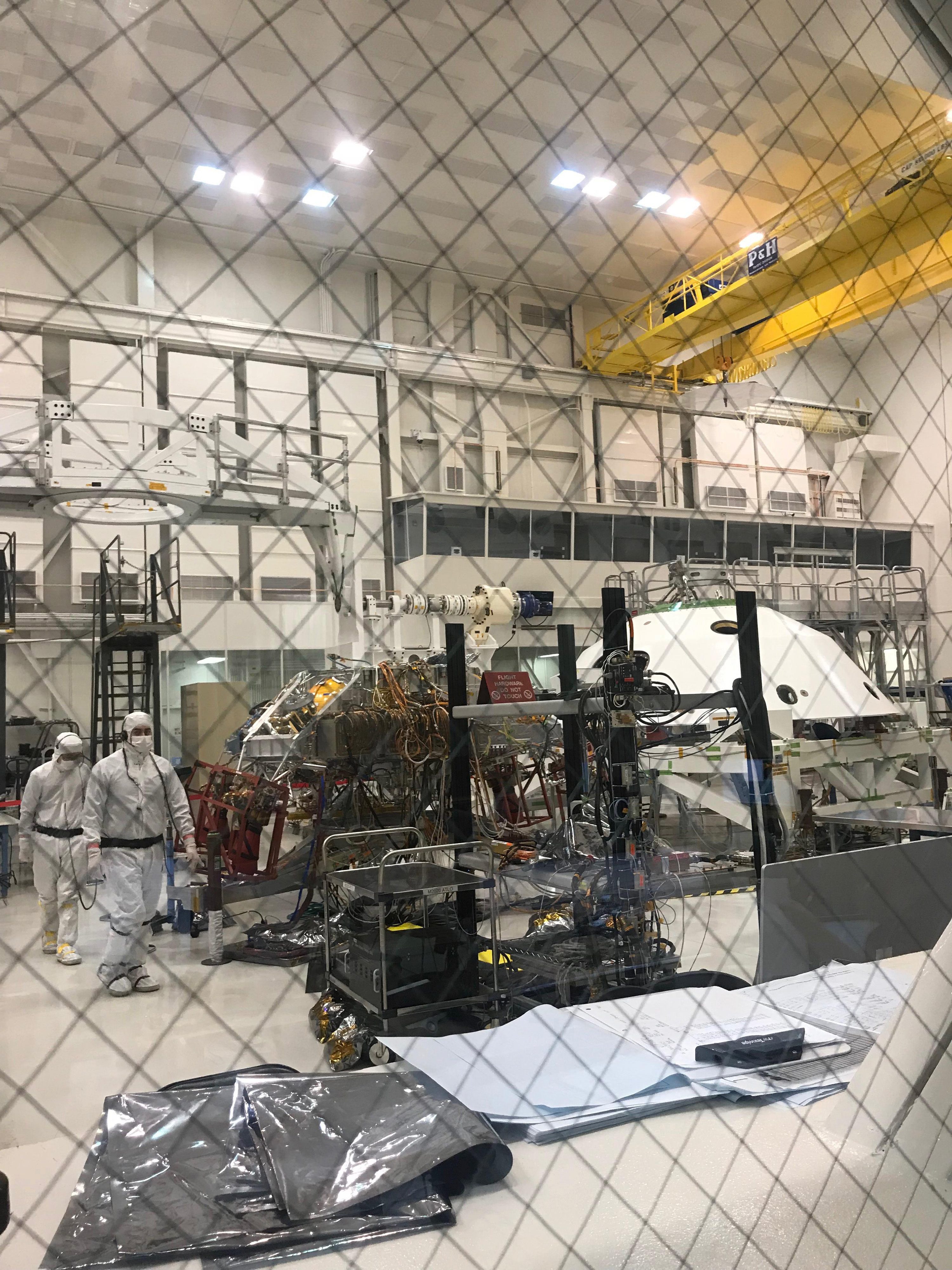
Technicians working Mars 2020’s System’s Test 1 approach their workstation in the Spacecraft Assembly Facility at NASA’s Jet Propulsion Laboratory in Pasadena, California. NASA/JPL-Caltech

The tests were performed at the Jet Propulsion Laboratory in Pasadena, California, in the High Bay 1 cleanroom, requiring the technicians to don white “bunny suits” to prevent the introduction of any contaminants. Most of the working team members were outside the room and looking in, with just two technicians overseeing the tests in person.

Designed to be as realistic as possible, the tests included communications handled by X-band radio transmission, just as will be the case with the real 2020 mission. An umbilical of electrical cabling fed data and power to the craft, and the launch capacities were tested when commands for powering on the electrical components and configuring the thermal, power, and telecomm systems were relayed.

After several tests of the launch system, the landing sequence was tested too, as well as a deep space cruise. The tests were successful, and in the end the team was able to perform two landings, four launches, several trajectory correction maneuvers, and deep space navigation.

The next challenge for the rover is to see how it will cope with the low temperatures on Mars by testing its abilities to perform in cold environments. “One of the future scenario tests will place the rover inside a thermal chamber and simulate being on the surface,” Bottom explained. “It will step through mission critical activities at some very low Mars surface temperatures. Both literally and figuratively it will be a very cool test.”

Georgina Torbet
Georgina has been the space writer at Digital Trends space writer for six years, covering human space exploration, planetary…
Edge browser on mobile gets a huge upgrade that makes it a worthy pick over Chrome
Edge mobile gets smarter just before Chrome’s big Gemini moment
Microsoft Edge on a phone

Chrome is still the default browser for many smartphone users, but Microsoft’s latest Edge update gives them a practical reason to try something else.

Microsoft has announced a major Copilot update for Edge across desktop and mobile. The rollout comes ahead of Google’s Gemini-powered Chrome upgrade for Android, which is expected in June, giving Edge a chance to stand out on phones before Chrome’s next big AI push.

Read more
After flubbing with Siri, Apple plans to host AI agents on the App Store
One problem is about money Apple won't commit to not charging. The other is about AI agents Apple can't figure out how to control. WWDC needs to solve both.
Electronics, Mobile Phone, Phone

Apple is currently facing a Siri problem that has nothing to do with Siri at all. With WWDC 2026 just weeks away, The Information reports the company is actively courting developers to integrate their apps with the new Siri coming in iOS 27. 

The mechanism powering the overhauled Siri, App Intents, is an API that lets Siri execute actions inside third-party apps without you actively opening them, which sounds quite useful, I’d say. However, some of the world’s largest developers are dragging their feet on it, not because it’s tough, but because Apple left the door open on charging for it later.

Read more
EV batteries just need some AI top-up nudge, and they get a big 23% life boost, finds research
Charging fast and lasting long seemed impossible. A new AI trick says otherwise.
EV Charging

EV battery charging technology has always had to find the right balance between charging speed and battery longevity. If the charging speed is too fast, it wears down the battery. If the charging is too slow, nobody is happy. 

Researchers Meng Yuan from Victoria University of Wellington and Changfu Zou from Chalmers University of Technology in Sweden may have cracked this long-standing problem using an AI technique called deep reinforcement learning, and the results are pretty encouraging.

Read more