
This story is part of our continuing coverage of CES 2020, including tech and gadgets from the showroom floor.
CES is usually a time to get excited about all of the possibilities that new technology can bring to our lives, even if some of it is downright silly. But this year, as Google is prominently celebrating its various technologies amid the endless halls of exhibitors, a storm cloud is gathering, casting a legal shadow over its achievements. Sonos, the whole-home wireless audio company known for its superb line of small but powerful speakers, is suing Google and alleging that the tech giant stole its intellectual property, according to The New York Times.
Sonos claims that during the time it has partnered with Google to enable the behemoth’s music service (Google Play Music) and its voice assistant (Google Assistant) on Sonos’ devices and software platform, Google was taking careful note of how Sonos created its multiroom wireless audio system. Google then, the lawsuit alleges, used that knowledge to create its own line of wireless multiroom speakers.
Google now sells several smart, wireless multiroom speakers like the Google Nest Mini, Google Home, and Google Home Max. Only the Google Home Max costs more than the least expensive Sonos smart speaker.
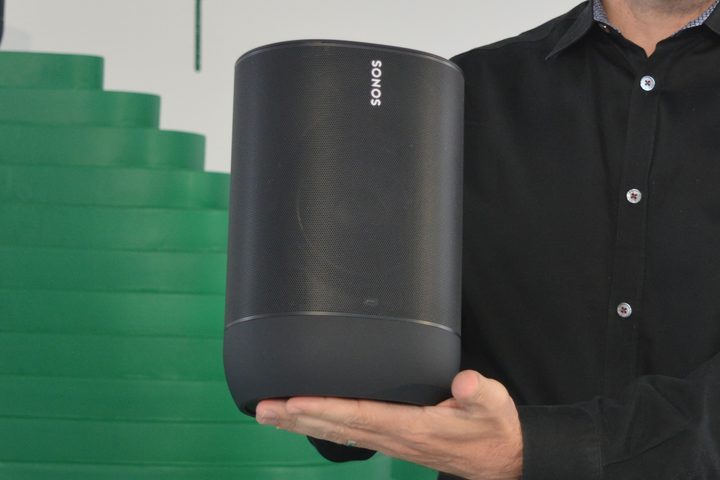
“Google has been blatantly and knowingly copying our patented technology,” Patrick Spence, Sonos’ CEO. reportedly said. “Despite our repeated and extensive efforts over the last few years, Google has not shown any willingness to work with us on a mutually beneficial solution. We’re left with no choice but to litigate.”
Needless to say, Google sees things differently. “Over the years, we have had numerous ongoing conversations with Sonos about both companies’ IP rights and we are disappointed that Sonos brought these lawsuits instead of continuing negotiations in good faith,” a Google spokesperson told Digital Trends. “We dispute these claims and will defend them vigorously.”
The issue isn’t going away, however. On Wednesday, the House Judiciary Committee invited Sonos to testify on January 17th as part of an ongoing antitrust investigation into the nation’s biggest tech companies, including Google. Sonos CEO Patrick Spence will testify on behalf of the company.
Amazon next?
Sonos also believes that Amazon has exhibited similar behavior, though for now, only Google is in Sonos’ legal crosshairs. Nonetheless, Amazon has also issued a statement saying: “The Echo family of devices and our multiroom music technology were developed independently by Amazon. Our focus is on building the best possible experience for our customers and partners … In fact, the Alexa flywheel is helping to generate billions of dollars for the Alexa developer and device-maker community.”
If Sonos genuinely believes that these other companies have violated its patents, it clearly needs to defend itself. But doing so could come at a heavy price, and not just in the presumably huge legal fees this action will cost. If Google decided to terminate its relationship with Sonos over the lawsuit, it would be a huge blow to Sonos.
A different world
When Sonos first established itself as a leader in the wireless audio space, streaming services were still just an idea and voice assistants were many years away from making their debut. Smart homes and the Internet of Things hadn’t become the massive buzzwords they are today. Back then, Sonos’ ability to let you stream your private MP3 collection to any room in the house without the use of speaker cables was more than enough reason to jump on board, despite the high prices.
Today, it’s a totally different world. Voice-controlled smart speakers are everywhere, they cost as little as $50 (or less), and they not only connect to the vast music libraries of the biggest streaming services, but they also act as hubs for every smart device in your home. In this new context, companies like Google and Amazon — which are effectively the only two voice assistant companies given Apple’s reluctance to license Siri to any third-party products — are the smart speaker kingmakers.
Sonos had the foresight and the ability to tweak its wireless speaker platform to be technologically agnostic. It works with virtually any streaming music service — far more than any other multiroom audio system — and, crucially, it gives its users the choice of Amazon Alexa or Google Assistant on its three smart speaker products: Sonos One, Sonos Beam, and Sonos Move.
Should Google choose to sever ties with Sonos, that choice would disappear overnight, effectively making Sonos’ smart speakers Alexa-only. Worse yet, if Google decided to play an even tougher game, it could pull all support for Sonos’ products from the Google Home platform and possibly deprive Sonos users of access to its Google Play Music and YouTube Music streaming services (Google is in the midst of rebranding Google Play Music as YouTube Music).
We suspect that Sonos could probably survive both potential outcomes, but they would leave a deep wound. Google Play Music isn’t the juggernaut that is Spotify or Apple Music (both of which work with Sonos). And Google Assistant doesn’t have as many users as Amazon Alexa. But it’s getting increasingly hard to see how a company like Sonos can continue to make inroads with new customers without the help of Big Tech.
Follow our live blog for more CES news and announcements.


