

As of today, you can officially download the new version of Edge from the website for Windows 7, Windows 8, Windows 10, or Mac.
What’s new about this version of Edge? Well, pretty much everything. The entire browser has been moved over to Google’s open-source Chromium platform, abandoning the EdgeHTML engine that never really caught on. When you use it, it feels a lot like an alternative version of Google Chrome. It even has a new, colorful logo to match.
Thus far, access to the new Microsoft Edge has only been available in beta through the Insider program. This has let developers and enthusiasts get a sneak peek of what Microsoft is working on — and will continue to do so into the future. If you’re familiar with the latest beta version of Edge, you won’t find any surprises here.
Instead, Microsoft is focused on pulling off a smooth launch, so the browser will only be available for download through the website rather than through the Microsoft Store.
To install it, just head over to the site and install the file provided there. If you’re on Windows 7, Windows 8, or Mac, Edge will install as a new browser, just as any other application you get off the web.
For those with Windows 10 (which already pre-installs Edge), the new Edge will install as an update to the old Edge.
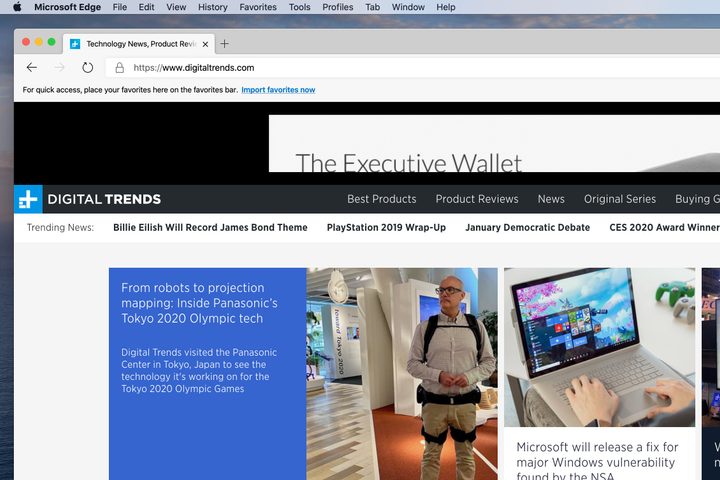
If you’re coming over from Internet Explorer or the older version of Edge, the browser will automatically pull in things like favorites and saved form fills. Meanwhile, if you’re coming from a different browser, Edge prompts you to pull those settings in once installed.
You can also choose to wait for an automatic update to come through, though Microsoft says it will not start rolling out for two or three weeks. Even then, it will be a slow and careful rollout, starting with Insiders in the Release Preview Ring. The company seems set on proceeding with caution, rather than rushing through the update.
Microsoft says its goal at launch isn’t a certain number of downloads or installations. Instead, it wants a smooth launch and to hit a level of satisfaction among the people that use it. Microsoft wants to nail the fundamentals to win early users over, focusing on things like security, performance, and privacy.


