1. Home
  2. Trash
  3. News

Garmin reportedly used decryption key, may have paid ransom after cyberattack

Add as a preferred source on Google

GPS technology company Garmin is recovering from a recent ransomware attack and has reportedly received a decryption key to recover its files, suggesting it may have paid a ransom, as uncovered by Bleeping Computer.

The site found that the attackers used the WastedLocker Ransomware and reported that they demanded $10 million as a ransom. Now, it also uncovered that Garmin is using a decryption key to regain access to its files, suggesting that the company may have paid that ransom demand or some other amount. The WastedLocker software uses encryption which has no known weaknesses, so the assumption is that to break it, the company must have paid the attackers for the decryption key.

Garmin was the victim of the ransomware attack at the end of July, when hackers succeeded in shutting down services including Garmin Connect, the network which syncs data for Garmin customers using wearables such as watches. Affected systems came back online within a few days, but services continued to be slow for some users.

As well as the inconvenience for wearables users, the hack had some people worried about more serious consequences as well. Some aviation navigation software like the flyGarmin app was also affected, meaning it could have been in breach of Federal Aviation Authority (FAA) requirements.

The company reassured customers that no customer data was stolen, and that no payment information from the Garmin Pay payment system was accessed or stolen either.

On Twitter, the company announced last week, “We are happy to report that many of the systems and services affected by the recent outage, including Garmin Connect, are returning to operation. Some features still have temporary limitations while all of the data is being processed.”

When asked for comment on these reports, a Garmin representative pointed Digital Trends to a statement the company made about the incident last week and said it had no further comments at this time.

Update August 3, 2020: Added response from Garmin

Georgina Torbet
Georgina has been the space writer at Digital Trends space writer for six years, covering human space exploration, planetary…
The Digital Trends App Bundle is yours to try for a whole week, free
Digital Trends App Bundle

Recently, we've entered an exciting collaboration with Maple Media, creating a bundle of 17 apps worth having on your phone. From relaxed fun to serious productivity boosts, these apps cover all your bases and provide a fun boost to your phone. Normally, the bundle is $9.99 per month (far lower than the cost of using the apps individually), but for your first 7 days you can get access to the bundle for free. View the full Digital Trends App Bundle for a complete list of the apps, or read on for a summarized take.

Start your free trial

Read more
The Galaxy S26 Ultra might not see much of a battery upgrade after all
It looks like it will stay the same as the last five years.
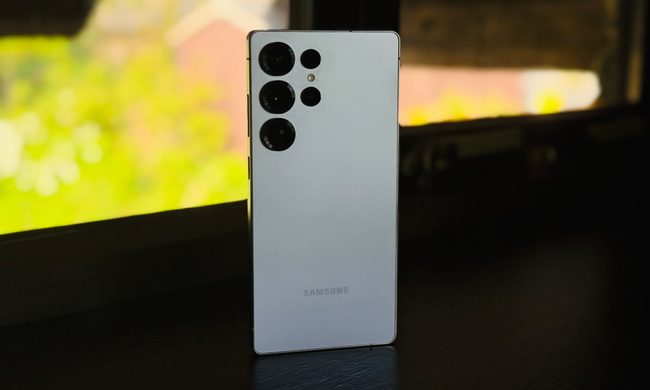
The back of the Samsung Galaxy S25 Ultra.

What's happened? This week, China's Quality Certification Center released information about a battery (EB-BS04898ABY) with a maximum capacity of 4,855mAh. That's the same capacity as was previously seen in the Samsung Galaxy S25 Ultra, and fans have taken this certification to mean the Galaxy S26 Ultra will not see a capacity increase after all.

The Samsung Galaxy Ultra models have had the same battery capacity for the last five years.

Read more
The Galaxy Tab S10 Lite is official, and it’ll be here sooner than you think
Galaxy Tab S10 Lite

What's happened? Samsung has officially announced the Galaxy Tab S10 Lite, a budget-friendly alternative to the Galaxy Tab S10. The device has been rumored for months, but this is the first time Samsung has officially acknowledged its existence.

The Galaxy Tab S10 Lite will have a 10.9-inch display and a peak brightness of 600 nits — a bit on the lower side, versus the iPad Pro's maximum brightness of 1,600 nits.

Read more