

Shopping for a robot vacuum has become increasingly complicated over the years. Models today offer a wide range of features — and carry an even wider range of price tags. From entry-level models that simply vacuum or mop to premium devices that empty their dustbin and perform self-maintenance tasks, there’s a world of difference between some of the available robot vacuums. However, robot vacuums are billed as autonomous houseguests that free up your time. And if you’re looking to make that a reality, be prepared to drop a good chunk of change.
Unfortunately, many of our favorite robot vacuums (and those that are the most hands-free) cost over $1,000. Many shoppers will find them to be a wise investment; however, as cheaper models often come with significant drawbacks. This includes a need to manually empty their dustbins, poor mopping performance, or navigation skills that miss entire sections of your home or let the robot get trapped on obstacles like socks or dog toys.
If you need help with your search, be sure to check out our roundup of the best robot vacuum and mop combos. Some of these support Matter, while others work with Google Home or Amazon Alexa, offering added flexibility. But if none of those catch your eye, here’s a detailed look at how to choose a robot vacuum, ensuring you find the right one for your smart home.
Features to consider in a robot vacuum
Sensory sophistication and virtual mapping
Most modern robot vacuums use sensor technology to navigate around a room, but some models are more advanced than others. Basic robots have infrared sensors to stop them from bumping into things and changing direction when they collide with something, whereas more sophisticated models will map out a room using laser-guided scanners or a combination of cameras and sensors.
These high-tech robots also sometimes have “dirt sensors” to be sure they have cleaned properly, and can add additional cleaning passes to dirty or high-traffic areas. Premium models can even use these sensors to automatically adjust their settings in real-time, ensuring they’re ready to tackle all sorts of messes. This also takes the guesswork out of creating your own cleaning routines — instead of tinkering with mopping and vacuuming settings, you can let the onboard AI and sensors do the thinking.
Automated scheduling
Most robot vacuums have a scheduling function, so you can set it to work at specific times of the day or week — when you’re at work, for example. Most of this scheduling is done via a companion app on your smartphone that makes changes and updates easy. With some models, however, you’ll need to manually program this schedule into the bot using buttons. If that sounds like about as much fun as setting the clock on your car radio, make sure to check in advance how the calendar interface works on your chosen robot vacuum.
Some robot vacs also combine high-tech mapping with that scheduling feature and let you program certain rooms to be cleaned on certain days, giving you amazing flexibility and freedom.
Automatic dirt disposal
With most bots, they may do the sweeping up, but you’ll have to empty it just like any regular vacuum cleaner. However, some models will automatically dispose of dirt into their own bin located inside the home base, and they will remind you when this bin needs to be emptied. These models tend to be more expensive, however. With the majority of robot vacuums, you simply pop out the dustbin, open a flap or door, and pour it into the garbage. Not a big deal, but if you’re looking to save even more time and hassle, automatic disposal is a feature to look for.
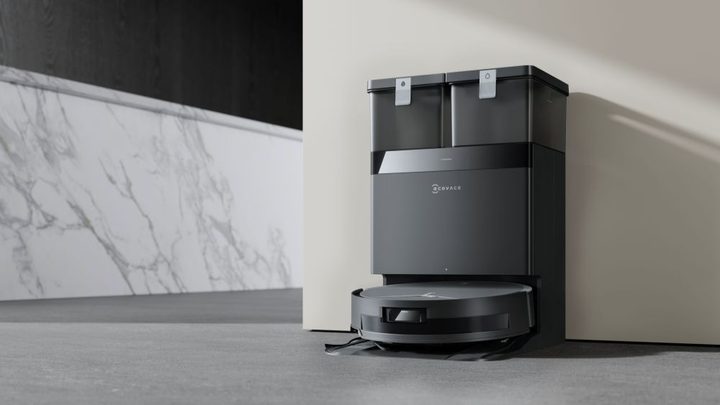
This feature is now common on all high-end robots. Whether it’s the Roborock Saros 10 or Ecovacs Deebot X8 Pro Omni, automatic dirt disposal is found on pretty much every flagship robot vacuum in today’s market.
Additional mopping functionality
Many manufacturers now produce devices that function as both a robot vacuum and a robot mop. The best models offer both functions without the need for any manual intervention — that is, they’ll vacuum constantly, and lift their mops when traveling on carpet to prevent the floor from getting wet.
More affordable products might ask you to install or remove mops based on the task you’d like to perform, but this isn’t the case with most products over $500. Step into the realm of premium robot vacuums, and they’ll mop without any prompting.
The Saros 10 is an excellent example of this, as it can automatically detach its mops when traveling on carpet. Some products from iRobot will stow their mop on top of themselves, ensuring they never touch carpets. The most common feature is a retractable mop. These pull up several millimeters into the robot — and while they’re fine for short carpet, plush carpets can still get wet if they have long fibers.
Which are the best robot vacuum brands?
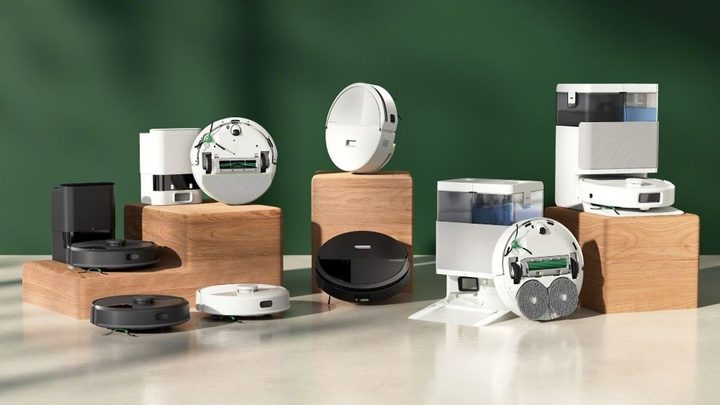
There are loads of great robot vacuum brands out there, all with varying price points and levels of functionality. Before purchasing a vacuum cleaner, it’s a good idea to do a little research on the brand and check reviews, as well as customer comments. These are some of the biggest brands:
Roborock
Roborock is one of the best robot vacuum manufacturers. The brand is responsible for our favorite robot vacuum and mop combo, and it has even produced a robot vacuum with a robotic arm — proving its commitment to innovation. Premium models from this brand look great, offer excellent navigation skills, and come with a docking station that performs most self-cleaning tasks. We can almost, without reservation, recommend all its products.
iRobot
Though they used to dominate the space, iRobot is no longer the leader in robot vacuums. Still, they offer some excellent products, many of which are more affordable than the competition. It has recently revamped its lineup, and it’ll be interesting to see what the future holds for the once-champion of robot vacuums.
Ecovacs
Ecovacs models are extremely sophisticated, with one of their newer models using an innovative roller mop that’s a wonderful companion for homes with hard floors. They offer a wide range of products and a wide range of price tags, and their flagships tend to be among the best on the market.
Eufy
These robot vacuums are great budget-friendly options with fewer fancy features but a focus on strong suction power. Most Eufy models have an easy-to-use app and are quite slim, meaning they can get into lots of hard-to-reach areas.
Maintenance considerations
While robot vacuums are more autonomous than a traditional vacuum, they still require maintenance. You’ll need to dust the sensors, empty and clean the dustbin, and keep the filter clean to make sure your vacuum runs smoothly. As with most machines, maintaining it will keep it running better and for longer. You’ll also want to check the brushes regularly to make sure they are not blocked, inspect the rollers for threads or fibers that can get wrapped around the roller and remove them, as well as clean the wheels and remove hair or tangled threads that may be impeding their movement.
If your robot vacuum doubles as a mop, you’ll also need to take care of its maintenance. Some high-end products do this for you, but if you pick up a budget-friendly model, you’ll need to be ready to clean the mop after each run and leave it out to dry.
Specifically, you’ll want to look for models that can both wash and dry their mops. Units with docking stations that can’t perform these features will require much more maintenance than you’d expect. And even if a robot vacuum can wash its mop, it’ll still be prone to obnoxious odors unless it can also perform a drying sequence. The best robot vacuums on the market use warm air to speed up this process and reduce the build-up of mildew-like smells.
They might cost a bit more, but we’d highly recommend picking up a robot vacuum that can perform routine maintenance tasks like the above. At the very least, be sure to find one that can empty itself after each cleaning cycle to truly automate your home care routine.
Price
As previously mentioned, the different brands of robot vacuum have varying price points, and they can range from around a hundred bucks to upwards of $1,000. Of course, it’s natural to pay more for trusted, high-quality brands such as Roborock. If you can afford the upfront investment, these models are extremely sophisticated and powerful.
However, if you are operating on a budget, you can find some great options that are way more affordable. iLife and Eufy have some superb, inexpensive models that may not come with all the functions you get with a more expensive vacuum but are nonetheless effective and responsive machines. Make sure to do your research before buying.
Keep in mind that products that cost less than $200 might be making significant cuts to hit that price tag. That could mean reliability takes a hit, or it simply won’t clean up to your standards. It might be best to bulk up your budget before purchasing a robot vacuum, as there’s nothing worse than a robot that requires constant babysitting or tons of maintenance.
It’s definitely a domestic dream to imagine never having to vacuum again, but with a robot cleaner, this is actually possible. With a host of brands sporting lots of cool capabilities and accessible price ranges, this dream can easily become a reality in your home.


