
A lot has been said about the graphical fidelity of Nintendo consoles in the last few weeks. We recently posted our review of the OLED Switch, a new version of the ubiquitous console that features a bigger, brighter screen for use in handheld mode.
Bloomberg then broke a story about developers who claimed to have received 4K-capable development kits from Nintendo. Neither the original Switch nor the OLED model support that hyper-sharp fidelity, but the news was big enough that Nintendo had to take to Twitter to deny the claims. “As we announced in July, we have no plans for any new model other than Nintendo Switch – OLED Model,” the company stated with an air of concrete finality.
A news report on Sept. 30, 2021(JST) falsely claims that Nintendo is supplying tools to drive game development for a Nintendo Switch with 4K support. To ensure correct understanding among our investors and customers, we want to clarify that this report is not true. (1/2)
— 任天堂株式会社(企業広報・IR) (@NintendoCoLtd) September 30, 2021
Missing the point
Despite the heavy-handed denial of the existence of a 4K Switch, fans continued to ask, beg, and plead for one. Competing platforms, like the PlayStation 5, Xbox Series X, and high-end gaming PCs all support 4K. Why couldn’t Nintendo upgrade its “underpowered” hardware to match? Is the company trying to cover up the existence of a 4K Switch, as many believed, or was it simply a mistake on the part of the developers, a miscommunication of some kind? Perhaps most importantly, how cool would it be to see Mario, Link, and company in 4K Ultra HD?
As neat as it would be, the discussion around and desire for a 4K Switch is simply missing the point. What makes Nintendo great isn’t its ultrapowerful consoles or crystal-clear graphical fidelity — it’s the company’s games and its creation of new experiences out of existing components, a view that the company has always espoused. Gunpei Yokoi, the creator of the Game Boy, defined Nintendo’s design philosophy as “lateral thinking through withered technology” — in other words, it tries to use previous technology to solve new problems and create something innovative. If Nintendo shifted its focus from lateral thinking and great games to pure console power, it would take away everything that makes the company different — and sometimes better — than the competition.
One strange little cube
This isn’t the first time we’ve seen discussions about the power or graphical output potential of Nintendo’s consoles. The GameCube, one of Nintendo’s most-loved consoles, was supposed to be an answer to the raw power of the original Xbox and the PlayStation 2.
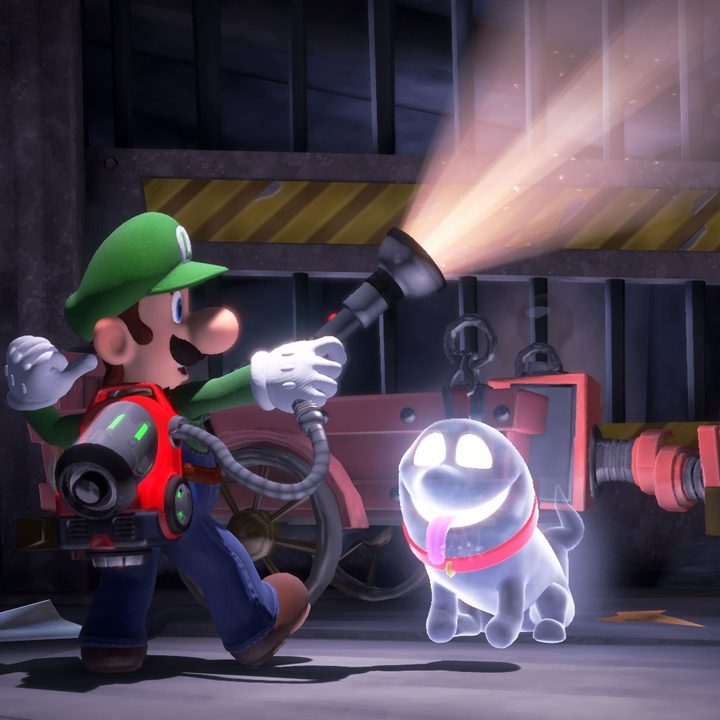
While it was ostensibly a business failure, with fewer consoles sold than either of its competitors, the GameCube remains beloved for its unique and different selection of games. It was one of the only Nintendo consoles to launch without a Mario game; instead, it had Luigi’s Mansion. (Super Mario Sunshine wouldn’t arrive for a while after.) It went on to launch the Pikmin and Animal Crossing franchises, and it gave us Super Smash Bros. Melee, which is still played in fighting game competitions around the world.
The Legend of Zelda: Wind Waker, the console’s primary Zelda entry, arguably received the most flack for its visual style. Coming after Ocarina of Time and Majora’s Mask, which had made huge strides for the series in the visual department, the cartoony, cell-shaded world of Wind Waker felt like a step back for many. Even so, in the years since, Wind Waker has become an esteemed classic, enough so to get an HD remaster on the Wii U almost eight years ago.
Almost no one remembers the GameCube for its processing power, output resolution, or refresh rate. Instead, they remember it for the experiences it brought them, the franchises and characters it introduced them to, and the amount of fun they had playing it.
Hold your 4K horses
As a PC or gaming enthusiast, it’s natural to want to see exactly what’s possible with your machine. With the right components and properly optimized games, the virtual worlds of our games start to look increasingly like the virtual worlds of our dreams. Locations like Hyrule in The Legend of Zelda: Breath of the Wild and the postapocalyptic (but colorful) reaches of the upcoming Kirby and the Forgotten Land are certainly enticing: What would they look like in 4K?
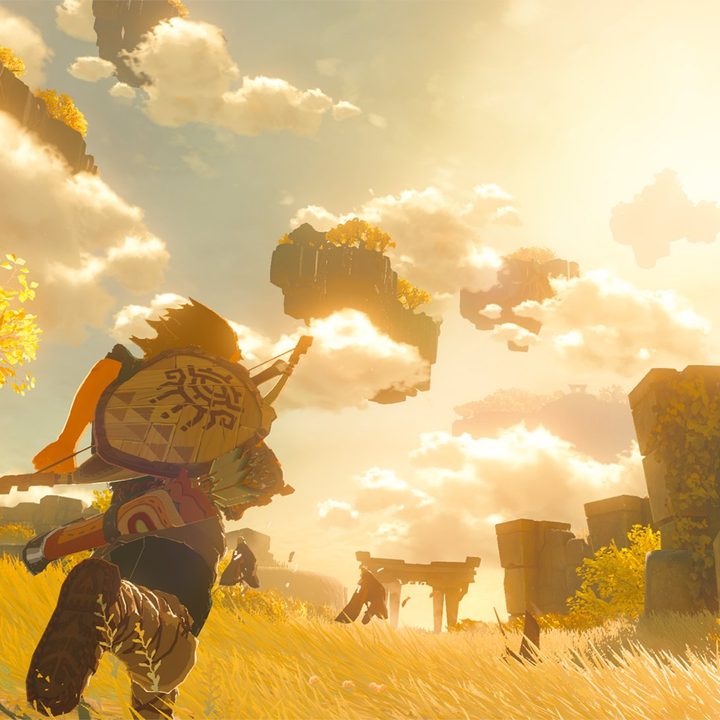
The answer is … not as good as you’d expect. Nintendo designs its first-party games to the limitations of its own consoles, ensuring that everything looks as good as can be on the hardware that’s provided. If it simply upscaled the Switch’s output resolution to 4K but left Breath of the Wild‘s and Kirby‘s graphics exactly the same, the upscaling would do little to increase their fidelity. These games just aren’t optimized for that kind of resolution. (See Super Monkey Ball Banana Mania, which upscales the original Super Monkey Ball‘s graphics to HD and 4K, but doesn’t do much to really enhance the game’s environments or add modern touches.) Nintendo would need to change the way it actually designs games for 4K to make a difference.
Sure, Nintendo could port or r-release versions of these games with enhanced visuals, but we’re probably at least a console generation away from an event like that. Games that typically struggle graphically on the Switch, like Apex Legends, are generally third-party games, which most people don’t buy Nintendo consoles for anyway.
As cool as it would be to get a 4K Switch (and as big a step it would be for the company), it’s simply not necessary or even worth it for Nintendo to release one. Nintendo’s defining trait isn’t cutting-edge visuals or system power; it’s strong gameplay, engaging characters, and that ever-elusive fun factor. If Nintendo released a 4K Switch, I doubt it would convince people who think of the console as inferior, underpowered, or aimed at kids to purchase one for themselves. Maybe one day we’ll see a 4K-capable console from the Big N, but for now, we’re already getting the OLED Switch. Can’t we just be satisfied with that?


