  1. Home
  2. Mobile
  3. Legacy Archives

Microsoft: Windows Phone 7 update failed for one in ten

Add as a preferred source on Google
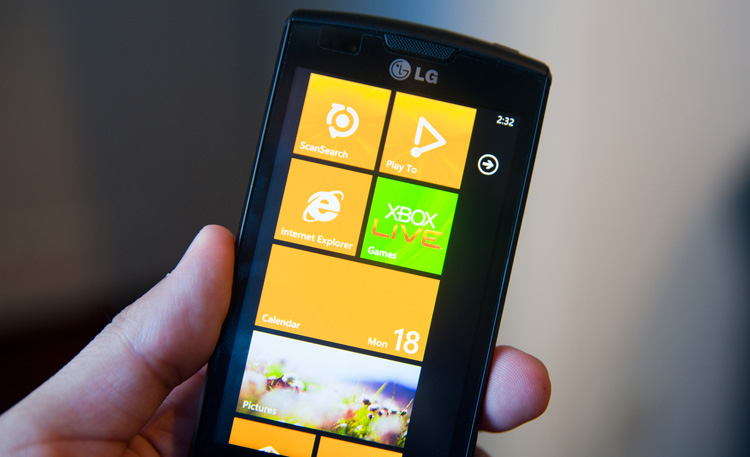
Image used with permission by copyright holder

Software giant Microsoft has published “more answers” about the status of its first update to its Windows Phone 7 software update, claiming that 90 percent of users who received an update notification were able to install the new software without any problems. In Microsoft’s estimation, then, 10 percent of users who received an update notice did have problems with the software—and that leaves aside an unknown number of users who have not received an update notice because Microsoft yanked the update for their devices.

A ten percent failure rate would seem to be considerably higher than the “small number of phones” Microsoft originally acknowledged were having issues installing the update. Microsoft introduced its first Windows Phone 7 update yesterday, and was immediately deluged with reports that the new software was rendering Samsung’s Omnia 7 devices inoperable. Microsoft then withdrew the update for Samsung devices.

Recommended Videos

Among the 10 percent of people who had problems, Microsoft says almost half of them had problems for reasons unrelated to their phone devices: poor Internet connectivity, or lack of storage space on their computer. Again, doing the math, that means more than half the failures were not caused by poor connectivity or insufficient storage.

Unlike many mobile operating system updates, Windows Phone 7 devices must be updated by tethering the phones to a PC, downloading the update to the PC, and updating the phone using either Microsoft’s Zune software (for Windows) or Windows Phone 7 Connector for Mac. No over-the-air updates are available.

Although Microsoft claims “the engineering team here was prepared,” the company claims few large-scale software updates ever go smoothly, and they intend to learn from the experience and improving the process for future updates. However, the update gaffe comes at a difficult time for the Windows Phone 7 platform, which is facing strong industry skepticism that—even with Nokia on board as a powerful OEM—it can build momentum to compete with the likes of Apple’s iOS, Android, and RIM’s BlackBerry platform.

Geoff Duncan
Former Contributor
Geoff Duncan writes, programs, edits, plays music, and delights in making software misbehave. He's probably the only member…
Snapchat Planets: What’s the order, and what do they mean?
Snapchat Planets turns your best friends list into a solar system, and yes, your orbit says a lot
Snapchat Planets being shown on the Snapchat app on iPhone.

Snapchat is already packed with little symbols that can be weirdly hard to decode. You have streaks, emojis, badges, scores, Best Friends, and if you use Snapchat Plus, a tiny solar system that shows where you sit in someone’s closest-friends list.

The feature is called Friend Solar System, though most people just call it Snapchat Planets. It takes your position in a friend’s Snapchat orbit and turns it into a planet. From Mercury to Neptune, these celestial bodies signify how close a person is to you.

Read more
How to use WhatsApp Web
We'll show you how to use WhatsApp on your desktop or laptop
WhatsApp Web

As one of the most popular messaging services, you’ve already heard of WhatsApp. From its humble beginnings in 2009—two years before Apple introduced iMessage—to its acquisition by Facebook (now Meta) in 2014, WhatsApp has become the dominant messaging platform around the globe.

In recent years, it's grown even more potent with new features like video messages, self-destructing voice messages, the ability to edit sent messages, and more. We even finally got an WhatsApp iPad app in May 2025.

Read more
What is WhatsApp? How to use the app, tips, tricks, and more
From setting it up to mastering hidden features, here is your complete guide to WhatsApp.
WhatsApp app store listing open on iPhone

There's no shortage of messaging apps out there. The past decade has given us more options than we know what to do with, largely because smartphones demanded something better than plain old SMS.

Both the App Store and the Play Store are packed with apps that promise to revolutionize the way we communicate. Most of them didn't make it. The truth is, a messaging app is only as good as the number of people using it, and most apps never cross that threshold.

Read more