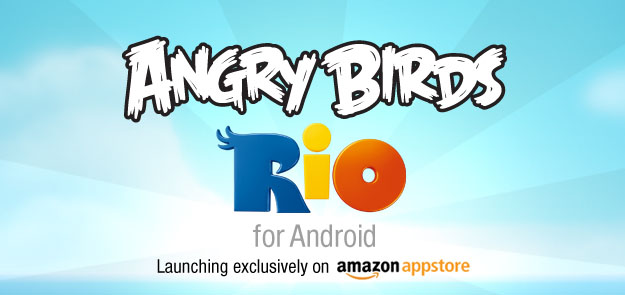
 The birds don’t have anything to be angry about this morning. Amazon has officially launched its Appstore for Android, celebrating the release with a free download of Angry Birds Rio to encourage people to check out the newness. The app will reset to its still-low price of $0.99 after today, but plenty of Android users are sure to jump on the promotion for the insanely popular mobile game before then.
There are two options available for accessing the Appstore: anyone with an Android phone can either download it straight to their device or head over to amazon.com/appstore for web access. Both options offer users access to the more than 3,800 apps that are available at launch, though the web-based frontend also offers access to Amazon’s Test Drive feature, which takes advantage of the online retailer’s cloud services. Using this, people are able to play around with any app in a browser window for 30 minutes. Amazon also intends to offer one app for free per day to help get things going for the newly launched Appstore.
This comes on the heels of the news late last week that Amazon will be setting its own Appstore prices, some of which will undercut identical offerings in Google‘s Android Market. The Android operating system offers a more open environment to operate in than Apple’s closed App Store model, which is why we’re not seeing a similar offering for iPhones and iPad.
The question people have been asking is whether Amazon’s entry into the app store space is helpful or harmful to the Android user base. Competition is healthy of course, and Google’s openness in allowing such a thing to exist on Android phones stands in stark contrast to Apple’s own approach. It could also serve to fragment the Android community as users are faced with a choice between purchasing the same apps from two different sources.
While Amazon’s 3,800+ offering of launch apps sounds healthy enough, the number falls far short of Android’s 200,000+. Many of those core 3,800 are among the most in-demand items, but there’s still a lot of ground to be covered before Amazon can be considered on the same level as Android Market.