
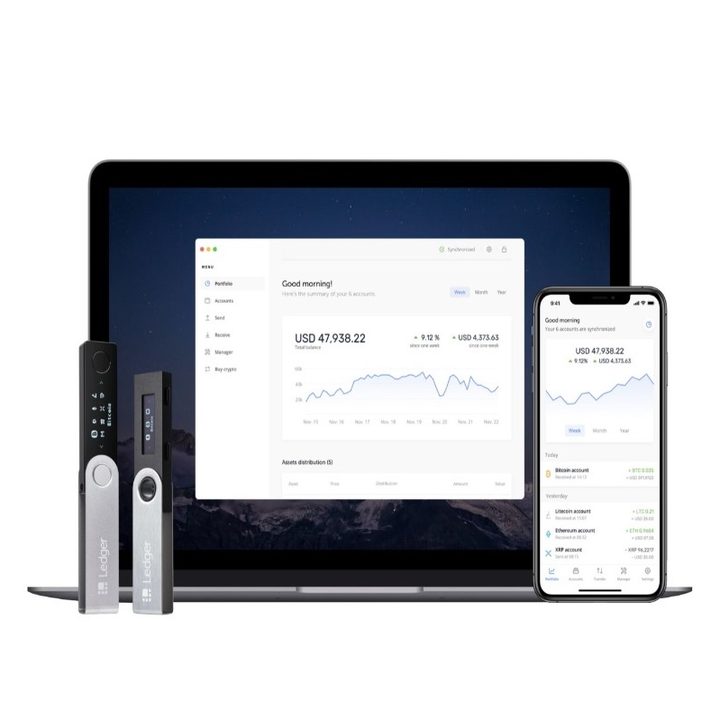
Not your keys, not your coins. It’s an incredibly simple concept but it means everything in the world of cryptocurrency. If you store your coins on an exchange, it may seem like you own them, until you run into any number of prevalent obstacles. For example, if you try to withdraw more cryptocurrency than the platform allows — yes, there’s usually a limit — you’ll be denied.
But this isn’t a problem relegated just to exchanges, it can also happen with any wallet provider that doesn’t allow you to own the private keys. Leaving them in the custody of a third party is never a good idea. And that’s precisely why you need a hardware wallet, like Ledger. It is the most secure platform for all of your crypto needs, and it will keep your keys — and coins — safe.
Here are just a few things that Ledger’s hardware wallets provide, beyond unmatched security:
Ease of use and versatility
Ledger can be used to securely store all of your crypto, like a personal bank vault, locking away your private keys, which only you can access. That means you get full ownership of all your assets. But Ledger also adds some incredibly convenient functionality, making the hardware wallets more versatile than ever.
You can also buy, sell, exchange, and earn crypto, securely, through a variety of providers directly via the Ledger Live app. Some examples include Wyre, Paraswap, Coinify, Changelly, and more. You can decide exactly where your crypto goes and what’s done with it.
Ledger also provides access so you can manage your NFT or DeFI portfolio through other external providers, from within its application.
One key to rule them all

When setting up your Ledger device for the first time, it will generate a list of 24 words, a master key, if you will. That one key rules them all, allowing you to manage all of your private keys stored on your wallet. It serves as the only backup of your crypto assets — and it’s extremely important.
Your private keys remain offline, secure within the hardware wallet. Nobody can access or use the wallet — or any stored funds — besides you. The secure element inside the device is the same type of chip used in credit cards and passports. In addition, you see what you sign, meaning man in the middle attacks are not possible because you’ll need human interaction through the embedded buttons on the device. Each requested action, whether buying or lending crypto, must be verified and validated with the Ledger hardware wallet.
What are Ledger’s hardware wallets?
Currently, there are two hardware wallets available through Ledger, and both include the same security standards. You can check out our direct comparison of the Nano S versus X, or read more about each below.
Ledger Nano S – $59

The Ledger Nano S is one of the best ways to hold and store your crypto. You can install three to 20 apps total, and you’ll gain access to Ledger’s desktop software. The Nano S also comes in several colors, so you can choose your favorite.
Ledger Nano X – $119

The Ledger Nano X is for crypto enthusiasts with a lot to store. You can install up to 100 apps, and it supports on-the-go Bluetooth access. Sync up with your mobile device or smartphone using Ledger’s app, to check your portfolio, trade, and more.
If you want more than one device, you can also order Ledger hardware wallets in a bundle of three, or more — Ledger’s Family Pack S includes three Nano S wallets.
The dedicated and trusty mobile app
Of course, another important aspect of using Ledger’s hardware wallet is that you gain access to the dedicated mobile or desktop app. From within the app, you can check your balance, review your portfolio, send or receive crypto, buy more, sell crypto for fiat, exchange for another currency, and more. The app is accessible online through a web browser, as well, so you can always check from a laptop or desktop if you prefer.
Ledger Live is a huge part of the experience. You can easily manage your crypto, wallet, and portfolio all from one place. It’s easy, it’s safe, but most of all it’s convenient — no fumbling around with a collection of apps, exchanges, and so on. The app, combined with a Ledger hardware wallet, is a secure gateway to buy and grow your crypto portfolio.


