  1. Home
  2. Computing
  3. Emerging Tech
  4. Mobile
  5. Legacy Archives

SanDisk buying SSD maker Pliant for $327 million

Add as a preferred source on Google
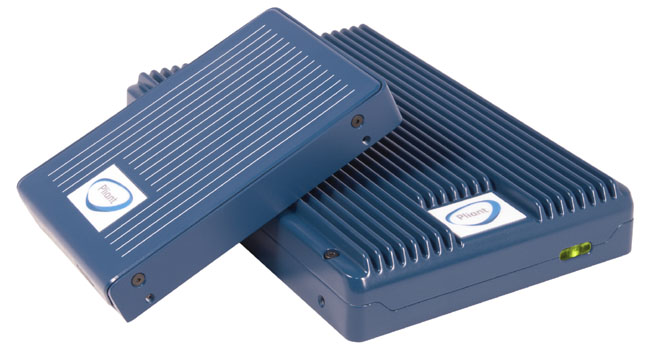
Pliant SSDs
Image used with permission by copyright holder

Flash memory manufacturer SanDisk is betting heavily on the future of solid-state storage: the company has reached a deal to acquire solid-state drive maker Pliant for some $327 million in cash and equity-based incentives. Pliant makes high-performance SAS solid-state drives designed for enterprise and data center storage solutions, and is working on rolling out PCIe-based storage systems for high-performance servers. The move is strategic for SanDisk—while the company manufacturers flash memory for a wide variety of applications, the company has historically leaned towards consumer products and storage devices for portable devices like phones, cameras, and media players. Buying Pliant puts SanDisk in the enterprise and corporate markets.

“We believe that the combination of Pliant’s innovative technology and enterprise-level system expertise with SanDisk’s high-quality, large-scale MLC memory production is a winning value proposition for customers,” said SanDisk president and CEO Sanjay Mehrotra, in a statement. “Our advanced flash technology roadmap and flash management capability will complement Pliant’s strengths and allow us to lead the way in reliability and performance in the enterprise SSD market.”

Recommended Videos

Businesses and data centers are increasingly looking towards SSD storage for high reliability with lower power consumption than traditional hard drives. Although solid-state storage is still considerably more expensive than hard drives on a cost-per-gigabyte basis, the costs of flash memory are falling rapidly. Pliant has been a leader in developing multi-level cell (MLC) NAND solutions for enterprise systems—MLC technology enables each cell in flash memory to store more than one bit of information, increasing storage density, often at the cost of higher error rates. Pliant’s technology has been focused on low-error MLC flash storage.

SanDisk expects the deal to close by the end of its second fiscal quarter, subject to regulatory approval. The boards of both companies have already approved the deal.

Geoff Duncan
Former Contributor
Geoff Duncan writes, programs, edits, plays music, and delights in making software misbehave. He's probably the only member…
The maker of ChatGPT wants to make open-source projects less of a security bargain
OpenAI launches Patch the Planet for open-source security, with over 30 open-source projects on board.
openai-chatgpt-os

OpenAI has launched Patch the Planet, a new initiative aimed at fixing one of the internet's quietest problems – the chronically underfunded security of open-source software.

Patch the Planet pairs OpenAI's most security-capable AI models with Trail of Bits, a security firm that has committed its entire research organization to the effort, alongside support from HackerOne and Calif.

Read more
I sifted through the Prime Day chaos to find the best Apple deals actually worth buying
Apple's about to hike prices. Prime Day 2026 is your last chance to save up to $150 on MacBooks, AirPods, and iPads.
Prime Day Deals on Apple Products

Apple is set to increase the prices for its upcoming iPhones and MacBooks, as the company can no longer offset the rising RAM and storage costs. That means, if you are looking to upgrade your aging device, you should buy the current-generation Apple products rather than wait for the new ones.

And since Amazon Prime Day is offering good discounts on the latest iPhones, iPads, MacBooks, and other Apple accessories, this is the perfect time to buy them. Here are my favorite Amazon Prime Day deals for Apple products. 

Read more
This sneaky photo trick gets AI chatbots to ignore their safety rules
Florida International University researchers built a method that nearly doubled the rate of harmful responses from a tested AI model using nothing but pixel-level edits in an image.
JaiLIP AI chatbot exploit image

A photo that looks completely ordinary to you could carry a hidden instruction to trick an AI chatbot into ignoring its safety rules, according to new research out of Florida International University. The study found that pixel-level alterations in an image that are invisible to the human eye can be enough to confuse the model reading the image and lead it to generate responses it would normally block.

Hacking what the AI sees

Read more