
Lenovo is taking on Google and Microsoft in the conference room with its new ThinkVision large-format smart displays, one of which stretches out to a massive 86 inches.
These new monitors are designed to take on Google’s Series One panels and Microsoft’s Surface Hub, making a play for large conference rooms in a hybrid work environment.
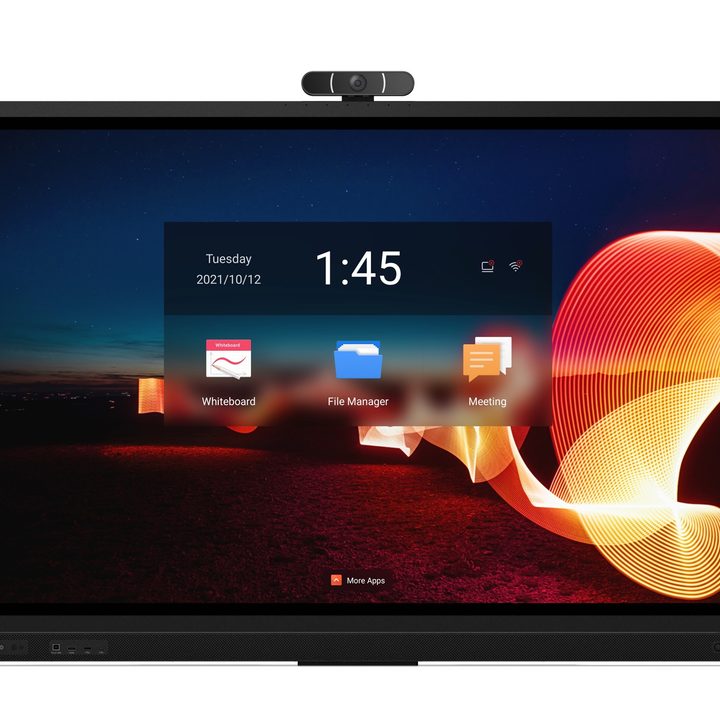
The new ThinkVision panels will be available in a 65-inch ThinkVision T65 model, a 75-inch ThinkVision T75, and a premium and large 86-inch ThinkVision T86. But unlike its more costly competitors — Microsoft’s Surface Hub 2S starts at $22,000 — the 65-inch Lenovo ThinkVision T65 will retail for less than one-quarter of that price at $4,999.
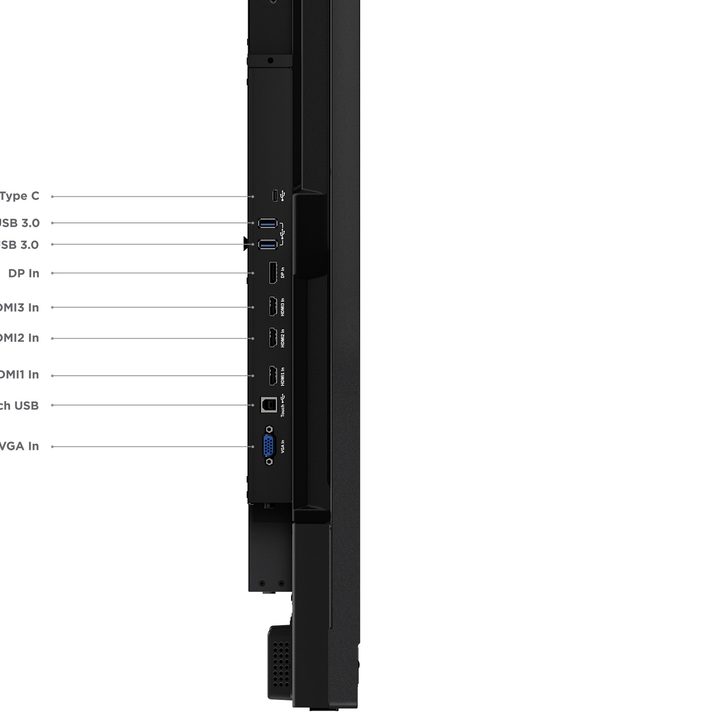
Similar to other smart videoconferencing solutions designed for the conference room, the ThinkVision supports touchscreen functionality with accurate IR technology, a 4K resolution panel with up to 400 nits of brightness, antiglare coating to minimize reflections and glare in bright offices, wireless projection support with a wireless dongle to mirror laptop screens for presentations, and multiple input and output ports to connect an array of devices utilizing USB-C, HDMI, DisplayPort, Ethernet, audio, and serial interfaces.
The ThinkVision series can be used both as a videoconferencing solution — it comes with a detachable 4K webcam that’s A..-powered to track the speaker, along with dual 15-watt speakers and a built-in eight-array microphone — as well as a whiteboard for collaboration, making it a terrific solution for offices that support hybrid work.
As a whiteboard, you can share ideas using your fingers, annotate presentations with a stylus, and even take notes on the screen with a lag-free writing experience. Up to 20 touch input points are simultaneously supported, which means multiple people can be writing or drawing on the screen at the same time for ease of collaboration.
Powering the ThinkVision panel is a quad-core ARM Cortex A73 system on a chip that supports 4GB of memory and 64GB of storage.
Lenovo says the processor comes with embedded Android that powers a custom user interface that includes the company’s Smart Whiteboard experience, support for various widgets on the display, and smart features like automatic brightness adjustments, privacy protection, and presence detection, the last of which will automatically shut off the unit when everyone has left the conference room.
All three versions of the ThinkVision interactive display come with an IPS panel that has a refresh rate of 60Hz and supports 85% of the NTSC color space.
The screens are HDR compliant, supporting HDR10. While the T65 starts at $4,999, the T75 will cost $6,999 and the T86 will retail for $7,999.


