
One year after Google shuttered the internal game development studio for its struggling cloud gaming service Google Stadia, a report from Business Insider gives a clear idea of what’s next for the tech giant’s gaming efforts. It’s reportedly moving away from making a cloud gaming platform where subscribers buy and play games. Instead, Google will use the technology in partnerships with major third-party companies under the moniker Google Stream.
As someone who has actively played Stadia since its November 2019 launch, the slow downfall of the platform has been painful. Still, Google executives never had their heart in Stadia’s potential as a commercial platform. Google Stream is what Stadia should’ve been from the start if Google wasn’t going to commit to gaming fully and, hopefully, it will play a part in cloud gaming’s bright future.
From Stadia to Stream
In retrospect, this endpoint for Google Stadia was inevitable. According to Business Insider, Google is pitching Google Stream to businesses as a backend cloud gaming technology that doesn’t necessarily need to be tied to the Stadia storefront. It already partnered with the exercise company Peleton and AT&T last year on different projects. Instead of putting effort into getting more exclusives or AAA games on Stadia, it’s getting more companies to white-label Google Stream. (That’s where a product or service produced by one company is rebranded by other companies to make it appear as if they had made it.)
It apparently pitched Google Stream to Bungie, which released Destiny 2 as a flagship Stadia title and was interested in making a streaming platform of its own. While the status of that deal is now in question due to Sony’s acquisition of Bungie, Google is also reportedly in negotiations with Capcom, which is interested in running game demos straight from its website using Google Stream.
Some Google employees even want to see how Google Stream works with nongaming tasks that require a lot of power, like 3D modeling. While these deals all might seem weird to those who’ve played Destiny 2 or Resident Evil Village on Stadia, they play to the strengths of cloud gaming and Google’s technology.
It’s better downstream
Out of every notable cloud gaming service I’ve tried, Stadia has the most consistently smooth and good-looking experience. As long as I had a stable internet connection, Stadia worked anywhere and anytime I chose. Google Stream would offer a solid infrastructure for companies that want a cloud-based experience, but can’t invest in the technology itself.
Quick demos are also an excellent use for cloud gaming technology. When I needed to boot up a game to check something out or write a guide for it, I appreciated being able to load Stadia or Xbox Cloud Gaming and quickly get what I needed without waiting for a game to install. This benefit also applies to demos, and I’ve always been shocked that Google never leaned into that strength more. Maybe its Stadia Connect presentations would have been a lot more impactful if I had been able to try the games immediately via cloud-based demos afterward.
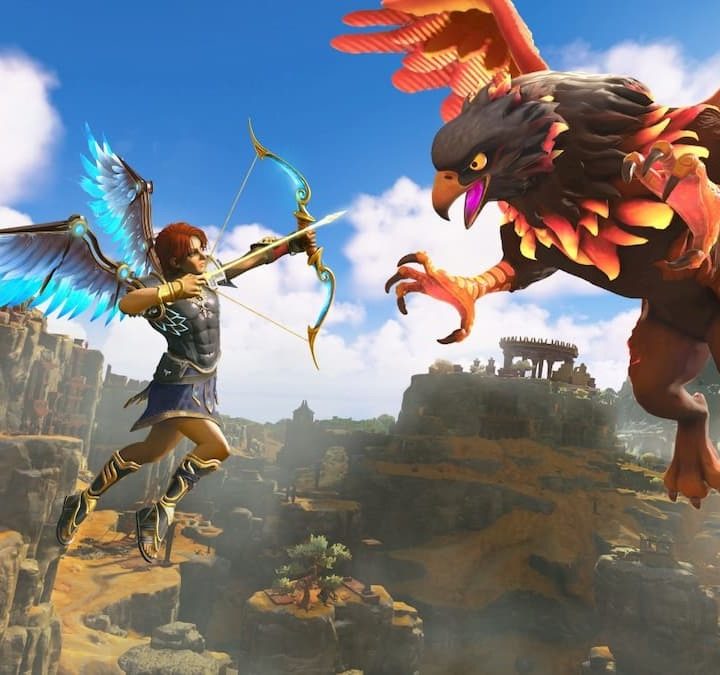
Stadia’s biggest problem was always its game library because that was something that Google would never go all-in on. Yet, it tried to create a development studio and court big third-parties to bring its games to a whole new platform. Game development takes time, so Google settled for launch window exclusives that didn’t take advantage of cloud technology and third-party games that were a year or two old by the time Stadia was out. Google then tried to double down on that approach as Xbox Game Pass Ultimate’s fantastic library dwarfed Stadia’s catalog.
Google took too long to assess the cloud gaming landscape and is now doing what it should have in 2019. I am disappointed that the unique Stadia experiences promised in Google’s GDC 2019 talk will never come to fruition, but Google was never equipped to do that. This partnership-based approach will mean more people will see the great parts of Google Stadia without dealing with the bad.
With Stadia, Google tried to replace console gaming with the cloud. Instead, Google ultimately confirmed that cloud gaming is at its best when it supports a player’s gaming experience, not when it’s the primary experience.


