
A new leak suggests that the upcoming Nvidia Ada Lovelace graphics cards may not differ that much from the current-gen RTX 30-series GPUs.
Although the cards are expected to offer a performance jump, a known Nvidia leaker suggests that in terms of architecture, they will still resemble Nvidia’s Ampere line.
https://twitter.com/greymon55/status/1489934052723281924
Sometimes, all it takes is a small hint to point in an interesting direction. Greymon55 on Twitter shared a quick comment that suggests the upcoming Ada Lovelace cards will not provide any significant architectural changes over existing Nvidia GPUs.
On the surface, this sounds like bad news, but it doesn’t have to be. In fact, this isn’t really news if you go by leaks alone — another known leaker, kopite7kimi, said much the same in a tweet in June 2021. But what does this mean for the performance of Ada Lovelace GPUs?
There should be no doubt that RTX 40-series graphics cards will be faster than RTX 30-series GPUs, and this is true regardless of their architecture. We can expect an increase in clock speeds, memory bandwidth, CUDA cores, tensor cores, ray tracing cores, teraflops, and overall performance. Let’s not forget power consumption — early leaks suggest that Ada Lovelace GPUs will be power-hungry beasts.
The difference between current-gen Nvidia graphics cards and their upcoming RTX 40-series successors lies in the process node used. Ampere GPUs are manufactured on Samsung’s 8nm process, which is similar to its 10nm node. However, Lovelace GPUs are going to use TSMC’s 5nm node, allowing them to pack more shade clusters than the current generation of Nvidia cards.
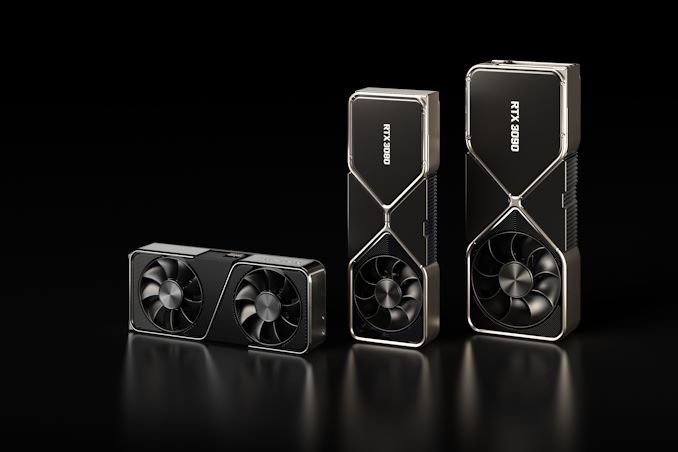
Switching to a 5nm node should significantly help Nvidia in terms of the process node, as it’s currently at a disadvantage when compared to AMD RDNA 2 cards that run on TSMC’s 7nm node. Starting with the next generation, both Team Green and Team Red are supposed to switch to TSMC’s 5nm node.
It’s possible that Nvidia and AMD cards may vary in different ways starting from this year’s generations. Recent rumors suggest that AMD may equip some of its RDNA 3 graphics cards with multi-chip module (MCM) technology. This involves integrating multiple GPU modules into a single package, adding extra power without increasing the size of the GPU chip. While Nvidia is also rumored to eventually integrate MCM into its cards, we may not see this technology in Ada Lovelace GPUs.
While many of us are still fighting to get our hands on one of the best graphics cards (or just any GPU whatsoever,) both Nvidia and AMD are already looking to the future, and 2022 is shaping up to be a big year. With the upcoming launch of Ada Lovelace and AMD RDNA 3 GPUs, we can only hope that the market situation improves enough for gamers to actually get their hardware.


