
Qualcomm has just unveiled the Snapdragon X70, the latest advancement in its 5G modem technology, which promises to deliver an even better 5G experience for the next generation of smartphones and tablets.
A successor to the Snapdragon X65 found in this year’s Samsung Galaxy S22 flagship smartphone lineup, the X70 boasts even more powerful capabilities thanks to new A.I. features.
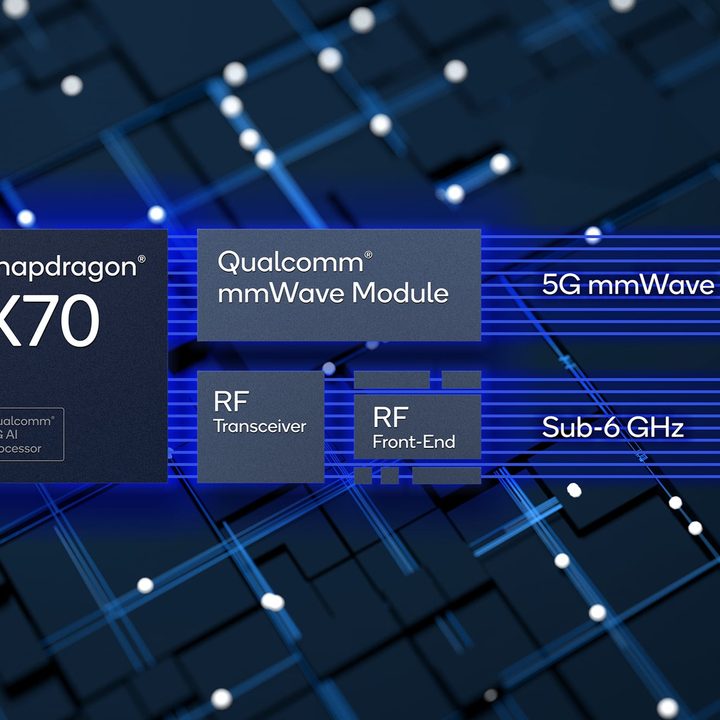
In fact, Qualcomm bills the Snapdragon X70 as “the world’s first 5G A.I. processor,” designed to use machine learning to provide the best possible 5G performance while also ensuring low latency and the kind of power efficiency that’s needed for mobile devices.
What the Snapdragon X70 brings to the table
Over the past couple of generations of Snapdragon 5G chips, Qualcomm has been putting more emphasis on signal reception. The Snapdragon X65 offered a new algorithm that helped to maximize signal strength by adjusting radio power dynamically based on how someone is holding and using their smartphone.
The X70 is taking that to the next level, with a whole suite of A.I.-based features that cover everything from mmWave beam management and antenna tuning to network selection and power consumption.
It’s not just about maximizing performance, either. Qualcomm also adds that the X70 will support every commercial 5G band from the base 600MHz up to 41GHz, at the top of the mmWave spectrum. This will help smartphone makers build the best devices possible for each of their global markets.
The Snapdragon X70 offers the same 10 gigabit 5G peak download speeds of the X65, but the new A.I. features, along with 4x downlink carrier aggregation, will get it much closer to achieving those speeds. Qualcomm’s third-generation PowerSave technology and 4nm chip design allows it to do this at significantly less power than before, which means longer battery life.
In the company’s press release, Durga Malladi, Qualcomm’s senior vice president of 5G, Mobile Broadband and Infrastructure, adds that the “Snapdragon X70 is an example of how we’re realizing the full potential of 5G and making an intelligently connected world possible.”
The Snapdragon X70 will begin landing in smartphone maker’s hands later this year. This means the first devices to include it could arrive by the end of 2022, and it’s fair to say that it will likely form the core of next year’s Samsung S23 smartphones. Meanwhile, Apple has yet to implement the Snapdragon X65; rumor has it that the X65 will come to the iPhone 14 this fall, but that also means Apple fans will have to wait until late 2023 to see this next generation of 5G modem technology.


