
Intel revealed its discrete Arc Alchemist mobile graphics cards on Wednesday, along with the announcement of two key features for PC gaming. Intel seems on a mission to kill one PC gaming’s oldest and most reviled features: V-Sync.
V-Sync, or Vertical Synchronization, prevents screen tearing in PC games. It essentially holds a buffer that feeds frames to the display so that there aren’t two frames showing up at the same time. It’s an antiquated solution, one that leads to input lag and locked frame rates in PC games. Intel has two new features to give V-Sync a makeover: Speed Sync and Smooth Sync.
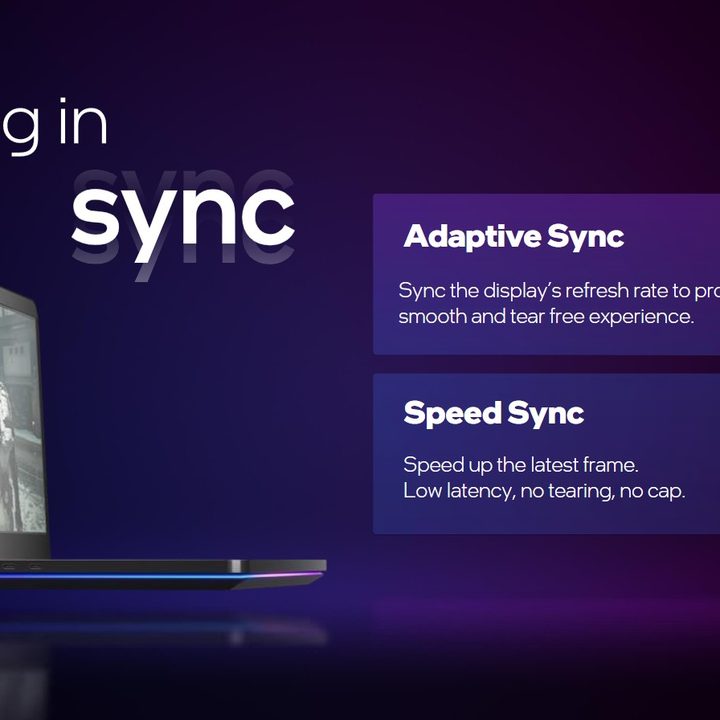
Speed Sync is basically V-Sync with the downsides excluded. It virtualizes the frame buffer, and it can adapt to your game in real time. Instead of waiting on frames to get through the buffer, which increases input lag as a result, Speed Sync can send the latest frame live as soon as the monitor refreshes. It also doesn’t cap your frame rate.
It’s essentially a version of Nvidia’s Fast Sync, which is a bit of tech the company introduced with its GTX 10-series (Pascal) graphics cards. AMD has its Enhanced Sync feature, which functions in the same way.
Smooth Sync is a surprisingly simple bit of tech. It simply blurs the line where a screen tear occurs so it’s less noticeable. Intel uses a dithering filter right on the edge where the tear occurs, and although you can still see the split image, it’s not as jarring as a full-on screen tear.
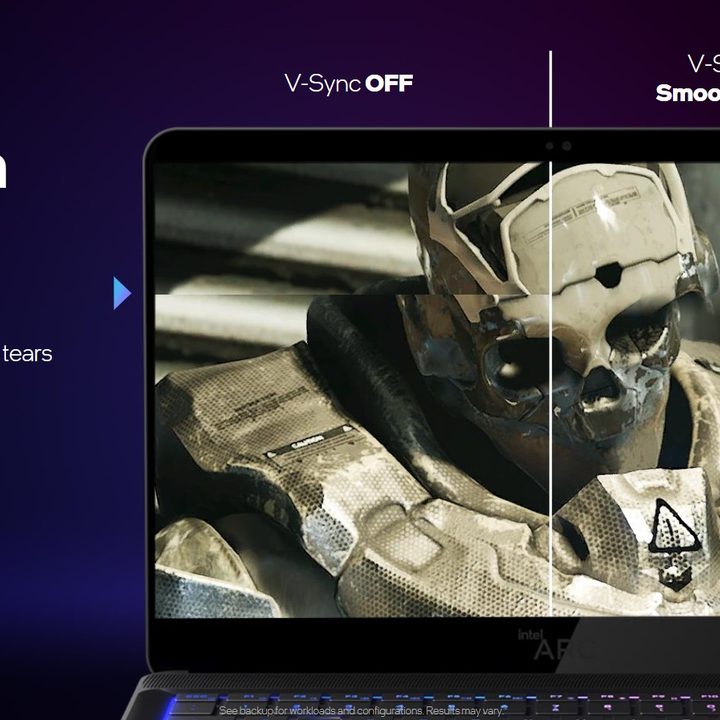
This will likely be relevant in esports and other titles that can run at a high frame rate, such as Counter-Strike: Global Offensive. At higher frame rates, there are a greater number of less noticeable tears, so a feature like Smooth Sync could make those tears irrelevant.
V-Sync has slowly fallen out of favor as adaptive refresh rate monitors have hit the market. Nvidia’s G-Sync led the charge, with a proprietary module that increased the prices of monitors. AMD came back with FreeSync, an open-source adaptive sync technology that could work without dedicated hardware.
Most monitors fall under the FreeSync or G-Sync umbrellas these days, making V-Sync largely irrelevant. Not all monitors do, however. Speed Sync and Smooth Sync look to improve monitors that have a fixed refresh rate, as well as improve image quality in titles where you want to leave adaptive sync off.
It’s nice to see Speed Sync, but it’s hardly surprising considering AMD and Nvidia have competing technologies. Smooth Sync is something different. If done properly, it could be an elegant solution for esports titles running at high frame rates. As with everything when it comes to Intel Arc Alchemist, however, we’re reserving judgment until we have the cards in-hand.


