
Today’s Android smartphone landscape is as complicated as it is crowded. From top-tier stalwarts like Google and Samsung to overseas newcomers like Xiaomi and Poco, phone manufacturers cover the gamut and appeal to every taste. But if there’s one positive thing to come out of the near-paralyzing number of choices, it’s this: The best cheap Android smartphones are getting really good.
The Blu F91 5G is a prime example of the confounding nature of this side of the market. On the one hand, Blu is just not a brand that has much market share, let alone cachet. To be fair, Blu is a brand headquartered out of Miami and has some experience manufacturing niche phones under different brands (including the rugged, budget-friendly Doogee name).
But on the other hand, when a budget brand like this wades into the mid-tier market with a 5G offering, it’s typically trying to appeal to people with limited money to spend who are willing to cut corners on some features. But where the Blu F91 cuts its corners is what interested me the most when I started testing it.
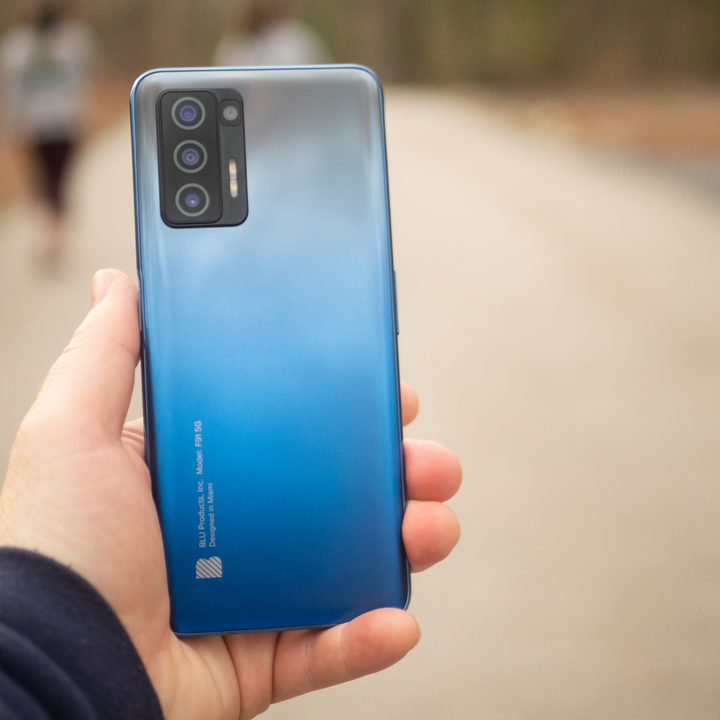
Design and display: A bright and bold combo
Blu stands for “Bold Like Us,” and marketing platitudes aside, that adage comes through quite strongly in the F91. The phone comes in one colorway, fittingly called “Oceanic Blue.” Upon inspection, the back of the phone is a pleasant, sapphire-like shade. The tendency for budget Androids to go for bolder, more effervescent colors is certainly not new, but I really like how this phone looks.
The display, on the other hand, is not as simple of a concept. On paper, Blu reports that the F91 features a 6.8-inch, full HD Infinity Dot display with 369 pixels per inch. From a resolution standpoint, the screen is pretty solid. Because it is an IPS display, you won’t find any inky blacks here, and on my unit, the backlighting showed plenty of bleed around the edges.
But what I just couldn’t wrap my head around was the actual experience of looking at the display. There was just something odd about the color management on the panel. Right out of the box, the display was set to max brightness, but even at halfway down the brightness slider, I found the display to be astonishingly bright—much brighter than I’m used to for this class of phone. But that came with the perhaps unintentional side effect of blowing out the colors. This was great for watching YouTube videos and scrolling Instagram, but I don’t think it would be great for color accuracy or long-term business use.

The hardware: Fast, clean, and picture-friendly
With most of the budget-friendly Android phones on the market, the manufacturer has to make a decision: Where do you cut back to keep the price low? Usually there are trade-offs at play, and with the Blu F91, that is certainly true — though there aren’t nearly as many trade-offs as you might think. During my time with the Blu F91, I was continually impressed with just how many ways in which this phone delivers.
While the jury is out on whether a super-bright, non-color-accurate screen is serviceable, it did really accentuate how fast and stable the processor is. Under the hood, the F91 is running an ARM-based MediaTek Dimensity 810 Octa-Core chip. While I don’t usually love using benchmarks from third-party apps as a corollary, Blu’s reviewer’s guide for the phone actually highlighted some pretty impressive comparison numbers. But in my day-to-day operation of the phone, it felt much snappier than even many of the mid-tier Android’s I’ve tried — even from heavyweights like Moto and Samsung.


- 1. Standard lens
- 2. Standard lens
- 3. Wide-angle lens
- 4. Wide-angle lens
- 5. Standard lens
- 6. Standard lens, 1.5x zoom
- 7. Standard lens
- 8. Standard lens, portrait mode
- 9. Wide-angle lens
- 10. Macro mode
- 11. Standard selfie
- 12. Portrait selfie
- 13. Standard lens
- 14. Macro mode
Then there’s the camera. Alongside the processor and the display resolution, the camera is clearly an area Blu has focused a lot of the budget toward. With a 48MP, Samsung-manufactured GM1 sensor, plus additional 5MP wide-angle and 2MP macro lens setups, there’s quite the arsenal on this reasonably priced phone. In practice, the photos are, well, decent! They aren’t award-winning, mostly because you won’t find any high-end software to run a comb through the pics (the portrait mode’s woefully kitschy bokeh effect is particularly egregious, and the macro option is really hit-or-miss depending on your subject). But the high megapixel count and the solid lens options yielded plenty of reasonable shots in lots of different lighting.
This is Blu’s first official foray into the 5G space, a category in which we’ve been seeing more and more budget phones. I live in a semi-suburban area with some decently large swaths of rural area, and with my T-Mobile sim card, I was able to get the same performance as I’d get with my Verizon-compatible 5G phones. It is important to note that coverage depends on your area, and which flavor of 5G your area is in range of. Because the Blu F91 5G is a GSM phone, it won’t be compatible with certain U.S. carriers like Verizon, but you will get connectivity with AT&T, T-Mobile, and Metro — and you can take advantage of dual-sim functionality for international use cases.
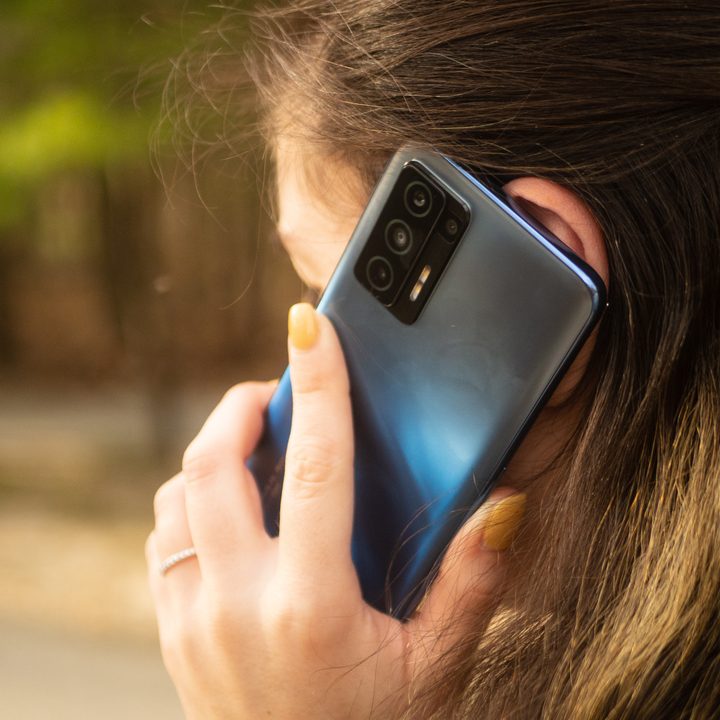
The drawbacks: Build quality, battery, and quirks
Seeing as this is a sub-$300 phone, it isn’t all good news for the spec hunters. While I really love the color of the Oceanic Blu chassis, and I actually don’t mind the feel of plastic in my hands, it’s clear to me that over time, you’ll put some wear on this phone.
Then there’s the battery. Blu says you’ll get “up to three days” out of the 5,000 mAh battery in this phone. While that is certainly a massive battery, my average-to-heavy use of the phone put that total closer to 36 hours at best. To be fair, any phone that can get you through more than a day of use on a single charge will be more than enough for most users. But I don’t love it when a phone manufacturer advertises outlandish battery totals, especially when so many people buy a phone based on battery life alone.
There are also little performance quirks. I said I liked the processing power, and I stand by that. But the 128GB capacity just feels a little low here (especially when you can technically record 4K video on the phone). What’s more is that the expandable SD card slot only accommodates up to 256GB of additional storage. That’s a good amount of space, but it should have been just as easy to allow 500GB or a TB into the party.
One thing to keep in mind with a budget Android phone is that there are B-list trade-offs you’re making — aka the features you didn’t think you’d notice, but that show their rough edges in typical day-to-day use. For instance, the “haptic feedback” when typing is little more than a clunky burst of vibration (a far cry from Apple’s award-winning haptic engine). This is something I always turn off, but it’s an area that shows the budget price on a phone like this.
There are other little things — while the phone claims it can accommodate 18-watt wired charging and 10W wireless charging, I never seemed to get what I would consider a fast-charging performance out of the phone. I also am skeptical about how long this phone will hold up over time. MediaTek has gained a ton of steam as an system on a chip manufacturer in recent years, but in my hands-on testing, I tend to find better performance and better support with Qualcomm chips (especially on the flagship side). But your mileage may vary.
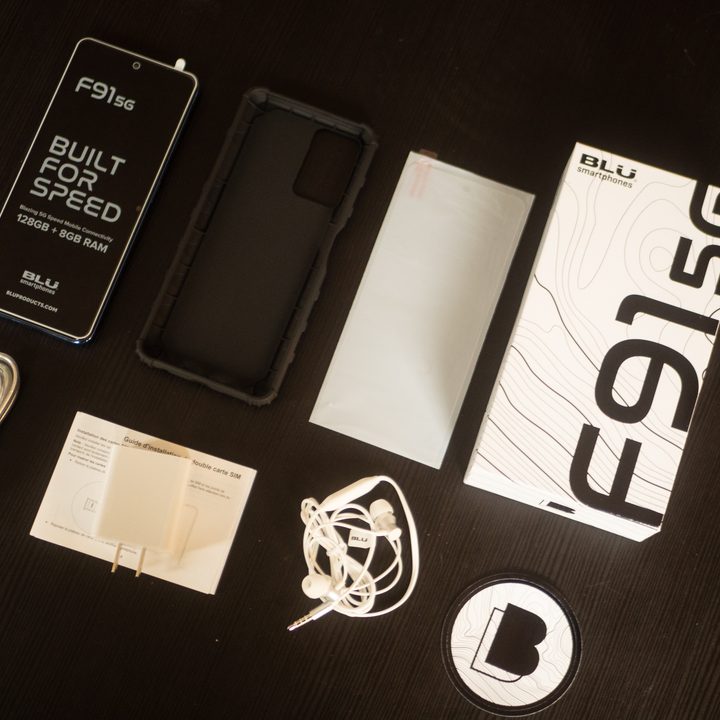
The extras: Smoke, mirrors, and fun little touches
One thing most people tend to forget about budget Android phones (if they’re like me, at least) is that there are a lot of little extras you get, even if you are missing out on some fundamentals. Take the accessories pack that comes standard with the F91. Not only do you get an 18W charging brick in the box — a refreshing inclusion when flagships leave out any charging brick nowadays — but you also get a high-quality USB-C cable, a tempered glass screen protector, and a (surprisingly great!) TPU case. This is really nice because it allows you to unbox your phone, set it up, and keep it protected right when you get it.
I was also happy to see a full suite of biometric options. There’s a side-mounted fingerprint reader that’s really snappy, and a rudimentary face unlock option for those who prefer a touch-free experience. And here’s a real kicker: This phone comes with a headphone jack! And you even get a pair of pretty-solid wired earbuds right in the box. While the headphone jack is becoming less and less necessary, it’s still something I like to see on a phone that could have easily been left off.
Price and availability
The Blu F91 5G will be available unlocked later this month for a launch price of $299. You can buy it on or on Blu’s website. It will be compatible with Blu’s typical slate of GSM carriers including AT&T and T-Mobile.
Conclusion: Pretty good!
All in all, the Blu F91 5G is a more-than-serviceable phone if it were in the $400 to 500 range, but at sub-$300, it is pretty impressive. While there are certainly trade-offs, there aren’t as many as I’ve seen in other phones at this price point. Solid performance, a nice design, decent cameras, and a solid screen resolution all make for an Android phone that punches just a bit above its class.


