
It’s hard to not get sucked into the capitalist vortex on Prime Day. Just look at those deals and try to keep your credit card in your wallet. But if you can’t resist the urge to buy something, you should at least consider opting for slower shipping. it might sound silly, since Amazon offers free two-day shipping for Prime members, and foregoing this perk could seem like a waste of your monthly subscription fee. But hear me out — just because you can get your items delivered in two days doesn’t necessarily mean you should. Here are a few good reasons to consider opting for slower delivery:
The first and perhaps most urgent reason is the environmental benefits. Transportation remains America’s top source of emissions, clocking in at 27%. Roughly a quarter of that comes from freight trucks like those used by Amazon, and 8% from planes. In the air, Amazon makes about 160 flights a day with its fleet. Once those flights have made their deliveries, Amazon’s trucks will often take smaller, less efficient loads in order to meet two-day delivery times. After all, trucks can’t wait around for more shipments to come in so they can make more stops.
Consolidating deliveries means less fuel burned, and less environmental impact.
The more flexible you, dear shopper, are on delivery times, the more boxes trucks can pack in, which ultimately reduces the number of trips they have to make. One study estimates that if a truck makes less than six stops on a trip, it loses efficiency of scale, and from an emissions perspective, it’s just as good for a consumer to drive to the nearest store and pick the desired item up themselves. Consolidating deliveries means less fuel burned, and less environmental impact.
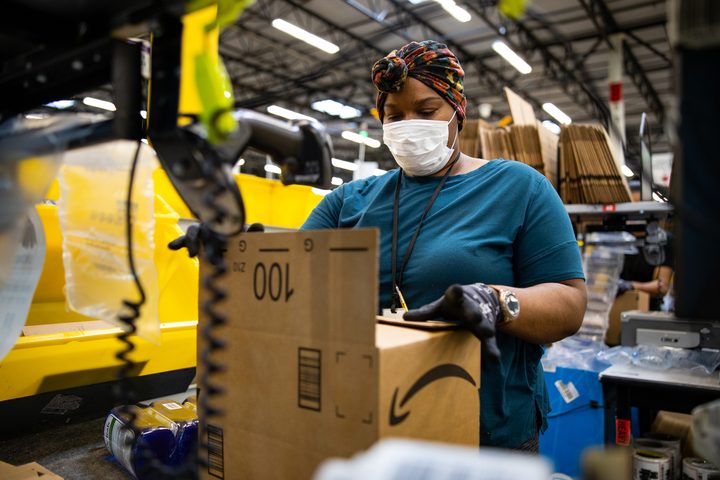
Now, Amazon argues that its shipping system has gotten so good that fast shipping is just a result of a robust network of warehouses that are already stocked with common products for that area. That could mean you’re getting products quickly and by low-carbon means since it’s already in the neighborhood and was delivered at scale. But even if that is the case, there’s still another good reason to opt for slower shipping: the human cost. Amazon workers are already at the end of their rope trying to get all of this stuff out the door. Prime Day only exacerbates this existing stress.
You’ve likely already heard about Amazon drivers urinating in bottles because they can’t afford to take a bathroom break. Prime Day really ups the ante, generating employee injuries, 12-hour days all week, and an impetus for strikes. There is a definite human cost to rampant shopping that isn’t reflected in the price tag. The need to rush is what puts the crunch on these people. Any willingness to get a package a few days later gives these overworked employees some much-needed breathing room.
Remember that Amazon is making a lot of decisions for you in order to expedite your checkout. This includes assuming you’re going to want two-day shipping. When you’re shopping on Prime Day, take the minute to switch from the default two-day shipping and explore slower, land-based shipping options. They won’t always be available, and odds are a plane was involved in bringing your product to life at some point down the line, but it’s still worth the effort to minimize impact.
Best of all? Amazon has something called no-rush shipping which generates discounts and rewards if you opt in. Not only can slower shipping save you money that way, but you are easing up on human and environmental stresses caused by an advanced timeline. Plus, let’s be honest. The thing you’re buying probably isn’t so urgently-needed to warrant all those costs being incurred behind the scenes.