
The Last of Us Part I may not be meaningfully different from the original game or its 2014 remaster, but the context around the franchise has notably changed. That’s because of The Last of Us Part II, a sequel that’s spurred as much critical praise as it has heated debate. The 2020 release built on the first game’s strong foundation by delivering a more complex story that further muddied the “good guys vs. bad guys” trope we see in so much media. It’s a story about cyclical violence where Joel’s actions at the end of the first game directly impact Ellie on her own misguided thirst for blood.
It’s a bold game, one that’s significantly longer and larger to fit in all of its ideas. I respected Naughty Dog’s ambition when I played the sequel two years ago, but walked away feeling like it was as swollen as one of the series’ Bloaters. After revisiting both The Last of Us and its excellent Left Behind DLC in the new PS5 remake, I feel more sure of my original critique. The Last of Us works because it’s a lean and focused game. Part II, on the other hand, makes it clear that excess is Naughty Dog’s Achilles’ heel.
From lean to bloated
What I immediately noticed in my replay of The Last of Us is that there’s barely a wasted moment. From its tense opening sequence to its gripping final hour, most scenes play a crucial role in the story. For instance, the winter-set chapter where Ellie takes charge serves as an important way to show how Joel’s ruthlessness has begun to infect her. My mind wandered once or twice during my 12-hour playthrough.
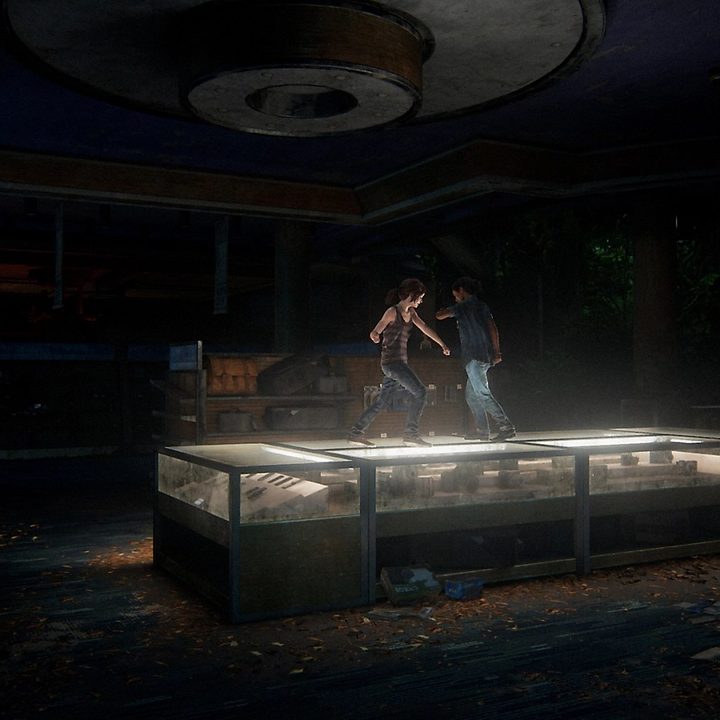
That’s even truer of Left Behind, a tight DLC that tells one of Naughty Dog’s most succinct stories in two hours. Every single moment is memorable, as it naturally develops the relationship between Ellie and Riley with each scene. I walked away from my replay wondering if it’s the single best pound-for-pound game the studio has made to date.
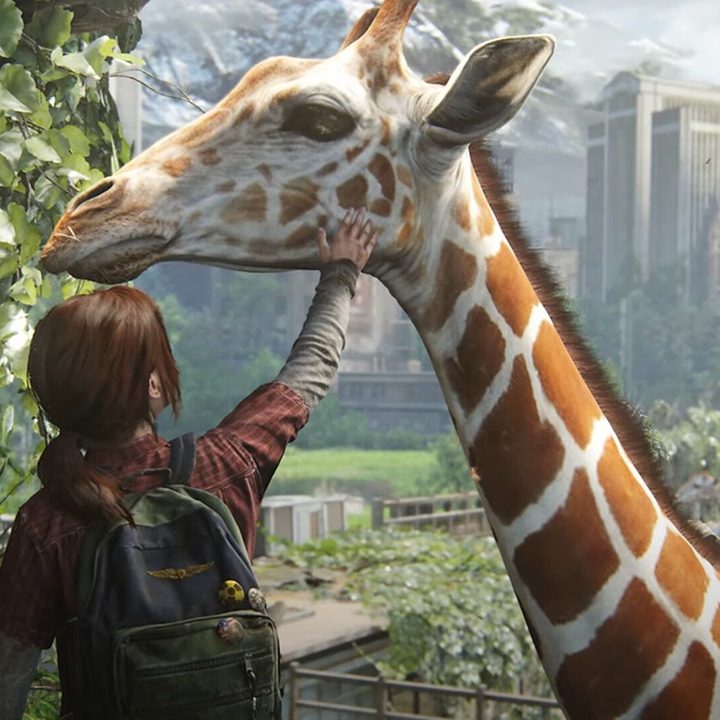
I don’t quite feel the same way about Part II. Clocking in at around 24 hours, the sequel is twice as long as its predecessor. Part of that is a necessity, as it’s telling the story of two different characters whose journeys run parallel to one another. However, I don’t always get the sense that every scene is indispensable as Naughty Dog tends to repeat itself much more. Several beats in Abbey’s story tend to retread already established ideas about the moral gray zones of violent conflict. We continually see “bad guys” reframed as “good guys,” something that’s already effectively established by the two-protagonist structure of the game.
That repetition is more noticeable in the actual game design. Naughty Dog tends to reuse the same tropes and scene setups to create artificial conflict. Several moments of the game involve a character walking toward a location, only to have the ground collapse under them and send them on some roundabout shortcut into a combat zone. There are less crutches like that in Part I, as complications aren’t as mechanically induced. That might make the game feel less like a high-stakes Hollywood blockbuster, but that’s ultimately to its benefit.
Similarities to Uncharted
This observation isn’t only exclusive to The Last of Us series. You can see the same dynamic in Naughty Dog’s Uncharted franchise over the years too. The developer is at its best the less it’s focused on escalating drama. Uncharted 2: Among Thieves is a tight action game that smoothly ups the ante with each scene, while Uncharted 3: Drake’s Deception is a hodgepodge of disconnected set-pieces that only seem to exist to create the illusion that Nathan Drake’s adventure is more exciting than the last. I noticed a similar thread in January when I played through Uncharted: Legacy of Thieves’ Collection and found that Uncharted: The Lost Legacy held up better than the excellent, but often meandering Uncharted 4: A Thief’s End.
I have the exact same feeling walking out of The Last of Us Part I, even if Part II is technically a more impressive spectacle. While I could nitpick about the former’s now dated level design, I found that it doesn’t leave as much room for dead air. With less time spent looking for “another way around,” the focus is more squarely on building Joel and Ellie’s distorted relationship one scene at a time. That allows the game to naturally build to a violent crescendo, whereas Part II hits long stretches where it feels like the band is tuning up between movements.
I hope that The Last of Us Part I was as much of a self-reflective learning process for Naughty Dog as it was for me. I’d love to see the developer scale back its loftier Hollywood ambitions to create something as lean as The Last of Us (I still wish Part II’s final California-set chapter had been reserved for a separate Left Behind-sized DLC). Save some of those excess scenes for a director’s cut down the line — lord knows the studio needs better excuses to rerelease its games anyways.
The Last of Us Part I is available now on PS5.


