  1. Home
  2. Computing
  3. News

You can finally purge your PC of default Windows apps

Add as a preferred source on Google

A new piece of EU regulation is forcing tech companies to make some drastic changes to policy. To stay compliant with the Digital Markets Act, Apple is being forced to adopt RCS for iPhones and Microsoft will now let you uninstall the Edge browser from your Windows 11 PC.

Microsoft published a blog post with all the details on how it will stay compliant, but the biggest change is the ability to uninstall default apps. Edge is chief among them, but you’ll also be able to uninstall Camera, Cortana, and Photos. You can even uninstall Bing from Web Search.
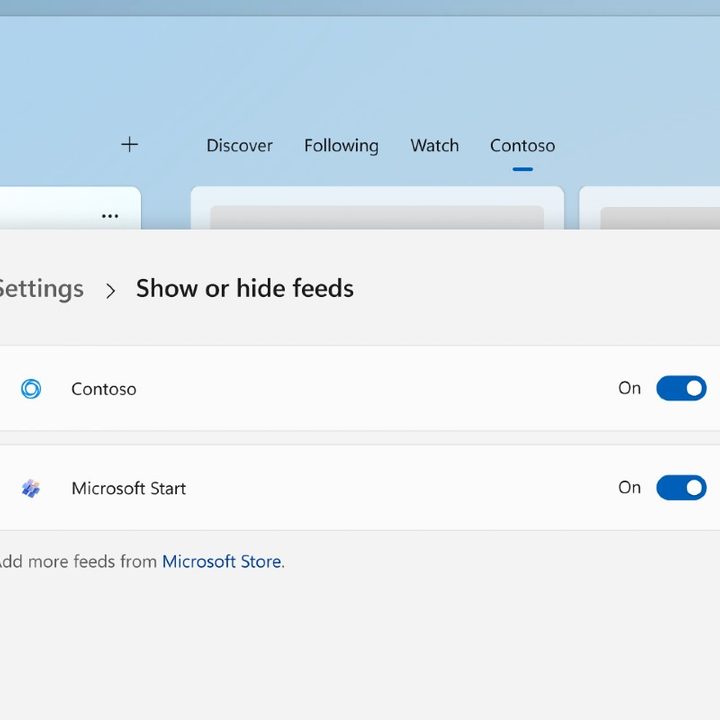
The news feed in the Windows 11 panel.
Microsoft

This is important because, even if you’ve chosen a different browser as your default, there are some situations where Windows 11 will force you to use Edge — although this has changed in Europe recently. Being able to uninstall Edge solves this problem. But it’s also a reversal on how Microsoft has handled default apps in general, especially given how hard Microsoft has pushed adoption of the Edge browser on Windows 11 PCs in particular. Just go ahead and try to change your default browser or search for “Google Chrome” in Bing Search and see what happens.

Recommended Videos

There’s a catch to these changes, though. The ability to uninstall Edge and Bing in particular ia reserved for only PCs sold in the European Economic Area (EEA). While that includes nearly every country in Europe, it does not include PCs sold in the U.S. — or anywhere else in the world, for that matter. So, while you’ll be able to uninstall Camera and Photos, the two big applications are left off the table for non-EEA PCs for some reason.

The other big change for EEA PCs is to the Widgets Board. You’ll be able to turn off the Microsoft News and ads feed alongside your widgets. Again,this is not a change that seems to be available for PCs sold outside the EEA.

These changes (and more) will be rolled out to the Release Preview Channel for Windows Insiders as update version 23H2. The changes will also be coming to Windows 10 (versions 22H2 and 23H2) in the EEA by March 6 of 2024.

All this is being done to comply with the Digital Markets Act, a piece of legislation that’s meant to ensure users have choices and that large companies don’t abuse power over competition.

Luke Larsen
Former Senior Editor, Computing
Luke Larsen is the Senior Editor of Computing, managing all content covering laptops, monitors, PC hardware, Macs, and more.
AI may have just won a literary prize. My heart weeps seeing it poison our love for books.
updated book and AI photo

I had a hard time processing this news. As someone who has been deeply in love with stories since childhood and who grew up on the works of Arthur Conan Doyle, Terry Pratchett, J.R.R. Tolkien, and other such venerable authors, seeing an AI-written story win a prestigious writing award is hard to digest. 

If you are unaware, the winners for the Commonwealth Short Story Prize for 2026 were announced, and three of the five winning regional stories have been found to be entirely or partially written by AI. Or at least that seems to be the consensus among readers. As a reader and an amateur fiction writer, this hurt me deeper than any other tale of AI corroding our lives.

Read more
Canva and Adobe are coming to Gemini, and they want to make everything chatty
Adobe and Canva are plugging into Google’s assistant, betting that creative work starts with a prompt, not an app icon
Art, Collage, Photography

Canva and Adobe are moving deeper into Google Gemini, giving the assistant a bigger role before users ever open a design app.

Adobe says its "Adobe for creativity" connector is coming to Gemini in the coming weeks, giving users a way to describe tasks and send them through Adobe tools for imaging, design, and video. Canva is already rolling out its Connected App for Gemini in select English-language markets, with full availability coming soon.

Read more
AI can pass the Turing Test in live chats and appear more human than us. I am spooked now
UC San Diego researchers found GPT-4.5 was judged human 73% of the time in live conversations
Image of a human woman next to an AI-generated face with Real or Fake text at the bottom.

AI can pass the Turing Test in live chats, and the latest result lands with a chill. In a UC San Diego study, GPT-4.5 outperformed real participants at convincing judges there was a person on the other side.

The setup was harder to shrug off than a standard benchmark. Judges reacted to real-time exchanges rather than static prompts, then made a fast call based on conversation alone.

Read more