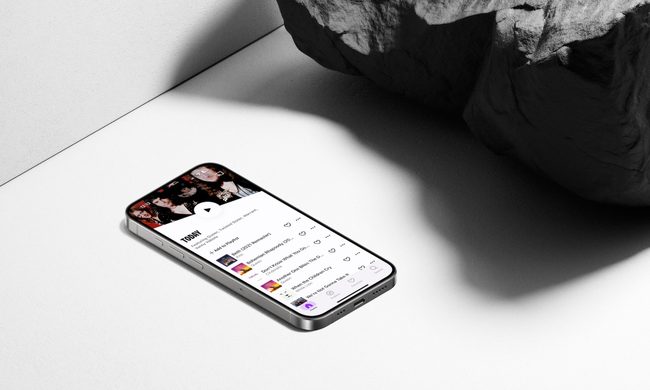
Apple is offering to pay artists more money if they provide Apple Music with versions of their songs recorded in the immersive Dolby Atmos Music format, according to a report from Bloomberg. On the surface, that makes a lot of sense, especially as Apple lays the groundwork for its soon-to-launch Apple Vision Pro headset, a device that will benefit greatly from immersive audio. But the move also could create exactly the wrong set of incentives at a time when the jury is still split over whether spatial audio for music actually is a good thing.
Apple has spent the past several years ramping up its support for spatial audio in general and Dolby Atmos specifically, through its AirPods family of wireless headphones, its Apple TV 4K streaming device, and virtually all of its computing products, too. Apple Music has a growing catalog of tracks in Dolby Atmos Music, and the Apple TV+ video streaming service offers Dolby Atmos soundtracks on nearly all of its movies and shows.
But while Dolby Atmos for movies is typically seen as a big enhancement of the movie-watching experience, the same isn’t necessarily true of Dolby Atmos Music. The reasons are myriad.
It’s not entirely clear that people want their favorite songs to be presented with the added width, depth, and movement of sounds that are made possible by a format like Dolby Atmos Music. When you’re used to stereo, spatial audio can be jarring. That disconnect can be made more pronounced when you introduce head tracking, which Apple uses on its AirPods Pro Gen 2/AirPods Pro Gen 2 USB-C, AirPods Max, and AirPods Gen 3, as well as Beats products like the Studio Pro and Fit Pro.
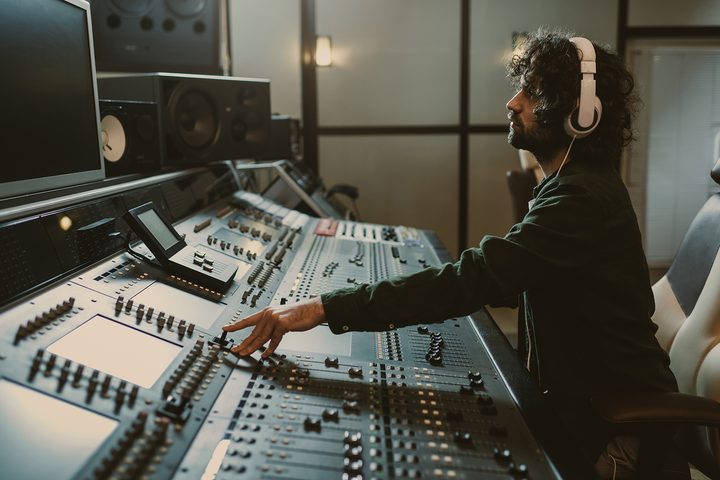
Then there’s the challenge, from an artistic perspective, in creating a Dolby Atmos Music track that uses the technology in a way that adds immersion, but doesn’t go too far. On the opposite end of the spectrum, you can also end up with a classic track that has been remixed in Atmos, but that doesn’t offer a truly new way to experience the song. In the hands of an inexperienced engineer, this can rob a song of its impact instead of reinforcing it.
Herein lies the problem with Apple’s Dolby Atmos Music bounty program. Apple plans to reward artists and labels merely for creating tracks in Dolby Atmos Music — there is no requirement that Apple Music subscribers listen to these versions according to Bloomberg’s sources.
But if Apple doesn’t put any creative quality control measures in place — and it’s not clear that it could even if it wanted to (how do you tell an artist their Atmos track sucks?) — the financial incentive could favor quantity over quality. It could easily send record labels in search of shortcuts (perhaps even AI-driven remixing software) in order to backfill their catalogs as quickly as possible. That’s the last thing a nascent audio format needs.
There’s a parallel here to another immersive format: 3D. In the 3D feeding frenzy that happened after James Cameron revealed his groundbreaking 3D movie Avatar, many movie studios continued to shoot in 2D, relying instead on software to perform a conversion to 3D after the fact. The results were often less than impressive.
In fairness, Apple’s own requirements for Dolby Atmos Music submission prohibit this kind of thing. The very first line in its Immersive Audio Source Profile declares that “Dolby Atmos audio files generated from stereo mixes are not allowed.”
I suspect that for many artists who are creating entirely new works and using Dolby’s suite of mixing tools to bring them to life, the results will be amazing. I’m slowly compiling a list of tracks that sound better to me in Dolby Atmos than in stereo. So far, most of them are recordings that were released in the past three years.
Which is not to say that songs that have been with us for decades as stereo tracks can’t be thoughtfully — and stunningly — remixed as Dolby Atmos (Giles Martin’s Atmos mix of INXS’ Kick remains one of my favorites). But the promise of money can create unpredictable results, and there’s a real risk that Apple’s plan could backfire, and doom us to a massive library of spatial audio tracks that aren’t worth listening to.