The Xiaomi 14 Ultra is one of 2024’s most interesting new Android smartphones, not least because of the massive camera bump on the back. It also has a number of great features inside — plus a very intriguing accessory kit you can get for the phone.
I recently put my SIM card in the Xiaomi 14 Ultra, ready to fully review it over the coming days. Here are the things I’m looking forward to the most about it.
Leica’s black-and-white filters
Leica describes black-and-white photography as a medium that “eliminates all distractions posed by color elements, focusing the observer’s eye entirely on the essence of the scene.” It has a long history with the format and even makes dedicated monochrome cameras. When Leica worked with Huawei and introduced a dedicated monochrome camera on phones like the Huawei P20 Pro, I loved the photos I took with it.
Xiaomi and Leica worked together on the Xiaomi 14 Ultra’s camera, and although it doesn’t have a monochrome camera, it does have two Leica black-and-white filters — BW NAT and BW HC. While black-and-white filters are available in most camera apps, there’s something special about the opportunity to use a Leica-tuned filter. I know from previous experience talking to the company about mobile photography that it wouldn’t put its name on it if it weren’t confident the results reflect the brand’s standards. I can’t wait to see what it can do.
The amazing Xiaomi Photography Kit

Xiaomi is taking photography seriously with the Xiaomi 14 Ultra and has released the Xiaomi Photography Kit to accompany the phone. It includes a leather case and a camera grip for the Xiaomi 14 Ultra that adds a two-stage shutter, a zoom wheel, quick access to video recording, and pro-level features like aperture, EV, and ISO. It also has a 1,500mAh battery built in so it doesn’t solely draw power from the phone.
Even more interestingly, it includes an adapter ring that fits around the camera module on the case so you can fit a 67mm filter for use with the phone’s camera. This is very unusual, and unlike adding a filter to your photo after you’ve taken it, it alters how the camera views the scene beforehand, opening it up to being used in a variety of different environments in a professional manner.

I’m all for exploring new ways to be creative with mobile cameras, and this is different from anything else available at the moment. Will it be worth the high $228 (converted over from the 180 British pound cost) entry price? I’m really looking forward to trying out the polarizing and UV filters I’ve already ordered for the kit to find out.
Using Xiaomi HyperOS

Xiaomi has used its MIUI interface over Android on its smartphones for years, but it has recently launched HyperOS — a complete software system that will replace MIUI and operate on everything from smart home products to electric cars like the Xiaomi SU7. The unified approach is similar to Huawei’s plans with HarmonyOS.
The Xiaomi 14 Ultra will be the first phone I’ve used with HyperOS on board, and although there are only a few visual changes compared to MIUI, there are many changes promised on the inside. I’m keen to see how HyperOS has affected performance — in particular smoothness and responsiveness — and if I can notice any other alterations when I use the phone day-to-day. Is this nothing more than a simple, sneaky rebrand, or is it something more substantial? That’s what I want to find out.
Testing battery efficiency and charging

The Xiaomi 14 Ultra has a 5,000mAh battery inside, which is sizable, but relatively standard across phones of this size and price, and not an absolute guarantee the battery life will be stellar. Although the phone uses the Qualcomm Snapdragon 8 Gen 3 chip — already proven to be a very efficient processor — software also plays a big part in battery efficiency and longevity. I’m keen to find out how the switch to HyperOS will affect it.
It’s not just because we all want long-lasting batteries in our phones; it’s also because the Xiaomi 14 Ultra’s main competitors have been impressing us with battery life recently. Xiaomi needs to get this fundamental feature right if it’s going to compete and if it wants to tempt you away from those other phones. It does have seriously fast charging on its side, though, as the 90W wired charging should take the battery to 100% in about 35 minutes. Plus, there’s fast wireless charging, too.
Living with that camera bump

I got used to the overall size of the Samsung Galaxy S24 Ultra, but couldn’t get on with the Asus Zenfone 11 Ultra, so what will my hands and pockets make of the Xiaomi 14 Ultra? It’s has very similar dimensions as these two other phones, and is actually the lightest of the three at 220 grams, but it’s also the thickest at just over 9mm. Will I quickly tire of the size, or has the design been optimized for long-term use?
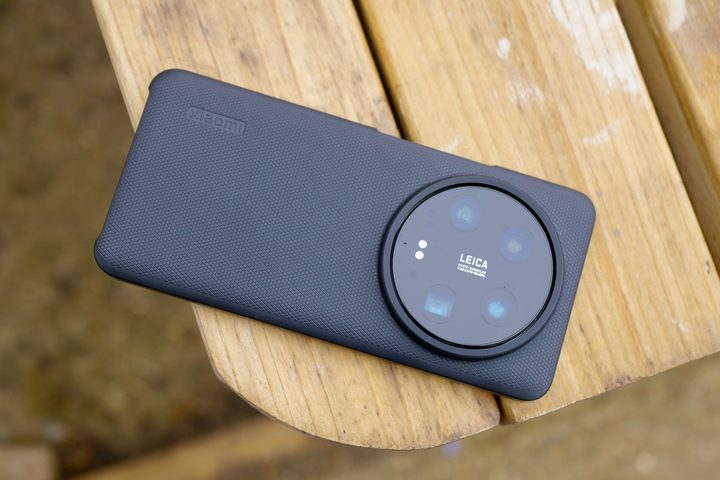
But it’s not just the dimensions that will affect how it is to live with the Xiaomi 14 Ultra — it’s the impact of the ridiculously massive camera module on the back. It’s distractingly large and becomes even more noticeable when you use the plastic case that comes with the phone. I want to find out if it affects balance, if it becomes annoying to hold the phone upright, if it gets caught in my pocket all the time, and if I soon tire of its presence. Will the Xiaomi 14 Ultra challenge the S24 Ultra for in-hand comfort, or is it going to join the Zenfone in terms of unwieldiness?
Review coming soon
The Xiaomi 14 Ultra is available outside China (although not in the U.S.), which hasn’t always immediately been the case for the brand’s top models. It costs the same as the Samsung Galaxy S24 Ultra, so it’s directly competing with one of 2024’s very best phones, but is it a true alternative?
These five things will make or break the Xiaomi 14 Ultra in its efforts to unseat the all-powerful Galaxy phone from its throne. You’ll find out if it does in our review, which is coming soon.