

Today, Microsoft’s most ambitious PC launch in recent memory goes live. You can now go out and buy one of the new Copilot+ PCs, including Microsoft’s own new Surface Laptop.
These are highly anticipated new laptops that make some pretty impressive claims about performance and battery life — they appear to be true MacBook Air competitors in every way.
But due to a some recent pushback to its controversial AI feature, the company had to delay review units, leaving Microsoft’s big day devoid of independent reviews. As tempting as it may be, I’d highly recommend waiting to buy one of these shiny new PCs until more reviews come out to verify them — especially since this is an untested new platform.
No reviews is no good

I try not to take myself too seriously. I know that when I review a product, it’s only my take, despite my most earnest attempts to lean on objective testing. But when a high-profile product launches without reviews, it’s not ideal. My review might just be my own, but via a collective body of journalists and media, you should able to get a pretty good idea of the general consensus. With something like Copilot+, however, there’s even more to consider than normal.
First of all, a lot of new laptops are launching today. Knowing which to buy isn’t easy just from looking at them in a Best Buy. There are visual differences, yes, but they fall under the same category of PC. What’s not clear, however, is how these laptops perform compared to one another. They all use the same Snapdragon X chips, of course, and Microsoft has said there will be less variation in performance and battery life than on previous Intel laptops, but there’s a lot we don’t know about how these individual machines will differ.
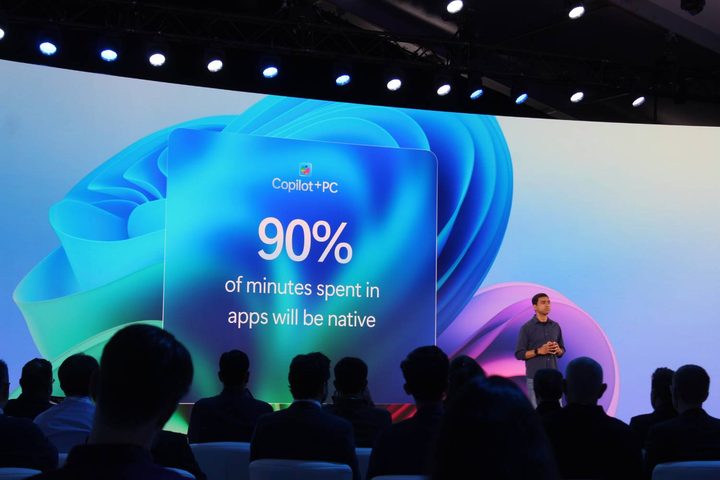
Furthermore, while the initial Snapdragon X chip performs looks good in benchmarks so far, a lot more testing is needed. There’s the question of emulation, of course, to see how efficient Microsoft’s new Prism emulator is with applications that haven’t been recompiled for Arm. Microsoft has made some ambitious claims about how performant Prism is, as well as how many new apps have native versions, but much of that is yet to be seen.
I’m dying to see how all this plays out and to get my hands on these devices myself. I want to know if running one of these Copilot+ machines is really as seamless as Microsoft and Qualcomm claim, and whether they will prove to be the serious MacBook Air competitors they appear to be. But until that happens, we’re left to take Microsoft’s word for it.
Problematic AI

The controversy around Recall might be the biggest reason to take a pause on buying a Copilot+ PC right now. The feature is supposed to give your PC “photographic memory,” letting you access everything you’ve done on it using natural language. We now know that the initial wave of these laptops won’t even come with Recall anymore, meaning all of these things have changed over the past week or two.
As fundamental security flaws have come forward about Recall, Microsoft has responded by first clarifying the opt-in nature of the feature, and then removing the feature entirely from the initial release.
This has been a bad look for Microsoft. The company was counting on selling these new laptops primarily as advanced AI PCs that utilize unique hardware that other laptops don’t have. But without Recall, there’s very little to take advantage of that hardware.
With all that said, there’s a lot we still don’t know about Microsoft’s plans for Recall and additional AI features in the future. The company is sure to be a bit more careful, but if you were interested in Copilot+ PCs primarily as advanced AI machines, it’s worth waiting to see how the saga plays out.
Don’t get me wrong — I’m still excited about the potential of these new devices. We’ll be working hard to review as many of them as we can (once we have them, of course) to provide you with the best buying advice. But right now, that’s just not possible.


