
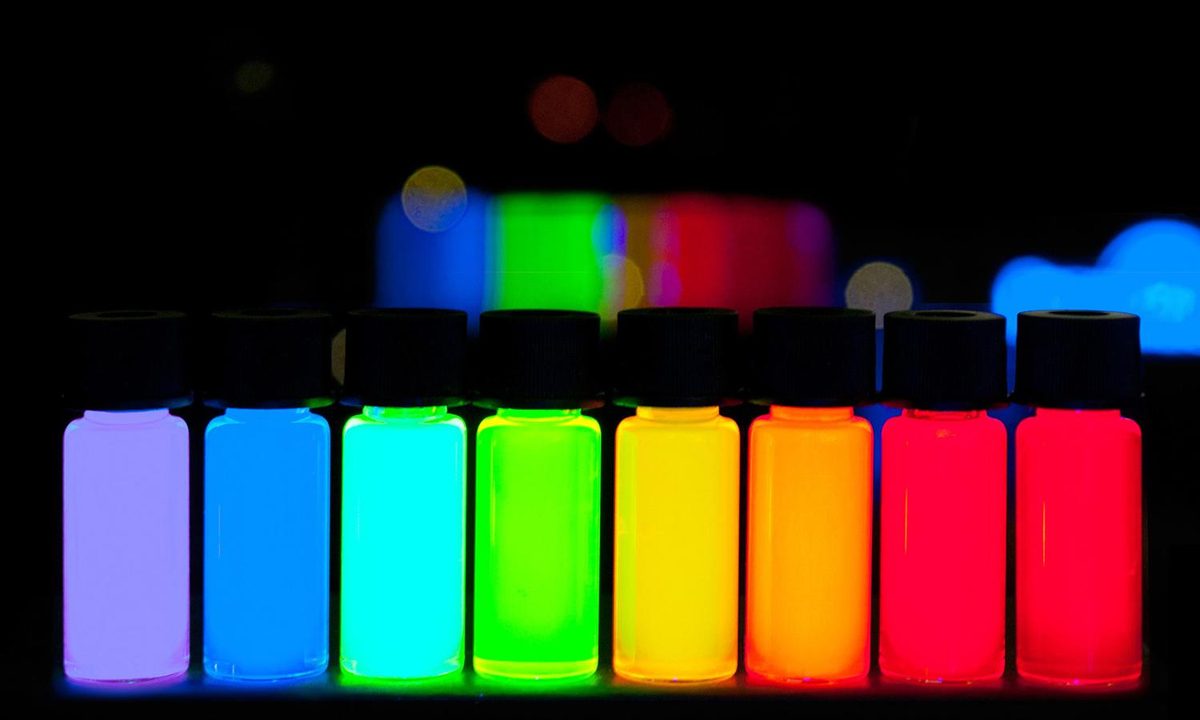
A Korean quantum dot producer that supplies components for Samsung’s QLED television panels has called into question whether TCL’s QLED panels actually use quantum dots. QLED stands for quantum dot LED, and TVs that bear this label are assumed to use a layer of quantum dots (which you’ll see here as QD) on top of their LED backlight, thus producing more accurate, brighter colors.
The analysis, which was first publicized on September 5 on etnews.com, concludes that TCL’s C755, C655, and C655 Pro QLED models do not possess quantum dots.
The analysis was commissioned by quantum dot producer Hansol Chemical and conducted by SGS and Intertek, two independent testing and certification agencies. The study searched for signs of indium and cadmium. Since no quantum dot producers can make these nanoscale particles without indium and cadmium, experts consider their absence inside a TV’s display proof that the TV doesn’t contain quantum dots.
Digital Trends reached out to TCL for its response to the analysis’ findings; company spokespeople said they couldn’t comment beyond the response provided to etnews.com.
Those comments were provided in Korean and translated into English by koreatimes.co.kr:
“TCL was quoted as saying that it is ‘manufacturing TV sets with QD films supplied by three companies’ and ‘the amount of quantum dots (QD) in the film may vary depending on the supplier, but it is certain that cadmium is included.’ ”
To back its claim, TCL sent etnews.com a copy of a chemical analysis commissioned by one of its QD film suppliers, Guangdong Region Advanced Materials. The report, which was also created by SGS, appears to show the presence of cadmium. It also performed a spectrogram on the QD film used in the three TVs, which it claims confirms the presence of quantum dots.
TCL questioned the validity of the Hansol report, claiming that the method and accuracy weren’t sufficient to detect the exact content of cadmium. However, TCL’s evidence comes from an examination of its QD film supplies, while the Hansol report was created by tearing down actual TCL TVs.

The TV supply chain is complex, and a company like TCL (China’s largest TV manufacturer) may use several vendors to acquire the same parts for one or more models. Quantum dots are seldom supplied directly from the manufacturer. Instead, the dots pass through a third-party supplier, which embeds them into a film suitable for use in a QLED TV. While there are only a few quantum dot makers worldwide, there are many producers of quantum dot films.
It’s entirely possible that TCL ended up using quantum dot film that was faulty. Clearly, this doesn’t absolve TCL of the need to perform inspections and quality assurance on its own products, but it may suggest that this wasn’t an intentional effort to deceive TCL’s customers.
Nonetheless, the situation is cause for concern.
While most TV buyers likely don’t understand the intricacies of why quantum dots help TVs achieve better picture quality, they’ve been told repeatedly by manufacturers and media that QLED TVs are a premium product with premium picture quality.
It’s reasonable to assume that if a company says its TV is a QLED TV, it benefits from the use of quantum dots, even if those benefits may not be noticeable to the buyer.
However, there’s a secondary issue at play that explains why a quantum dot producer like Hansol (which, as a reminder, doesn’t sell quantum dots to TCL) might want to throw TCL under the bus with this report.
If buyers feel that their new QLED TV doesn’t meet their expectations for picture quality, they could decide that quantum dot technology has been overhyped and doesn’t live up to its promise. This could lead to a drop in demand for TVs that use quantum dots, which would negatively impact all quantum dot makers — including Hansol.
So if the term “QLED” is no longer a guarantee that a TV contains quantum dots, where does this leave TV buyers? According to industry sources we spoke to on condition of anonymity, some TV manufacturers are mulling the creation of a “QLED Alliance.” Such an entity would presumably work to establish a verification process with a QLED logo mark for QLED TVs that would give buyers a level of certainty that’s currently missing, similar to the 8K Association’s certification program.
Manufacturers would be under no obligation to participate. However, it’s been fascinating to see the personal audio world rally around the Japan Audio Society’s Hi-Res Audio certification program. The Hi-Res Audio logo isn’t a guarantee of sound quality, but it does guarantee that a product meets the minimum requirements to reproduce the extra level of resolution present in hi-res audio content.
In the meantime, our advice for buyers is the same as it has always been. Do your research. Read professional TV reviews on sites like Digital Trends or watch relevant videos on YouTube. You don’t need to perform a chemical analysis to know if a QLED TV uses quantum dots. With professional-grade measurement tools, TV experts can evaluate criteria like color gamut and color accuracy. These tests will quickly reveal weaknesses in picture quality that shouldn’t be present on a true QLED TV.


