  1. Home
  2. Computing
  3. News

Your next Windows update should install much faster

Add as a preferred source on Google
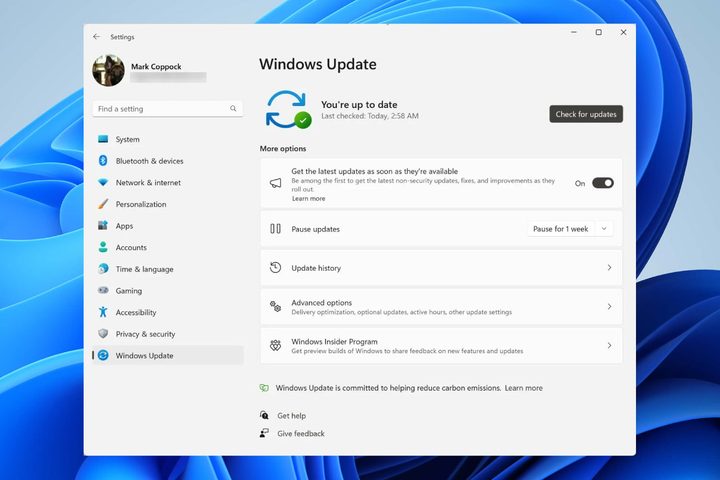
The Windows Update screen in Windows 11.
Digital Trends

It’s about time Windows 11 users got some good news about updates. Microsoft recently claimed in a blog post that thanks to 24H2‘s servicing stack, the update installs up to 45.6% faster than previous versions of Windows. The upcoming update will use fewer system resources, and the restart time will be faster.

According to Microsoft’s tests on PCs that had not been updated for 18 months and ones that were regularly updated, there were significant improvements to celebrate. On the well-maintained PCs, installation time was 45.6% faster, restart time was 39.7% faster, and CPU usage was 15.3% less. In an atypical scenario with an 18-month out-of-date PC, the installation time was 43.6% faster, restart time was 33.5% faster, and CPU usage was 25% less.

Recommended Videos

Microsoft said it achieved these improvements using different methods, such as parallel processing, which allows PCs to control numerous parts of the update simultaneously. Another method used was smart caching, which stores already processed information, so your PC doesn’t have to do the same job twice. Smart caching is a huge help in speeding this up with updates that used to take forever.

Lastly, the Windows 11 update will be able to take advantage of RAM (random access memory) by checking whether your computer has enough RAM and modifying the update process accordingly to prevent it from slowing down. Microsoft summarized everything by saying that “the newest Windows release uses less CPU time (a 15.3-25% improvement) for a monthly security update. The tests also showed that the update is even faster to install (43.6-45.5%) and to restart, which shortens the offline time (33.5-39.7%).”

However, Microsoft had more good news: It has redesigned how non-system and system apps are structured in the Unified Update Platform (UUP) collection of files. The Edge browser will save 200MB of space during more significant feature updates.

Judy Sanhz
Computing Writer
Judy Sanhz is a Digital Trends computing writer covering all computing news. Loves all operating systems and devices.
The Mac Pro is dead at Apple, and I’ll miss the cheese-grater powerhouse
RIP Mac Pro. The Mac Studio is taking the throne, and we're okay with that.
Electronics, Computer, Pc

Apple has officially discontinued the Mac Pro. It’s been removed from Apple’s website, and Apple has confirmed to 9to5Mac that there are no plans to release a future version. The buy page now redirects to Apple’s Mac homepage, where the Mac Pro no longer exists.

Why did Apple kill the Mac Pro?

Read more
March Madness, Revisited: The AI Model Did Well. But Mad Things Still Happen
Stills from NCAA games.

(NOTE: This article is part of an ongoing series documenting an experiment with using AI to fill the NCAA brackets and see how it fares against years of human experience. The original article is as follows.)

A week ago, I wrote about entering an NCAA tournament pool with a more disciplined process than I usually use.

Read more
A simple coding mistake is exposing API keys across thousands of websites
Security gaps that are easier to miss than you think
Computer, Electronics, Laptop

After analyzing 10 million webpages, researchers have found thousands of websites accidentally exposing sensitive API credentials, including keys linked to major services like Amazon Web Services, Stripe, and OpenAI.

This is a serious issue because APIs act as the backbone of the apps we use today. They allow websites to connect to services like payments, cloud storage, and AI tools, but they rely on digital keys to stay secure. Once exposed, API keys can allow anyone to interact with those services with malicious intent.

Read more