  1. Home
  2. Wearables
  3. Mobile
  4. News

Blood oxygen tracking isn’t coming back to the Apple Watch anytime soon

Add as a preferred source on Google
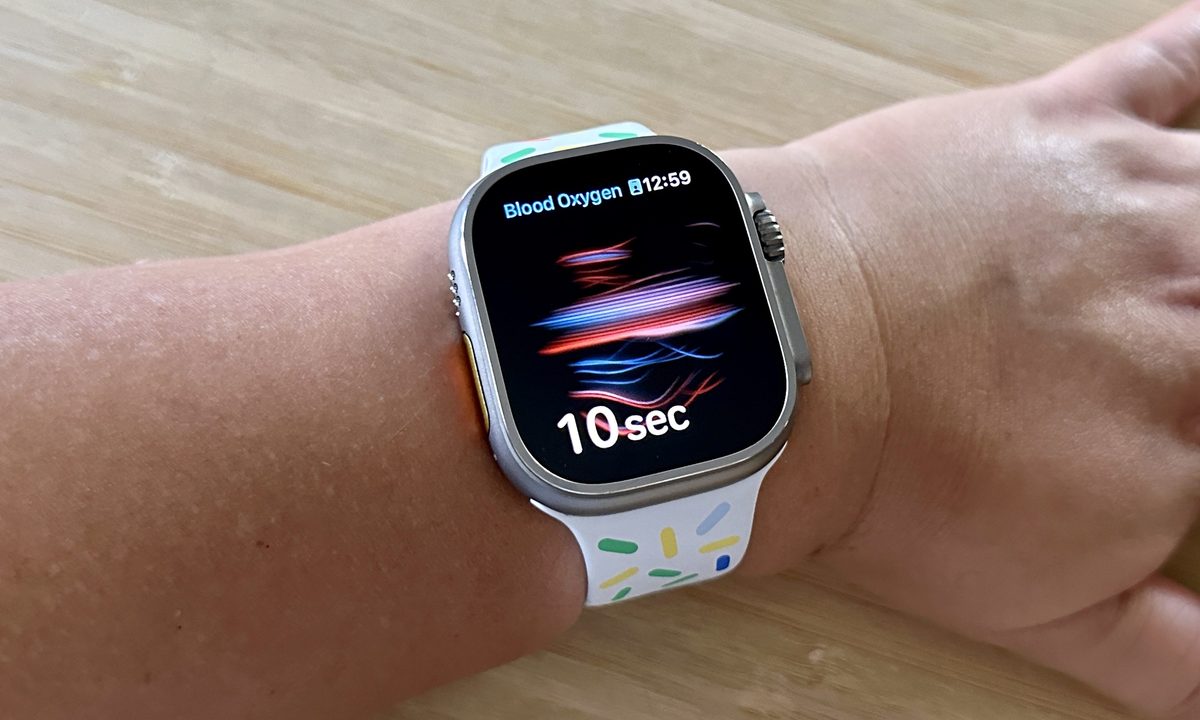
Apple Watch Ultra taking a measurement for blood oxygen levels.
Christine Romero-Chan / Digital Trends

One of the major selling points of Apple Watches in recent years has been the ability to test users’ blood oxygen levels. Unfortunately, ongoing litigation has prevented this feature from being included in Apple Watches sold in the U.S. since January. Now, it seems unlikely that this situation will change soon.

On Friday, a Delaware jury found that health-monitoring technology company Masimo infringed on some of Apple’s earlier smartwatch patents. As a result, Apple received an award of only $250. However, the same jury ruled that Masimo’s current watches did not infringe on the patents that Apple accused it of copying. Consequently, an injunction remains in effect in the U.S. that prevents the company from offering blood oxygen tracking on new watches sold in the country.

Recommended Videos

At the beginning of the year, the U.S. International Trade Commission ruled in favor of Masimo, saying Apple’s use of pulse oximeter technology in the Apple Watch violated Masimo’s patents. As such, any Apple Watch sold after January 18, 2024, couldn’t ship with the feature. Soon after, Apple appealed the decision and countersued, alleging Masimo copied Apple Watch features to use in its smartwatches. Since then, it has been unsuccessful in getting the injunction lifted by a court.

Apple’s blood oxygen feature was first available on the Apple Watch Series 6 in 2020. Since then, it has been available on every non-Apple Watch SE model up to the injunction. The all-new Apple Watch Series 10 has the hardware to support blood oxygen tracking. Therefore, whenever a resolution is reached between the two companies, Apple could push out a software update to add those features to watches currently without them.

Blood oxygen tracking measures the percentage of oxygen currently carried by a user’s red blood cells. Numbers below 95% suggest possible health issues, including respiratory conditions, sleep apnea, heart conditions, or more. It’s an incredibly helpful feature, but due to this latest ruling, it will continue to be missing from Apple Watches for the foreseeable future.

Bryan M. Wolfe
Former Mobile and A/V Freelancer
Bryan M. Wolfe has over a decade of experience as a technology writer. He writes about mobile.
Apple wants you to verify your identity before you get Education discount on products
Apple moving the US Education Store off the honor system also seems about making a globally consistent verification infrastructure that could eventually support more aggressive Education Store expansion.
Computer, Electronics, Laptop

Getting an Apple Education discount in the United States used to be as simple as claiming you’re a student or a teacher; it didn’t need a formal verification. That era is officially over. 

Starting May 8, 2026, Apple now requires formal identity verification for all Education Store purchases in the US, ending the informal honor system that was in place for years (via MacRumors). 

Read more
You can finally avail an education discount on the Apple Watch
It's Apple broadening its ecosystem play into a segment that previously had no wearable entry point, and that could meaningfully accelerate Apple Watch adoption among younger first-time buyers.
Side view of Apple Watch Series 11.

Apple’s Education Store has always been a reliable shortcut to cheaper Macs and iPads for students and teachers. However, for years, Apple Watch wasn’t allowed into the story, making people wait for third-party sales or discounts to get their hands on the smartwatch. 

That’s changing, with effect from May 8, 2026. Apple has quietly added the Apple Watch to its Education Store for the first time. The Watch Series 11, SE 3, and the Ultra 3 are now available at discounted education pricing across 21 markets, including the US, UK, India, Canada, and Australia. 

Read more
Whoop’s response to Fitbit Air and Google Health is real doctors, not just an AI chatbot.
In the race to own your health data, Google chose an AI, and Whoop chose a doctor. That single decision may define which fitness tracker serious health users reach for in 2026 and beyond.
A person wearing the Whoop 5.0.

Recently, Google launched the Fitbit Air as a direct rival to the Whoop screenless fitness band, rebranded the Fitbit app to Google Health, and released a Gemini-powered AI coach. Exactly one day later, Whoop has responded with on-demand video consultations with licensed clinicians for US users. 

The contrast is hard to ignore. While Google is betting on AI as your general health advisor, Whoop is doubling down on real, licensed doctors, and making the case that they can serve its fitness-focused users considerably better (via CNBC).

Read more