  1. Home
  2. Computing
  3. News

Apple just acquired this beloved Mac app

Add as a preferred source on Google
Editing a photo in Photometer.
Screenshot Willow Roberts / Digital Trends

Popular photo-editing app Pixelmator published a blog post today announcing its plans to join Apple. The post was spotted by 9to5Mac.  The acquisition is still pending approval, and the Pixelmator team has confirmed that it won’t be making any changes to its apps “at this time.”

The company offers two apps — a professional image editing tool called Pixelmator Pro and a free photo-editing app called Photomator. Pixelmator Pro is available for a one-time fee of $50, making it much more affordable and easier to buy than competitors like Photoshop.

Recommended Videos

It includes a range of features, from color adjustment and AI background removal to illustration tools. The Photomator app, on the other hand, has been one of the best Mac apps for years and is available on iPhone, iPad, and even the Apple Vision Pro.
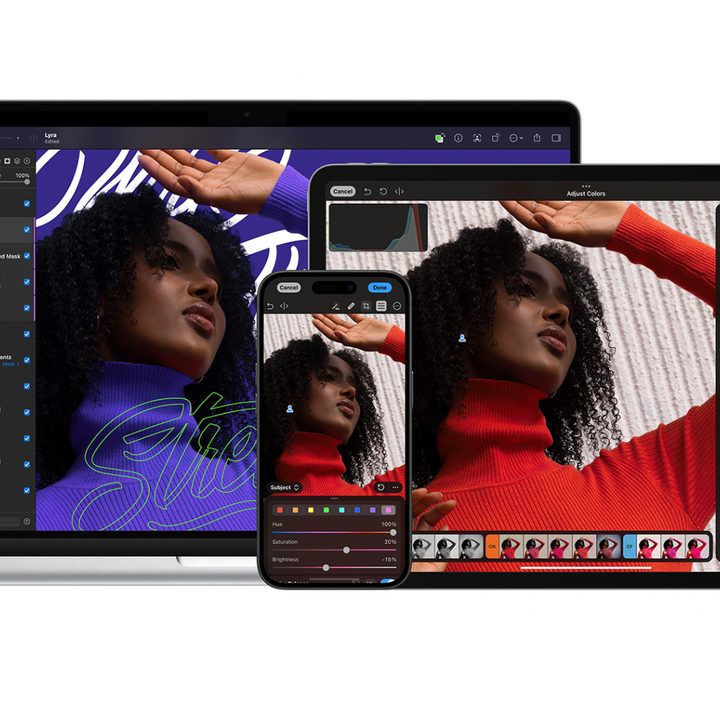
Pixelmator running on a Mac, iPad, and iPhone.
Pixelmator

Although Pixelmator has mentioned there won’t be any changes to its apps right now, there’s no saying what will happen if the acquisition goes through. There are historical cases of Apple both shutting down apps it acquires (like Dark Sky in 2020) and keeping them as is (like Final Cut Pro and Logic Pro) — so it could go either way.

Considering the limited built-in editing features on Apple’s Photos app, integrating the tech from Photomator to expand what we can do with photos directly on our iPhones sounds like a pretty good idea.

As for the pending approval — while it could pass without any problems, you never really know when it comes to big companies. Regulatory authorities definitely have their eyes on brands like Apple but it’s usually the joining of two big names like Nvidia and Arm that gets stopped in its tracks. However, if Apple swallows up enough smaller companies, that could definitely become problematic as well.

Willow Roberts
Willow Roberts has been a Computing Writer at Digital Trends for a year and has been writing for about a decade. She has a…
Claude’s Sonnet 5 is built to do more on its own and cost you less
Better than its predecessor, nearly as good as the flagship, and meaningfully cheaper than both.
Art, Floral Design, Graphics

Every major AI lab is racing to prove its models can work autonomously with minimal hand-holding; we’re now seeing pricing emerge as the next battleground. 

Anthropic just fired its latest shot, Claude Sonnet 5, a model the company says performs nearly as well as its flagship Opus 4.8 at a fraction of the cost.

Read more
Apple Creator Studio adds AI tools across Final Cut Pro, Logic Pro and Pixelmator Pro
Final Cut Pro gets AI captions, Auto Mask and better Pixelmator Pro workflows in Creator Studio update
Computer Hardware, Electronics, Hardware

Apple has introduced a major update to Apple Creator Studio, adding new AI features, deeper Pixelmator Pro integration, and workflow upgrades across Final Cut Pro, Logic Pro, Keynote, Pages, Numbers, Motion, Compressor, Freeform, and Final Cut Camera.

The update makes Creator Studio more useful across Mac, iPad, and iPhone, especially for people who move between video editing, image editing, presentations, documents, spreadsheets, and music production.

Read more
AI browsers like Perplexity Comet can be tricked into spilling your password through BioShocking exploit
Six AI browsers were found leaking saved passwords and many of them haven't fixed it yet.
MacBook Air in hand, Comet browser loaded—let’s see what Perplexity’s AI can really do

Security researchers just found a strange way to trick AI browsers into handing over your passwords. They managed to trick AI browser agents into exposing sensitive data like saved passwords, session cookies, and private tokens by disguising the theft as part of a harmless "game."

The technique is called BioShocking, named after the popular video game BioShock, where a brainwashed character is manipulated into believing a false reality. Once an AI browser falls for the same trick, it stops following its own safety rules entirely.

Read more