  1. Home
  2. Emerging Tech
  3. Mobile
  4. Legacy Archives

Want a phone you can see through? Polytron unveils clear phone prototype

Add as a preferred source on Google
Transparent-Phone-Polytron
Image used with permission by copyright holder

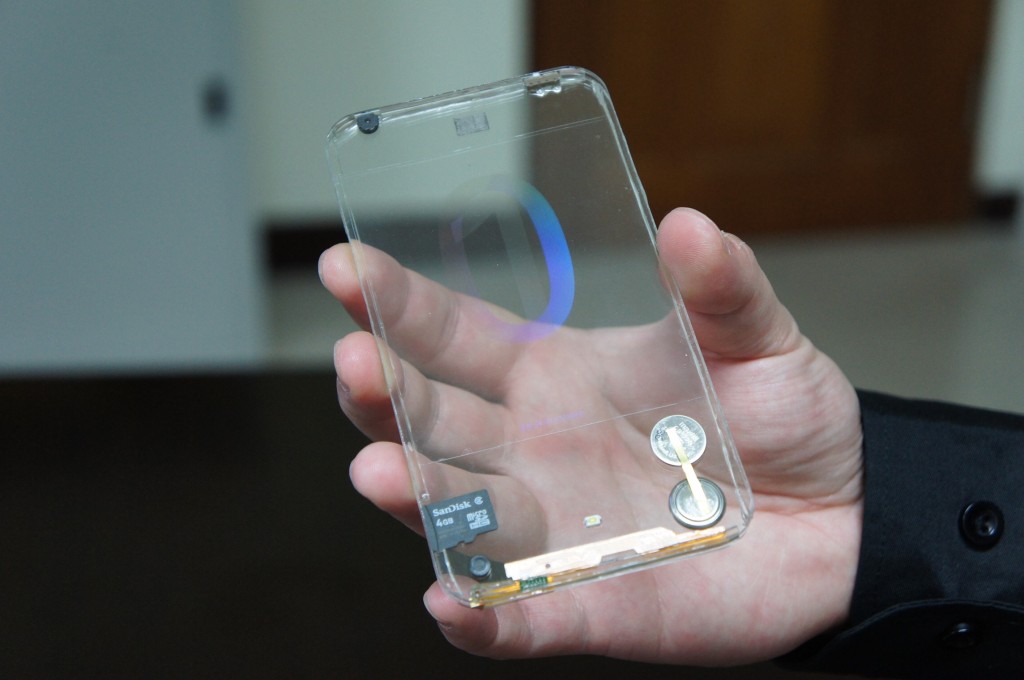
Clear glass phones have been a mainstay of science fiction movies for the last half-decade, from Real Steel to Looper, but Hollywood’s dream may be closer than you think. Polytron, a global systems integration firm based in Duluth, GA, has unveiled (via Mobile Geeks) a mostly transparent cell phone. We say mostly transparent because, in the released photos, we could still see a small battery, circuit board, and a memory card. But aside from that, the entire phone is completely transparent.
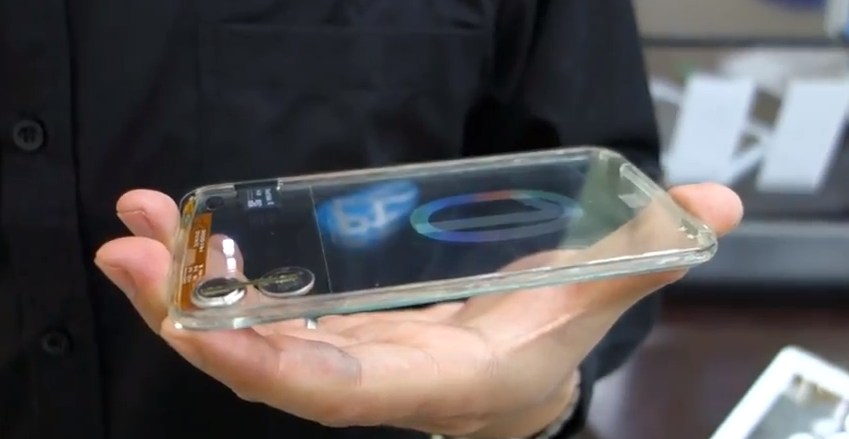
Polytron clear cell phone
Image used with permission by copyright holder

The prototype is not fully functional yet, but it’s believed that such devices could be ready for the retail market as soon as the year’s end. Of course, with such a novel (and yes, completely unnecessary) concept, there are questions that arise about the functionality. Will video quality on the phone, which has increasingly been getting better and better, begin to suffer? Will the backside of the phone reveal what the user is seeing, resulting in an issue of privacy?

Recommended Videos

This isn’t the first time the company has come up with innovative uses of glass. While they traditionally have employed glass for use in construction projects, the company has also revealed a nearly transparent USB memory stick, which it says will be available for sale later this year.

While this clear concept is certainly a cool innovation, we’re not sure just how well-received it will be by the general public. And, more importantly, how much devices like this will cost and what they’ll be capable of. (We’re guessing they won’t be on the affordable end of the scale.)

Joshua Pramis
Spending a childhood engrossed in such technologically inspiring television shows like Voltron, Small Wonder, and Power…
Meta’s Brain2Qwerty v2 turns thoughts into text, and it doesn’t need brain implants
The latest AI model decodes brain signals into coherent sentences using external scanners.
Meta Brain2Qwerty v2 Featured

Artificial intelligence is getting surprisingly good at understanding humans. Now, Meta wants it to understand our brains too. The company has unveiled Brain2Qwerty v2, an upgraded AI system that can translate brain activity into full sentences, all without requiring brain implants or surgery. The goal isn't mind reading for the masses. Instead, it's to help people who have lost the ability to speak communicate again.

How a Brain-powered keyboard works

Read more
AI chatbots can often feed into your delusions. Researchers say you should look for three signs
Experts warn that chatbot design choices can reinforce unhealthy beliefs in vulnerable users.
ChatGPT on a smartphone

Artificial intelligence chatbots have become incredibly good at sounding human. But a new review paper by psychiatrist Marc Augustin and fellow researchers Thomas A. Pollak and Helen Morrin, published in NPP—Digital Psychiatry and Neuroscience, argues that existing AI research points to an overlooked psychological risk. The paper, highlighted by The Wall Street Journal, reviews previous studies and proposes a framework explaining how three common chatbot behaviors can combine to reinforce delusional thinking in vulnerable users, creating what the authors call an "amplification spiral."

Researchers say these are the three warning signs

Read more
Lost access to your crypto wallet? Don’t Google your way out of it
Security researchers warn that fake recovery tools are becoming the latest trap for crypto owners.
Bitcoin crypto wallet featured

Forgetting the recovery phrase to a crypto wallet can be stressful enough. Unfortunately, that's exactly the moment scammers are waiting for. A new warning highlights a growing scam in which cybercriminals disguise malware as cryptocurrency recovery software, tricking desperate users into handing over far more than just access to their wallets.

The fake recovery tool that's actually malware

Read more