  1. Home
  2. Mobile
  3. Computing
  4. Legacy Archives

Researchers use Wi-Fi signals to see through walls

Add as a preferred source on Google
x-ray vision
Image used with permission by copyright holder

If you could have any super power in the world, which one would it be? Would you want to shoot lasers out of your eyes? Perhaps you’d prefer the ability to read a person’s thoughts? Or maybe seeing through walls would be more your thing.

If you answered the latter of the three, you may be able to get your wish sooner than you think. Dina Katabi, a professor for MIT’s Department of Electrical Engineering and Computer Sciences, along with graduate student Fadel Adib, are working on a means to do just that, using low-cost Wi-Fi technology. 

Recommended Videos

The technology, which Katabi has dubbed Wi-Vi, works sort of like sonar; using the device the two created, they can send out two nearly identical, modified wireless signals which are then reflected by the presence of any human body and bounced back. When the signals hit a static object, like a wall, they’re canceled out. “If the person moves behind the wall,” explained Adib, “all reflections from static objects are canceled out, and the only thing registered by the device is the moving human.” Once the device has canceled out all static objects, it can then focus on tracking the moving object. 

So it may not be exactly like having X-Ray vision, but it’s pretty darn cool. And there’s practical use for it. This sort of technology could help speed up rescue efforts for anyone trapped in the rubble of a building after a damaging earthquake, for example. It could be used as a safety precaution for anyone nervous about walking alone at night. And Katabi says that it could even could be used for gesture-based controlling, whether it’s shutting off the lights or playing a video game. 

Katabi plans to formally introduce the technology this August at the Sigcomm conference in Hong Kong. How long it will take before this technology starts being used has yet to be determined, but it’s already gotten the attention of Microsoft, as a possible means of stepping up its gaming abilities.

Joshua Pramis
Spending a childhood engrossed in such technologically inspiring television shows like Voltron, Small Wonder, and Power…
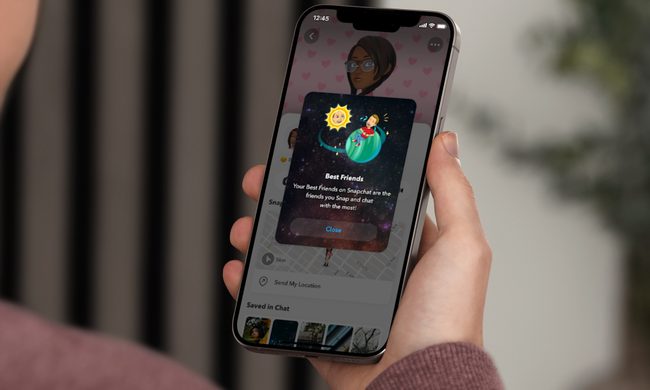
Snapchat Planets Meaning: Order, Rankings, and How Friend Solar System Works
Snapchat Planets turns your best friends list into a solar system, and yes, your orbit says a lot
Snapchat Planets being shown on the Snapchat app on iPhone.

Snapchat+ includes several exclusive features, but few have generated as much curiosity as Snapchat Planets. Part of the app's Friend Solar System, it transforms your Best Friends list into a planetary ranking, assigning each of your top eight friends a planet based on how often you interact.

From Mercury, which represents your closest friend, to Neptune, which represents your eighth closest, the system offers a quick visual snapshot of your interactions. But what do the different planets actually mean, and how does Snapchat decide who gets which one?

Read more
How to use WhatsApp Web
We'll show you how to use WhatsApp on your desktop or laptop
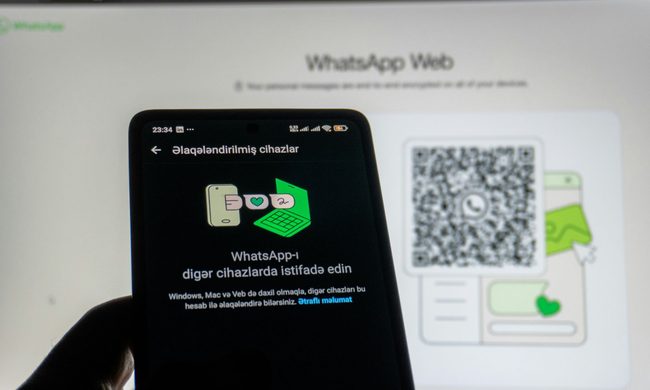
WhatsApp Web

As one of the most popular messaging services, you’ve already heard of WhatsApp. From its humble beginnings in 2009—two years before Apple introduced iMessage—to its acquisition by Facebook (now Meta) in 2014, WhatsApp has become the dominant messaging platform around the globe.

In recent years, it's grown even more potent with new features like video messages, self-destructing voice messages, the ability to edit sent messages, and more. We even finally got an WhatsApp iPad app in May 2025.

Read more
What is WhatsApp? How to use the app, tips, tricks, and more
From setting it up to mastering hidden features, here is your complete guide to WhatsApp.
WhatsApp app store listing open on iPhone

There's no shortage of messaging apps out there. The past decade has given us more options than we know what to do with, largely because smartphones demanded something better than plain old SMS.

Both the App Store and the Play Store are packed with apps that promise to revolutionize the way we communicate. Most of them didn't make it. The truth is, a messaging app is only as good as the number of people using it, and most apps never cross that threshold.

Read more