 While most of the technology world finds itself in decline, a few product categories are growing. Two of the most notable are the netbook and smartphone markets. J.D. Power & Associates have released three new studies of the mobile phone industry that each ranks a different type of handset or user group.
The studies include the 2009 Wireless Consumer Smartphone Customers Satisfaction Study, Vol. 2.; the 2009 Wireless Business Smartphone Satisfaction Study; and the 2009 Wireless Traditional Mobile Phone Satisfaction Study, Vol. 2. The studies rank devices on a 1000-point scale.
The study found that overall satisfaction with devices in the smartphone market is growing with a gain of 14 points on the 1,000-point scale compared to six months ago. At the same time, satisfaction among business smartphone users has grown more robustly with a 43-point gain since 2008. While smartphone satisfaction grew with consumers and business users, satisfaction with traditional mobile phone owners has declined by 6 points since April.
EWeek reports that this is likely due to increasing frustration by users who realize what features their phones lack. The study found one point where satisfaction tends to falter for traditional phone users — whether or not the device is free. Users who participated in the study and had free phones were less happy with their device than those who paid money for their handsets. This is due to the stripped down phone that most mobile carriers offer for free.
J.D. Power’s Kirk Parsons said, “Satisfaction is notably lower among owners who receive their handsets for free because these phones often do not offer the full suite of features that owner’s desire. When fewer features are available, usage rates also decline, which translates into lower brand loyalty.”
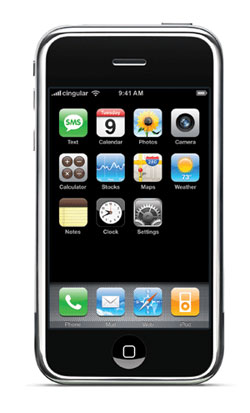
According to consumer smartphone users, key factors affecting satisfaction include ease of operation according to 30% of participants, operating system according to 22%, features according to 21%, physical design according to 18%, and 9% say battery function. The smartphone class leader was the Apple iPhone with 811 points, second place was LG with 776 points, third went to the Blackberry with 759 points. The industry average was 765 points.
It is interesting that with the widely publicized 30% dropped call rate for the AT&T network that carriers the iPhone, the device still tops the list.
Business smartphone users have slightly different priorities reports eWeek with 29% saying ease of operation was most important, 23% saying the OS, 21% saying physical design, and 16% citing features. Traditional wireless handset users pegged operation as most important (30%), 30% pegged physical design, 20% picked features, and 20% chose battery function. In traditional wireless handsets, LG came out on top with 723 points, Motorola was second with 700 points, and Sanyo was third with 699.
Parsons said, “Attractive rebates or discounts offered to current smartphone owners, as well as incentives given to traditional handset owners to upgrade to smartphones, are effective ways for wireless carriers to generate revenue and increase market share. It is important, however, that manufacturers meet the expectations of those taking advantage of such offers by ensuring the features are intuitive and ultimately rewarding to them in the long run. Providing an easy-to-use, yet powerful operating system with the ability to customize applications to suit owners’ individual needs is essential to providing a high-quality and rewarding wireless experience.”