While the majority of Lenovo’s announcements at CES 2014 revolve around mobile computers or smartphones, the company is also taking the wraps off a small number of desktops and monitors. But that doesn’t mean they’re ho-hum towers; far from it, in fact.
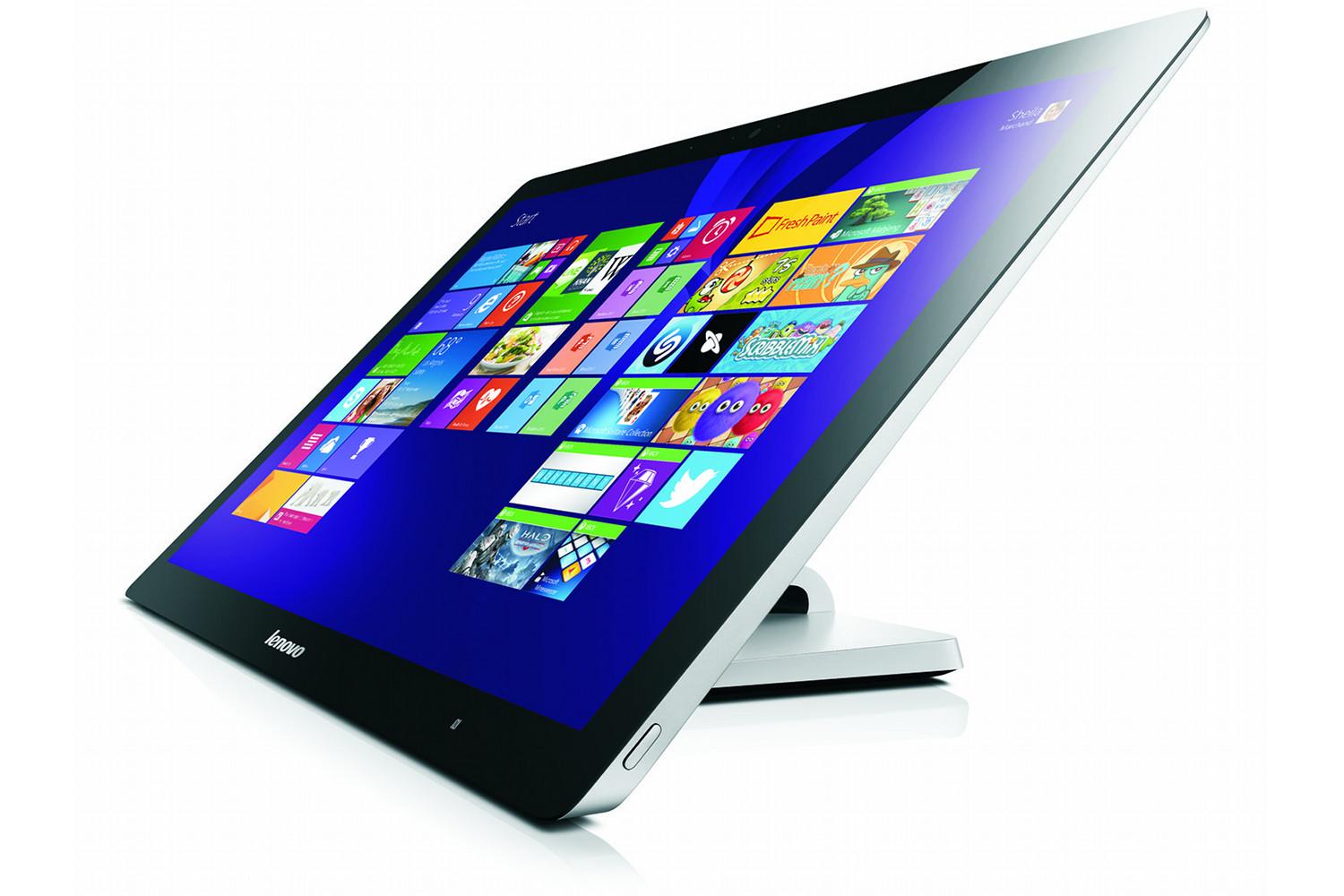
The standout is probably the new N308, an all-in-one and tablet PC with a 19.5-inch 1600 x 900 display. This is not your typical Windows machine, however. Instead, it runs Android 4.2.2 on an Nvidia Tegra processor, while also sporting 320GB or 500GB of hard drive space, up to 2GB of RAM and more. A flip-out stand keeps the computer upright on a desk, but it can be retracted so the device can be used like a tablet on a tablet or your lap. Unfortunately, USB 3.0 seems to the absent, with a pair of USB 2.0 ports in place instead. Pricing starts at just $449.
Lenovo’s original table PC, the Horizon, will also make an appearance, albeit in an updated form. Running Windows 8.1, the appropriately named Horizon II boasts a 27-inch touchscreen display with a resolution of either 1920 x 1080 or 2560 x 1440, up to a 4th-gen Intel Core processor and Nvidia GeForce graphics. While it looks similar to the first version, the new model is thinner, lighter and provides up to 4 hours of battery life. Like the original, the new model’s MSRP is an expensive $1,499.
Those who aren’t interested in table PCs will be happy to know Lenovo hasn’t ignored its standard all-in-ones. The A740, which is the newest member of Lenovo’s A-series, is one of the most attractive AIOs on the market, and has been updated with a 2560×1440 touchscreen, though the option to go with a lower-res 1920 x 1080 display is also available. The A740 can also be equippied with a range of processors topping out at Intel’s 4th-gen Core i7 CPUs and optional Nvidia GTX graphics for a starting price of $1,499.
Buyers on a budget can instead opt for the 23-inch C560, which is powered by a range of processors from Intel Celerons to high-end Core i7 CPUs, but doesn’t reach the resolution heights of the other models above, instead coming equipped with a 1920 x 1080 touchscreen without options to upgrade. Nvidia GeForce graphics are also available on this model. Though more basic, the new C-series should prove capable, and the price starts at a more affordable $659.
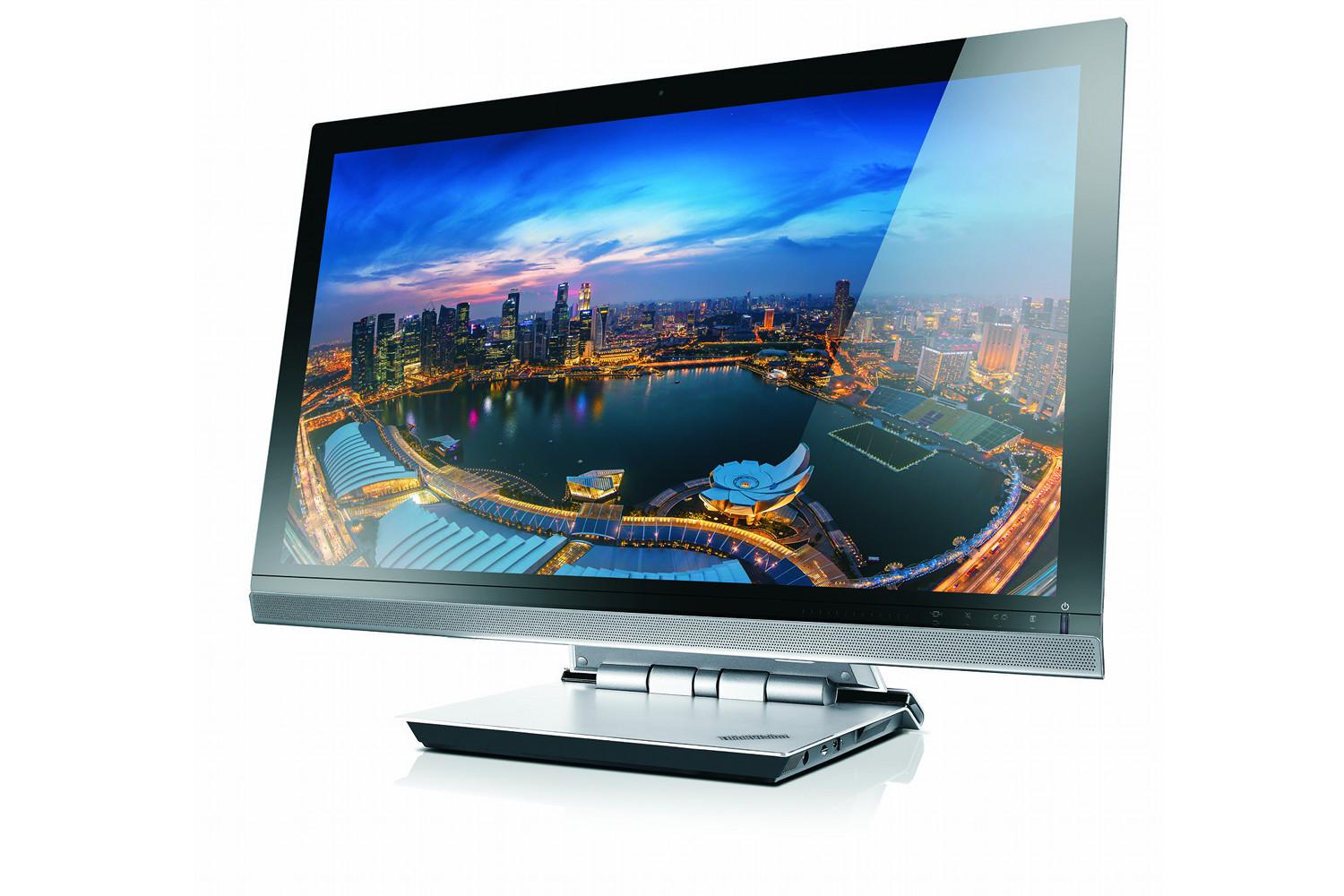
Consumers who just need a display may want to check out Lenovo’s two new displays, the ThinkVision Smart 28 and the ThinkVision Pro 2840m. Both are 4K monitors with resolutions of 3840 x 2160, and both offer a 28-inch panel, but the ThinkVision Smart is also a “smart monitor” with its own Tegra processor that runs Android 4.4. It can act as a standalone Android device or alongside a Windows PC for multi-OS purposes. Now for prices: $799 for the Pro 2840m and $1199 for the Smart.
Last, but not least, is a bit of an oddball known as the Lenovo Beacon Home Cloud Centre. This is not a PC, but instead a media hub that can store up to 6TB of data and has its own built-in Atom processor along with a gigabyte of DDR3 memory. The device can be used with PCs, of course, but also can be accessed by Android devices. You’ll have to hand over just $199 for the Beacon.
What do you think of these new Lenovo gadgets? Which stand out to you and why? Sound off in the comments below.