“RealSense is a half-baked research product that’s been unleashed on the public well before it’s done.”
- Should be “free” when bundled in PCs
- Fast movement can fool the camera
- Works only within a limited range
- Software support is very immature
“Why you can trust Digital Trends – We have a 20-year history of testing, reviewing, and rating products, services and apps to help you make a sound buying decision. Find out more about how we test and score products.“
RealSense is a half-baked research product that’s been unleashed on the public well before it’s done.
Intel devoted most of its CES 2014 press conference to its new RealSense 3D camera, a device that’s very much like Kinect for a laptop computer. This camera will be bundled into numerous Ultrabooks and tablets by mid-year, and will enable software never before possible. Interactive 3D books, real-time virtual sculpting and on-the-fly video editing are just some of the possibilities hinted at.
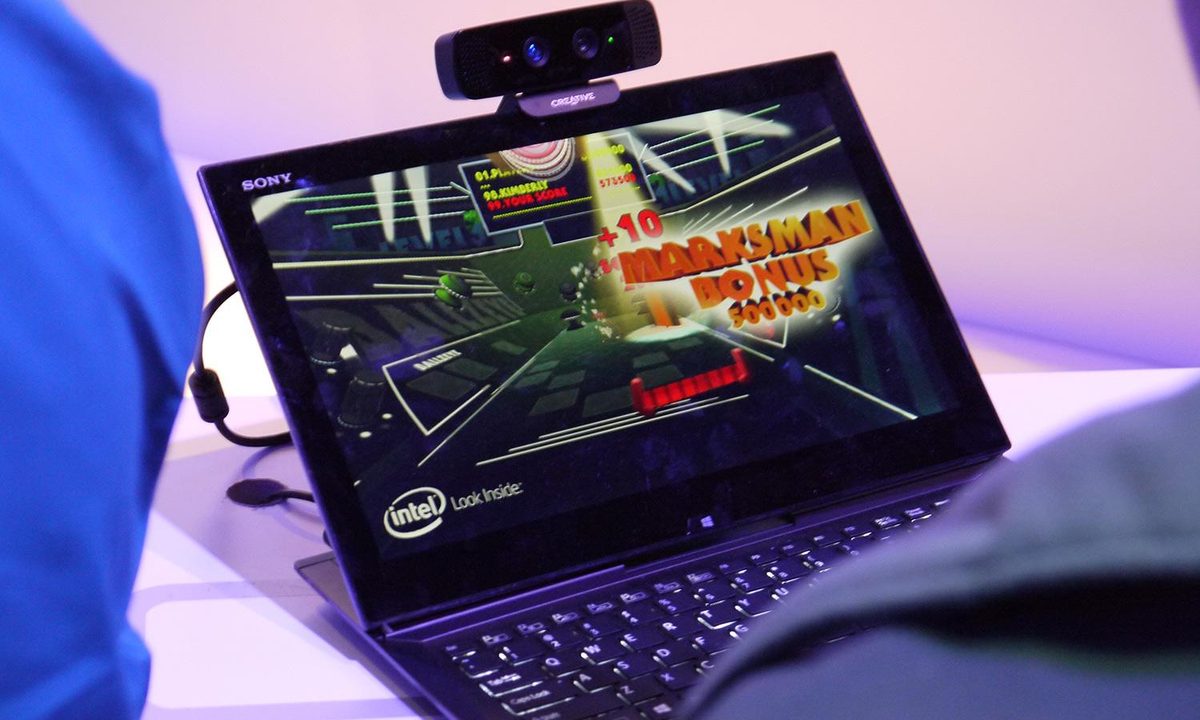
To see the technology for ourselves, we made our way over to Intel’s booth, where a variety of demos were on display. We didn’t have to play with them long to realize that RealSense isn’t ready for launch. Indeed, using it brings back scarring memories of the Leap sensor, which disappointed us last year.
We started off with a gesture-based music app that was shown at Intel’s conference. This was the most convincing demo on-stage, so we expected it to work well in person. It didn’t. The camera seemed to have a hard time picking up any gestures at all unless we stood within a narrow range and, even then, only some of the app’s gestures worked. Others, like giving a camera a thumbs-up to increase the tempo of the background music, were never recognized.
Another demo, a game called 3D pinball, tasked us with using our hands to deflect a ball bouncing between the foreground and targets in the background. While the game had no problem locating a hand held before the camera, movement was not smooth and instead came in jerks and starts. This, of course, made the game rather frustrating, as we couldn’t aim the ball where we wanted or reliably hit it.
The only demo that worked somewhat well was Hoplites, a game built in the style of Angry Birds with the goal of helping a squad of cute cartoon warriors safely reach their destination. Doing this requires the use of various hand gestures to bridge chasms, block fireballs and ward off monsters. Though the game often perceived us as thumbless, it at least detected hand movement quickly and smoothly.
On the whole, then, the verdict is simple: RealSense doesn’t work very well. In fact, we think it’s fair to say it works poorly. Kinect 2 is light-years ahead, and even the Leap is a step forward.
Using the camera – and watching others use the camera – did no favors for Intel’s argument that gesture input is more “natural” than touch. While the company’s ever-smiling floor staff was eager to show people what to do, there was still no shortage of flailing hands and confused faces. The technology sparks curiosity, but it fails to follow up, and loses its interest once the initial charm of interaction gives way to reality; RealSense isn’t any good.
What most baffles us most is the fact that Intel is acting as if this technology, which clearly isn’t ready, will change the world. Maybe it could, one day. But if it does, it won’t be because of RealSense. All this immature product does is sour people to 3D sensors, making the path to acceptance harder for future products that may (hopefully) work better.
Highs
- Should be “free” when bundled in PCs
Lows
- Fast movement can fool the camera
- Works only within a limited range
- Software support is very immature