
The writing is on the wall. It’s also on car windows, bathroom tiles, and bedframes.
In The Signal, everything is a surface to be written on. Director William Eubank’s second feature film is a surreal thriller that twists and turns down increasingly shocking and unexpected pathways, ultimately arriving at a definite destination without a concrete conclusion.
Confused? That’s part of the point. The viewers, like the hero at the heart of the tale, must draw their own conclusions about what unfolds in The Signal. It’s not a completely subjective experience — certain aspects of the story are overtly explained — but by and large, the ultimate meaning of the unfolding terror is left up to you.
Brenton Thwaites stars as Nick Eastman, a computer-savvy MIT freshman on a cross-country road trip with his best friend Jonah (Beau Knapp) and girlfriend Hailey (Olivia Cooke). At some indistinct point in the past, Nick was a star runner; these days, he walks on crutches, his physical state deteriorating for reasons that aren’t immediately clear. Nick guesses that he’ll be in a wheelchair within a year or two, and he feels that Hailey, who is about to begin school in California, shouldn’t have to suffer at his side.
It brings to mind stomach-knotting, mind-bending horrors like The Twilight Zone and Twin Peaks.
Despite the warning, Nick and his friends continue their pursuit, ultimately tracking Nomad’s signal to a remote location in the desert, about 180 miles off course. Every sign indicates that they should cease their chase. But that’s not Nick’s style; he subscribes to the idea that people should run toward problems, not away from them. On this occasion, Nick should have resisted his own advice.
It’s hard to talk about what happens next — which is exactly the situation Nick finds himself in. Following his pursuit of Nomad, Nick falls deep into a proverbial hole without any discernible explanation of how he got there or how he can get out. Even as he attempts to rise out of his situation, he only sinks deeper.
The Signal is a movie that works best when you don’t know what’s about to happen next. It’s told at a deliberate, methodical pace; at times, it almost feels like three distinct films crammed into one space. The scenic road-trip through empty deserts and nearby mountain views ultimately gives way to more enigmatic, static imagery. The further the movie moves along, the deeper down the rabbit hole it goes.
Indeed, The Signal plays out like a Wonderland of sorts. It brings to mind stomach-knotting, mind-bending horrors like The Twilight Zone and Twin Peaks. (In fact, the film was edited by Twin Peaks veteran Brian Berdan.) The film adheres to the golden rule of “show, don’t tell” for the majority of the runtime; monstrous scrapes on walls make little sense at first glance, but once certain pieces of information become available, the fuller picture comes into focus.
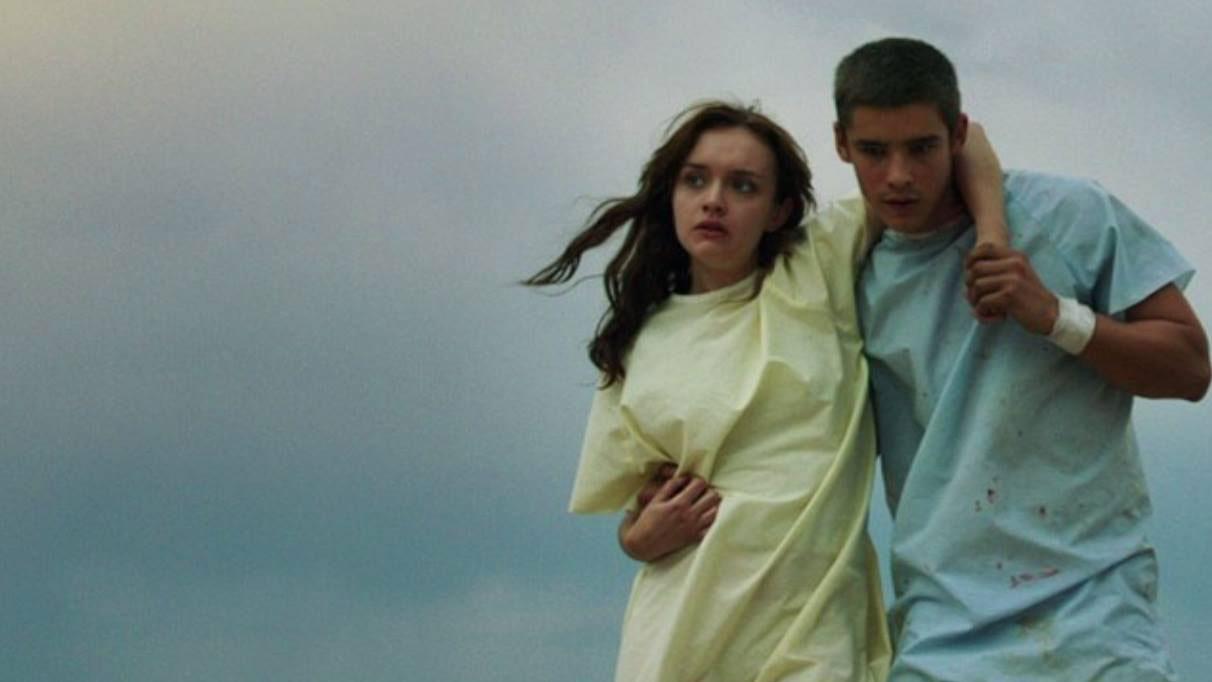
When The Signal does explain itself, it doesn’t work as well. A last-minute twist involving Laurence Fishburne’s character, for example, falls flat on its face, both because of its delivery and how on-the-nose certain information is in retrospect. Fishburne himself, it should be noted, is a delight; as the one high-profile actor in the film, he brings his signature gravitas and enigmatic qualities to a role that demands presence. With a lesser actor in the role, The Signal would die out.
“As advanced as we are,” Fishburne’s character says at one point in the film, “it’s amazing that we still have use for something as crude as a pen.”
The observation speaks to the larger themes of The Signal, to the reason why the film succeeds. There are machinations at work greater than any one individual; moments and movements that words and definitions cannot justify. For all of his brains and high-tech know-how, even Nick has to occasionally resort to pen and paper (or pen and concrete surface, as the circumstances sometimes demand) to decode his increasingly perilous situation. Likewise, the viewer’s imagination becomes the pen, and the film becomes the canvas; the unfolding mystery, and its ultimate destination, is a compelling conundrum worthy of debate and personal interpretation.
The Signal is a smart and sharp film, especially (perhaps even only) when Eubank shies away from explicitly connecting the dots. That’s not even mentioning the film’s visual effects work; again, to delve too much into that topic would reveal some of the more surprising twists of the movie, but suffice it to say, Eubank has a vivid imagination and the ability to follow through on his vision.
Even if it’s not the must-see movie of the summer, The Signal is a provocative work of science fiction that’s well worth seeking out. Keep an eye on Eubank especially. His sophomore effort sends strong signals that he’s a filmmaker to watch.


