  1. Home
  2. Phones
  3. News

Signal messenger wants to protect you from phishing with these new in-app changes

Signal has introduced new safety features to help users detect and avoid scams.

Add as a preferred source on Google
Signal app banner on an iPhone.
Rachit Agarwal / Digital Trends

If you use Signal, there’s something important you should know. The encrypted messaging app has rolled out a set of new in-app safety measures designed to protect you from phishing and social engineering attacks.

To help protect Signal users from phishing and social engineering attacks, we’ve introduced additional confirmations and educational messaging in the app to help people better detect fraudulent profiles, especially message requests from scammers posing as Signal.

More changes… pic.twitter.com/ASZNCXHNFM

— Signal (@signalapp) May 11, 2026

This isn’t out of nowhere either. Back in March, Signal confirmed that its platform had been targeted by phishing attacks aimed specifically at government officials and journalists. It seems that these new changes are a direct response to that.

What are the new safety changes in Signal app?
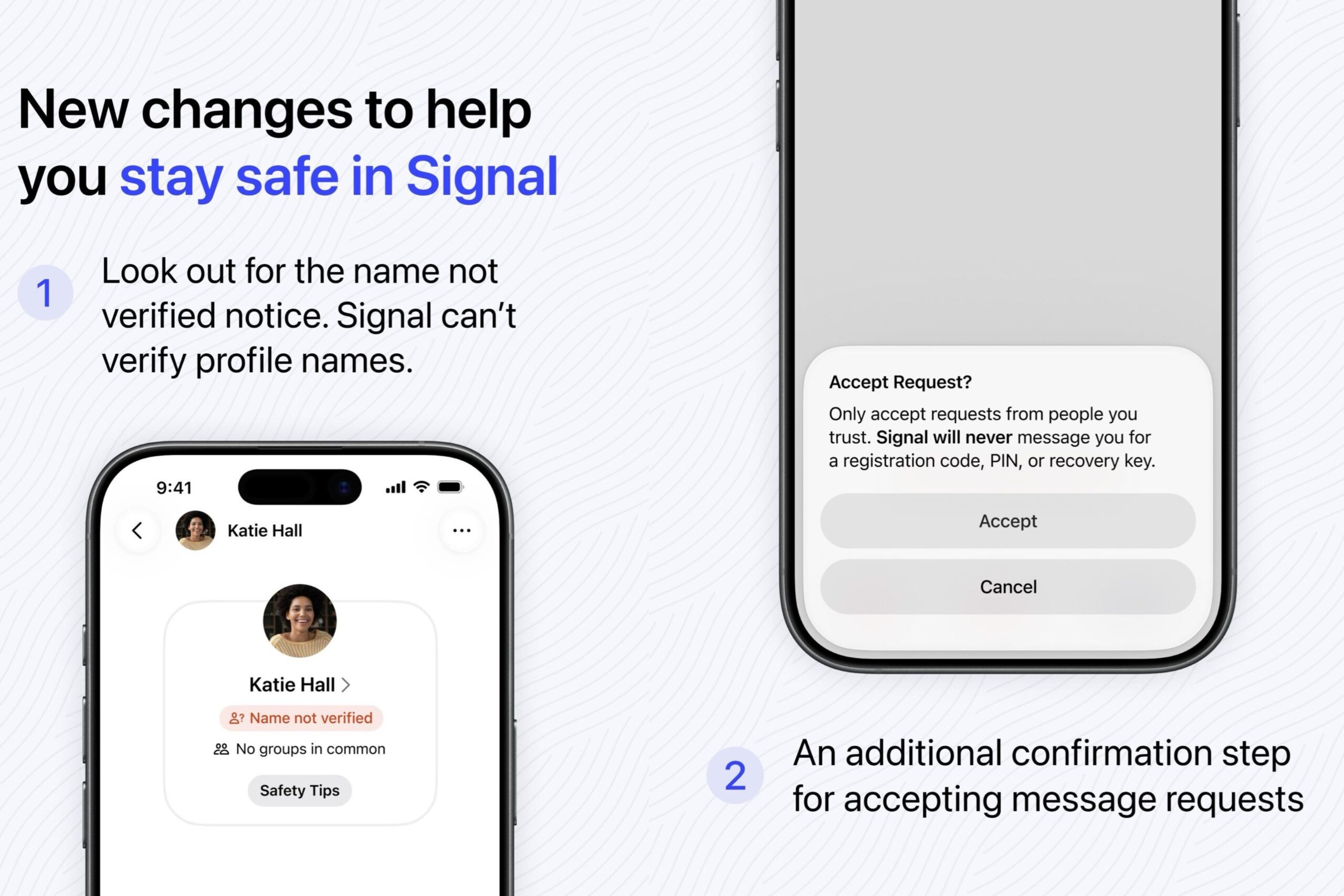
The most notable addition is a “name not verified” notice that now appears on profiles. This is important because Signal cannot actually verify the names users display on their profiles. Anyone can claim to be anyone since the profile name is set by individual users.

Recommended Videos

Signal has also introduced an extra confirmation step when you receive a message request. The idea is to only accept requests from people you actually know and trust. This is quite similar to how WhatsApp handles chats from unknown numbers, where you get the option to accept or cancel when it comes from an unknown number.
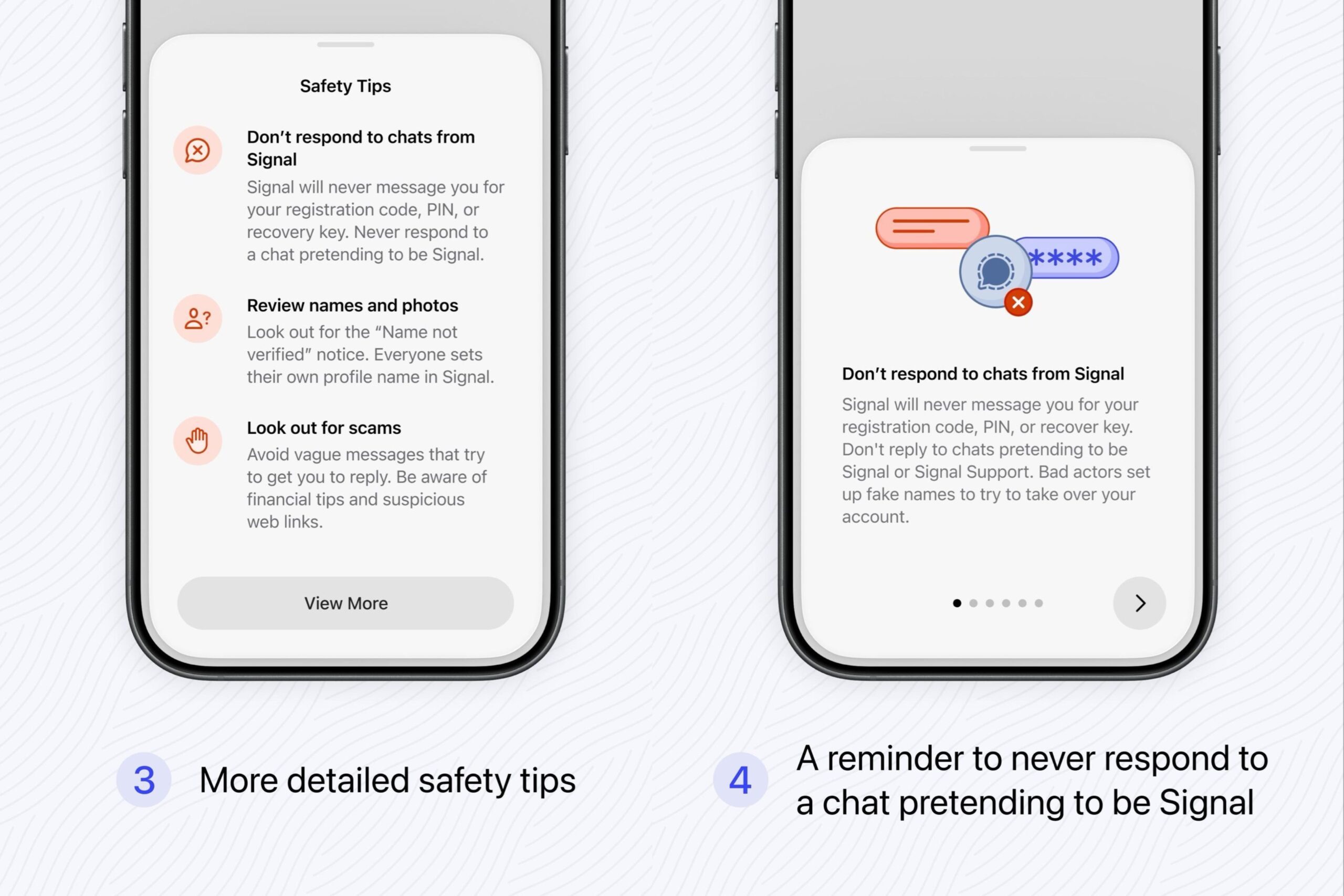
The app now also surfaces more detailed safety guidance directly in the interface. You’ll see reminders not to respond to chats claiming to be from Signal, since Signal will never reach out to ask for your PIN, registration code, or recovery key. If someone is asking for any of those things, it’s a scam.

The app also highlights vague messages – designed to lure a reply, suspicious web links, and any chat pushing financial tips – as red flags to watch for.

Why this matters?

Social engineering is one of the most common ways people get compromised online. It doesn’t require a technical hack. It just requires tricking you into handing over the right information.

Scammers impersonating Signal itself is a particularly sneaky tactic because it exploits the trust people place in the app. Signal has confirmed more changes are on the way, so this is just the beginning of a broader push to make the platform safer for everyone.

Manisha Priyadarshini
Manisha Priyadarshini is a tech and entertainment writer with over nine years of editorial experience.
Qualcomm leak suggests we have entered the ludicrous era of pricey phones
Your next Android flagship could cost more because of one tiny chip
Snapdragon 8 Elite

We have reached the point where the processor inside a flagship phone may cost as much as an entire budget Android phone. That sounds absurd, but it also feels exactly like where premium phones are headed. Samsung already raised the Galaxy S26’s starting price by $100 over the Galaxy S25, and the next wave of Android flagships could climb even higher.

According to a new leak from tipster Abhishek Yadav, Qualcomm’s upcoming Snapdragon 8 Elite Gen 6 Pro could cost upward of $300, significantly raising the bill of materials for next-generation Android flagships.

Read more
Samsung phones will block those nasty push notifications brimmning with adware
Galaxy users may get a cleaner notification bar
Front view of the Galaxy S26

Push notifications are useful until apps start treating them like free ad space. On Android, this gets especially annoying because promotional alerts are not always clearly separated from important notifications. Users often have to guess which setting controls ads, and many end up turning off notifications entirely just to stop the spam.

Samsung now appears to be addressing this issue with a new Device Care update that can detect and block apps that send too many promotional notifications.

Read more
Apple’s 2028 iPhone display sounds impossible, but Samsung and LG are scrambling to build it
Android phones have had curved displays for years and accepted the distortion as the price of aesthetics. Apple is spending two years and billions of supplier dollars to not accept it.
iPhone 2027 mockup

Apple doesn’t ask its suppliers to build things. It tells them to, hands them a deadline, and watches billions of dollars move on product lines and supply chains. 

The company is reportedly pushing Samsung and LG to build a fundamentally new OLED cathode material called IZO (Indium Zinc Oxide) for a four-sided bending display planned for 2028 iPhones (via ETnews). 

Read more