I like noise-canceling earbuds because the outside world has a way of barging in without permission. A few blocks to the gym shouldn’t require hearing every motorcycle, car horn, or construction drill the city can throw at me.
The problem shows up on the walk back, usually when I stop to buy something. Suddenly, I’m at the checkout counter holding my earbuds like tiny expensive pebbles, trying not to be rude, trying not to drop them, and somehow making the whole thing look more dramatic than it needs to be. Then one slips, and I’m bent over looking for inconspicuous black earbuds on hot asphalt.
So yes, I get the appeal.
Why open-ear earbuds sound so reasonable
That tiny annoyance is where this category starts making sense. Shokz built its name on bone-conduction headphones for runners and cyclists, while Bose and Sony have pushed designs that sit outside the ear instead of sealing it shut.
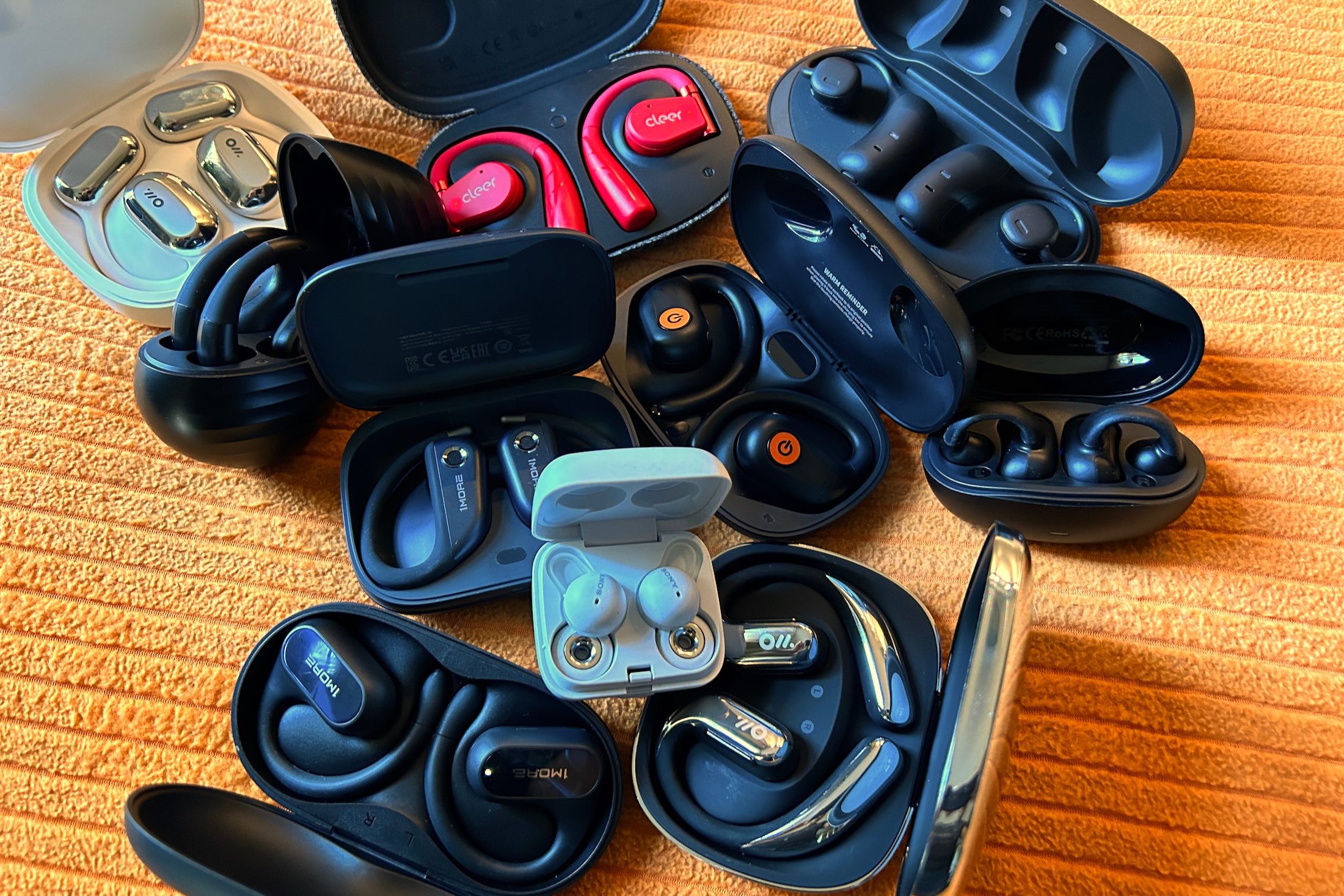
It’s a good pitch. Sealed earbuds make the social signal obvious. Open-ear models leave more room for negotiation. Traffic still cuts through. Coworkers still exist. Boarding announcements, checkout small talk, and someone asking whether you’re “free for a quick sync” can still reach you. You can keep a playlist, podcast, or call running and still look like a basically functioning member of society.
That convenience is hard to argue with. Naturally, that’s when it starts looking suspicious.
When available starts getting blurry
The office version gets weirder. Big headphones send a clear message. Noise-canceling earbuds do, too. They say, fairly or not, that you’re working, hiding, concentrating, or choosing not to hear anyone describe a calendar invite out loud.
Open-ear models soften that signal. Someone can say your name, and you can probably answer without removing anything. Maybe that’s considerate. Maybe the room has just become another background layer, tucked somewhere behind a podcast, a playlist, a call, or some AI voice telling you what to do next.

It creates a neat little social loophole. You’re technically reachable, but not fully there.
How constant listening learned to behave itself
This goes beyond earbuds, which is usually when a harmless gadget starts acting too pleased with itself. The same logic fits audio glasses, smart glasses, wearable AI, and every other device that wants to disappear while staying on.
The hardware isn’t the villain here. For runners, commuters, travelers, and people who need situational awareness, it can be the difference between enjoying music and missing something important. I’d rather notice a car coming than enjoy one last crisp chorus before becoming a cautionary tale.
The office version leaves a stranger aftertaste. Awareness becomes the product feature, while the habit underneath stays the same: constant stimulation with better manners. Open-ear earbuds don’t shut the world out. They renegotiate the terms.
I’ll hear you if I must, but until then, I’d rather be somewhere else.