
Apple may have announced a smaller iPhone 6 at its September keynote as previously rumored, but that didn’t stop the Cupertino-based company from introducing an enlarged version of the iPhone 6 too. Sporting a 5.5-inch Retina display and more advanced camera components, the aptly-titled iPhone 6 Plus looks like a capable contender in the burgeoning realm of phablets.
Like its smaller sister phone, the sleek device includes an updated version of Apple’s 64-bit A8 processor and M8 co-processor, along with support of the 802.11ac wireless standard and NFC capabilities designed to make use of the forthcoming Apple Pay system. It also features more robust storage capacity and retains the fingerprint sensor first introduced in the iPhone 5s. Regardless of it’s merits, though, how does Apple’s latest big-screen endeavor compare when placed side-by-side with the Samsung’s promising Galaxy Note 4? Check out the spec comparison below for an in-depth look a the internal hardware and software differentiating the two devices.
Related: Samsung reveals the Galaxy Note 4 and Apple announces 5.5-inch iPhone 6.
Apple iPhone 6 Plus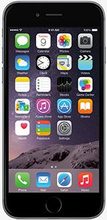 |
Samsung Galaxy Note 4 |
|
| Size | 6.22 x 3.06 x 0.28 (in) | 6.04 x 3.09 x 0.33 (in) |
| Weight | 6.07oz | 6.21oz |
| Screen | 5.5-inch Retina HD | 5.7-inch, Quad HD Super AMOLED |
| Resolution | 1920 x 1080 pixels | 2560 × 1440 pixels |
| OS | iOS 8 | Android 4.4 |
| Storage | 16/64/128GB internal | 32GB internal, 64GB external |
| SD Card Slot | No | Yes |
| NFC support | Yes | Yes |
| Processor | Apple 64-bit, A8 chip | Quad-core Snapdragon 805 processor |
| RAM | 1GB, possibly 2GB | 3GB |
| Connectivity | Wi-Fi, 4G LTE, HSPA+ | Wi-Fi, 4G LTE, HSPA+ |
| Camera | Front 2.1MP, Rear 8MP | Front 3.7 MP, Rear 16 MP |
| Video | 1080p HD | 1080p HD |
| Bluetooth | Yes, version 4.0 | Yes, version 4.0 |
| Fingerprint sensor | Yes | Yes |
| Water Resistant | Yes | No |
| Battery | TBA, 24 hours of talk time | 3220mAh, TBA |
| Charger | Lightning | microUSB |
| Marketplace | Apple App Store | Google Play Store |
| Avg. Price | $750, $300 with a two-year contract | $600, $300 with a two-year contract (likely) |
| Availability | September 19 on AT&T, Verizon, Sprint, T-Mobile | October on Verizon Wireless, T-Mobile, Sprint, AT&T |
| Colors | Gold, silver, space gray | Gold, white, pink, black |
| DT Review | 4.5 out of 5 stars | 4.5 out of 5 stars |
Power and productivity
Power and productivity is more than merely what’s on the surface. The Galaxy Note 4 is powered by a quad-core Snapdragon 805 processor – a CPU that’s set to be the last of the high-end, 32-bit chips – while the 6 Plus features a 64-bit A8 chip. However, just because the Snapdragon 805 processor appears quicker and more powerful, that doesn’t necessarily mean it will surpass the A8 chip in performance. Apple’s offering is more advanced despite (reportedly) possessing a mere two cores. Nonetheless, there’s no arguing against the Note 4’s 3GB of RAM.
Connectivity options are nearly identical across both devices. Each smartphone is compatible with 802.11ac Wi-Fi, 4G LTE, and HSPA+, along with Bluetooth 4.0 and NFC. Whereas the Note 4 merely offers 32GB of internal storage with optional external storage of up to 128GB, though, those who opt for the 6 Plus can choose a model with up to 128GB of internal storage from the get-go. The Note 4 runs Android 4.4 and utilizes the Google Play Store while the Plus runs iOS 8 and capitalizes on Apple’s App Store — but both offerings do include a fingerprint sensor.
Perhaps the biggest productivity difference between the two is the S Pen stylus, which slips inside the Galaxy Note 4’s body. It has been improved for the latest model, and there are several new, time-saving software features including an updated Air Command menu on the device itself. Apple has taken advantage of the 6 Plus’ larger screen though, and tweaked iOS 8 to make it easier to use with one hand, and in landscape mode, plus it has added another column of icons on the home screen.
Winner: Galaxy Note 4
Design
Past iPhone users will instantly recognize the Plus’ new design, but appreciate the slim body, curved edges, and premium build. Sitting at 6.2 inches tall and sporting a 5.5-inch Retina HD screen, the Plus also weighs just 6.07 ounces and has a 1920 by 1080 pixel resolution. Samsung’s offering trails the Plus only in how tall the phone is, while trumping the 6 Plus in every other size and design specification. Packed with a 5.7-inch, Quad HD Super AMOLED screen, and featuring a 2560 by 1440 pixel resolution, the Note 4’s screen looks beautiful. It does weigh a “heavy” 6.21 ounces, though anyone who purchases a phone in the phablet line knows they aren’t getting one for its light weight.
The Note 4 has a metal frame and another leather-look rear panel, which some may not consider very premium, while the iPhone 6 Plus has a better looking, smooth and sleek aluminum body. The Note 4 wins in specs, but the 6 Plus has it on design.
Winner: Draw
Camera
Apple went to great lengths — or so it made it seem — to give the iPhone’s camera a massive upgrade for its latest release. Touting advancements across the board for its 8-megapixel iSight Camera, Apple stepped its camera game up by including its new Focus Pixels sensor while improving its face detection and auto focus functions. Crucially, the iPhone 6 Plus gets optical image stabilization, which is absent from the smaller iPhone 6. The megapixel count may be low, but this has never stopped photographers from taking amazing pictures with the iPhone in the past.
Not to be outdone by its competition, Samsung included an incredible 16-megapixel rear facing camera, to go along with a 3.7 megapixel front camera on the upcoming Galaxy Note 4. Even with the advancements Apple made in regards to its iSight Camera and video shooting capabilities, the fact the Note 4 doubles the Plus in terms of megapixels gives it a leg up on Apple’s flagship, but both are sure to deliver outstanding results.
Winner: Draw
Price and availability
Pre-orders for the iPhone 6 and 6 Plus go live on September 12th, with a full-scale release scheduled for September 19th on all the major cellphone carriers. As for the price, the iPhone 6 Plus retails at $750 though anyone who signs a 2-year agreement with a cell-phone carrier gets the 16GB model of Apple’s phablet at just $300. Samsung plans to launch its Galaxy Note 4 this coming October across all the major cell phone carriers. Expect to pay roughly $600 for an un-tethered Galaxy Note 4 and around $300 for the device on a two-year agreement.
Winner: Draw
Conclusion
Though the iPhone 6 Plus is Apple’s first venture in the phablet market, it’s apparent the electronics giant knows what it’s doing. Apple found the perfect blend of iPhone and iPad when constructing the Plus and the finished product is superb. If the other electronics in your life have the same Apple logo on them, then the Plus 6 is an easy recommendation. With an improved approach to connecting all your devices, and Apple’s patented ease of use with its operating system, the iPhone 6 plus doesn’t disappoint. Samsung’s Galaxy Note 4 is a welcome upgrade over the Note 3 but its hard to bet against Apple and its impressive first foray in the phablet game.
Related: iPhone 6 vs. iPhone 6 Plus.
Related: How big is the iPhone 6 Plus?
DT writers Brandon Widder and Rick Stella contributed to this piece.


