1. Home
  2. Wearables
  3. Cars
  4. Emerging Tech
  5. Legacy Archives

Drivebot is a Fitbit for your car, helping you save grief, money, and gas

Add as a preferred source on Google

There are plenty of wearable devices out there to help you monitor your health, but a team from Thailand has applied that same concept to cars. The Drivebot is a dongle that plugs into your car and links up to your smartphone so you can track your car’s health and become a more fuel-efficient driver. In other words, it’s a Fitbit for your car.

The white device plugs into a car’s OBD-II (on-bard diagnostic) port, which is included in all cars and light trucks sold in the U.S. after Jan. 1, 1996. Once it pairs with your smartphone via Bluetooth, your car’s health (e.g., engine, transmission, brake and steering system status) can be monitored via the Drivebot app for iOS and Android phones.

Recommended Videos

Related: Zubie lets you monitor your car – and loved ones – with your smartphone

Beyond helping drivers stay on top of their automobile’s health so they can avoid costly “too late” visits to the auto mechanic, the Drivebot is meant to help save on fuel costs and time on the road by finding the best driving routes and offering tips for improved driving habits.

The Drivebot will retail for $119, but it’s available at a discount on its Indiegogo page. The team of five engineers doesn’t seem to mind resellers, as the crowdfunding page has a $1,300 package aimed at that specific audience, which offers 20 Drivebot devices at about 50 percent off retail.

The Indiegogo campaign, which began on Oct. 20 and closes on Nov. 29, has already raised more than $42,000 from more than 480 backers (the goal was $35,000). This unlocks the $40,000 stretch goal: a “special edition” Drivebot.

Shipments of the Drivebot and the launch of the iOS app are slated for February 2015, with the Android app expected to launch in March.

Jason Hahn
Former Contributor
Jason Hahn is a part-time freelance writer based in New Jersey. He earned his master's degree in journalism at Northwestern…
Apple wants you to verify your identity before you get Education discount on products
Apple moving the US Education Store off the honor system also seems about making a globally consistent verification infrastructure that could eventually support more aggressive Education Store expansion.
Computer, Electronics, Laptop

Getting an Apple Education discount in the United States used to be as simple as claiming you’re a student or a teacher; it didn’t need a formal verification. That era is officially over. 

Starting May 8, 2026, Apple now requires formal identity verification for all Education Store purchases in the US, ending the informal honor system that was in place for years (via MacRumors). 

Read more
You can finally avail an education discount on the Apple Watch
It's Apple broadening its ecosystem play into a segment that previously had no wearable entry point, and that could meaningfully accelerate Apple Watch adoption among younger first-time buyers.
Side view of Apple Watch Series 11.

Apple’s Education Store has always been a reliable shortcut to cheaper Macs and iPads for students and teachers. However, for years, Apple Watch wasn’t allowed into the story, making people wait for third-party sales or discounts to get their hands on the smartwatch. 

That’s changing, with effect from May 8, 2026. Apple has quietly added the Apple Watch to its Education Store for the first time. The Watch Series 11, SE 3, and the Ultra 3 are now available at discounted education pricing across 21 markets, including the US, UK, India, Canada, and Australia. 

Read more
Whoop’s response to Fitbit Air and Google Health is real doctors, not just an AI chatbot.
In the race to own your health data, Google chose an AI, and Whoop chose a doctor. That single decision may define which fitness tracker serious health users reach for in 2026 and beyond.
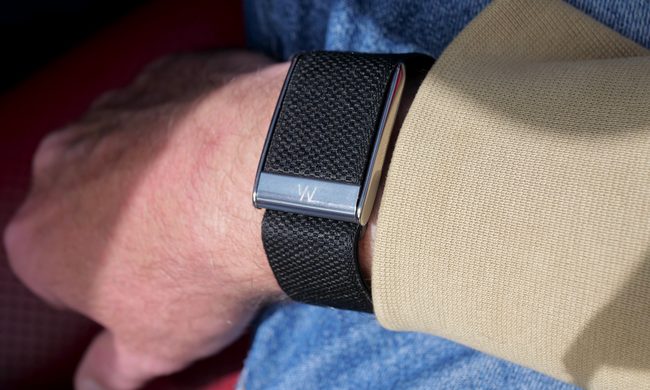
A person wearing the Whoop 5.0.

Recently, Google launched the Fitbit Air as a direct rival to the Whoop screenless fitness band, rebranded the Fitbit app to Google Health, and released a Gemini-powered AI coach. Exactly one day later, Whoop has responded with on-demand video consultations with licensed clinicians for US users. 

The contrast is hard to ignore. While Google is betting on AI as your general health advisor, Whoop is doubling down on real, licensed doctors, and making the case that they can serve its fitness-focused users considerably better (via CNBC).

Read more