1. Home
  2. Phones
  3. Cars
  4. Mobile
  5. News

Uber expands self-driving car project with University of Arizona partnership

Add as a preferred source on Google

In the U.S., Uber’s believed to have more than 150,000 drivers on its books, each one taking around 80 percent of every fare. With that in mind, it’s perhaps little wonder that its executives are apparently steering the company toward a driverless-car set-up, though admittedly it’ll be many years before riders climb into an Uber car to find no one in the driving seat.

Moving steadily toward its goal, San Francisco-based Uber said Tuesday it’s partnered with the University of Arizona in Tuscon to work on optics technology to develop its self-driving car’s mapping system and safety features.

Recommended Videos

The move marks an expansion of its ambitious autonomous-vehicle project, coming six months after Uber announced a partnership with Carnegie Mellon University (CMU) to create the Uber Advanced Technologies Center in Pittsburgh. The facility is focusing on developing key long-term technologies “that advance Uber’s mission of bringing safe, reliable transportation to everyone, everywhere,” the company said at the time.

Arizona governor Doug Ducey said Tuesday that besides the development work, Uber will also donate $25,000 to the university’s College of Optical Sciences “to help the next generation of scientists, engineers and researchers continue to explore and develop new, innovative technology.”

Governor Ducey also green-lighted the testing and operation of self-driving vehicles in Arizona, so residents can expect at some point to see Uber cars – as well as others – tootling along the streets with a bunch of tech gear perched on the roof.

Uber’s self-driving car ambitions first came to light in 2014 when CEO Travis Kalanick said he could imagine a time where the ride-hailing service operated a fleet of such vehicles.

Commenting on the technology being developed by Google as well as a slew of established car companies, Kalanick said at the time that “this is the way the world is going….if Uber doesn’t go there, it’s not going to exist either way.”

Keen to calm its community of drivers possibly fearing they were on the verge of being replaced by a computer, the CEO added that Uber’s transition to driverless cars is likely to take many years.

Trevor Mogg
Contributing Editor
Not so many moons ago, Trevor moved from one tea-loving island nation that drives on the left (Britain) to another (Japan)…
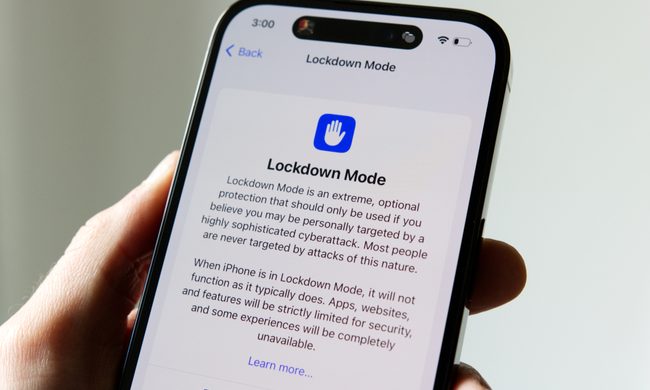
Apple says Lockdown Mode thwarted spyware attacks with a clean slate
Apple’s strongest defense is actually holding up
Lockdown Mode information page on an iPhone 14 Pro.

Apple says it has not seen a successful spyware attack on any iPhone with Lockdown Mode enabled, a claim it shared with TechCrunch.

Lockdown Mode arrived in 2022 as an opt-in feature for iPhone, iPad, and Mac. It was introduced as a stricter security mode for people at high risk of targeted attacks, such as journalists, activists, and government officials.

Read more
The Dynamic Island could shrink on the iPhone 18 series, and not just on the Pro models
One leaker, one claim, and a big question: is Apple genuinely ready to give every iPhone buyer the same design treatment as Pro owners this cycle?
Apple iPhone 17 Pro in Cosmic Orange leaning on a gray wall.

Apple’s Dynamic Island has been around long enough that most people have made their peace with it or forgotten it’s there. In fact, I’ve seen people associating the pill-shaped notch with newer iPhone models (released in the last 3 years). Now, a fresh leak suggests that the notch replacement is about to shrink, not just on the expensive models. 

What did the leaker actually say?

Read more
Apple Podcasts finally gets serious about video, adds multiple YouTube-inspired features
With offline downloads, Picture-in-Picture, and a dedicated video hub, iOS 26.4 turns Apple Podcasts into a platform creators can no longer afford to ignore.
Electronics, Phone, Mobile Phone

For years, the Apple Podcasts app supported video, at least it did technically, but nobody used it. Creators ignored it, while listeners forgot it. Meanwhile, other platforms like YouTube and Spotify quietly built empires on video podcasting. However, that changes with the iOS 26.4 update, or at least that is what Apple hopes for. 

Video podcasting exploded in popularity in recent years, with audiences gravitating toward platforms that treated the format well (as already mentioned above). Despite being an iPhone user, I personally consume podcasts on YouTube (I briefly paid for the Premium membership as well). 

Read more