  1. Home
  2. Phones
  3. Mobile
  4. News

Verizon fined $1.35 million for tracking customers without them even knowing

Add as a preferred source on Google

After going back and forth with the Federal Communications Commission, Verizon agreed to settle with the agency over its use of Unique Identifier Headers (UIHDs).

Better known as supercookies, these device-level identifiers allow Big Red and its advertising partners to deliver targeted ads based on customer information, such as age, gender, location, apps, websites that customers visit, and interests. Unfortunately, according to the FCC, Verizon abused these supercookies by inserting them into its customers’ mobile traffic in 2012 and not letting them know about it until October 2014. In addition, it took Big Red another five months to update its terms of service to include information regarding its targeted ads program.

Recommended Videos

Furthermore, Verizon also injected supercookies into enterprise, government, and mobile virtual network operator (MVNO) lines, all of which are ineligible for targeted ad programs.

According to FCC enforcement bureau chief Travis LeBlanc, this is a matter of protecting customer privacy, though he has implied there is a degree of tracking that is acceptable. “Consumers care about privacy and should have a say in how their personal information is used, especially when it comes to who knows what they’re doing online. Privacy and innovation are not incompatible,” said LeBlanc. “This agreement shows that companies can offer meaningful transparency and consumer choice while at the same time continuing to innovate.”

As part of the $1.35 million settlement, Verizon is not only required to turn the data sharing into an opt-in, rather than an opt-out, affair, but also inform customers about its targeted ads program. According to Big Red, it’s already begun working on the latter.

“Over the past year, we have made several changes to our advertising programs that have provided consumers with even more options,” said Verizon regulatory spokesperson Rich Young. “Today’s settlement with the FCC recognizes that. We will continue to give customers the information they need to decide what programs and services are right for them.”

Williams Pelegrin
Williams is an avid New York Yankees fan, speaks Spanish, resides in Colorado, and has an affinity for Frosted Flakes. Send…
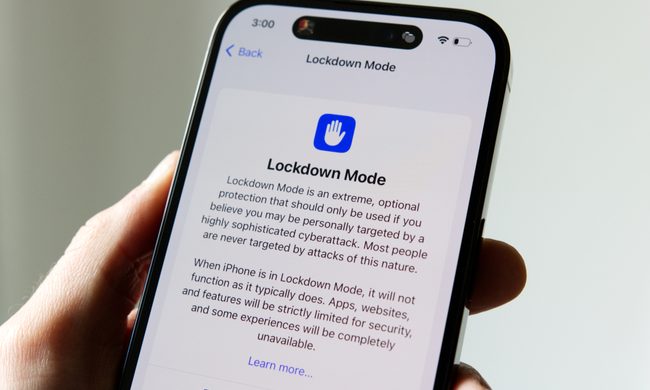
Apple says Lockdown Mode thwarted spyware attacks with a clean slate
Apple’s strongest defense is actually holding up
Lockdown Mode information page on an iPhone 14 Pro.

Apple says it has not seen a successful spyware attack on any iPhone with Lockdown Mode enabled, a claim it shared with TechCrunch.

Lockdown Mode arrived in 2022 as an opt-in feature for iPhone, iPad, and Mac. It was introduced as a stricter security mode for people at high risk of targeted attacks, such as journalists, activists, and government officials.

Read more
The Dynamic Island could shrink on the iPhone 18 series, and not just on the Pro models
One leaker, one claim, and a big question: is Apple genuinely ready to give every iPhone buyer the same design treatment as Pro owners this cycle?
Apple iPhone 17 Pro in Cosmic Orange leaning on a gray wall.

Apple’s Dynamic Island has been around long enough that most people have made their peace with it or forgotten it’s there. In fact, I’ve seen people associating the pill-shaped notch with newer iPhone models (released in the last 3 years). Now, a fresh leak suggests that the notch replacement is about to shrink, not just on the expensive models. 

What did the leaker actually say?

Read more
Apple Podcasts finally gets serious about video, adds multiple YouTube-inspired features
With offline downloads, Picture-in-Picture, and a dedicated video hub, iOS 26.4 turns Apple Podcasts into a platform creators can no longer afford to ignore.
Electronics, Phone, Mobile Phone

For years, the Apple Podcasts app supported video, at least it did technically, but nobody used it. Creators ignored it, while listeners forgot it. Meanwhile, other platforms like YouTube and Spotify quietly built empires on video podcasting. However, that changes with the iOS 26.4 update, or at least that is what Apple hopes for. 

Video podcasting exploded in popularity in recent years, with audiences gravitating toward platforms that treated the format well (as already mentioned above). Despite being an iPhone user, I personally consume podcasts on YouTube (I briefly paid for the Premium membership as well). 

Read more