
Let’s face it, our phones are often teetering on the edge of shutting down, typically due to a drained battery. This is particularly frustrating on a hike, camping trip, or other excursions where you may be relying on your phone for GPS coordinates.
Fortunately, the sun is always on — at least during the day — so why not harness the power of solar energy and keep your devices running even when you’re trekking in the middle of nowhere? After months of testing, we chose the Buy at Amazon as the best solar charger for backcountry power, thanks to its affordable price tag and efficiency. If BigBlue’s offering is too large for your needs, however, we have a few alternatives.
Further reading
BigBlue 28W Solar Charger
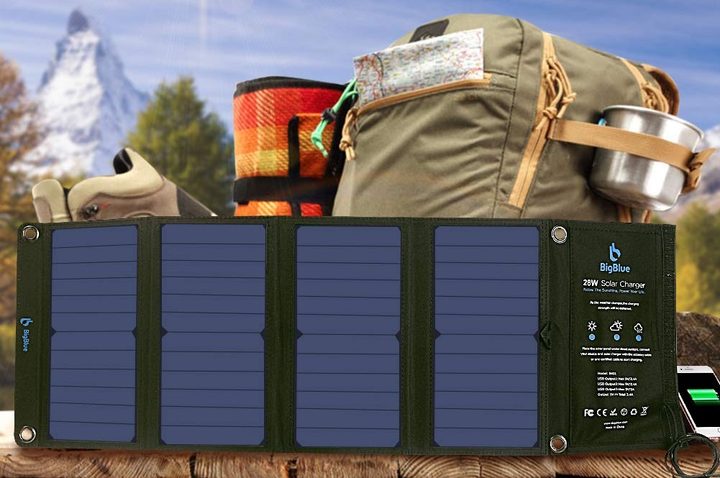
- Capacity — None (panel only)
- Outputs — 2 USB (2.4A)
- Weight — 22 ounces
- Solar panel — 28 watts
Many solar chargers are marketed as ultra-portable solar options, but few measure up to the BigBlue 28W solar charger. The unit isn’t the smallest panel on the market but delivers quite a punch when it comes to power. The solar panel charges quickly and reliably even under adverse conditions and then charges multiple devices rapidly. With a manufacturer suggested price tag of $60, the Big Blue is easy on the wallet as well. The only catch is that BigBlue doesn’t include a battery pack. You either need to charge your electronic devices directly or supply your own portable battery.
Renogy E.FLEX 10W
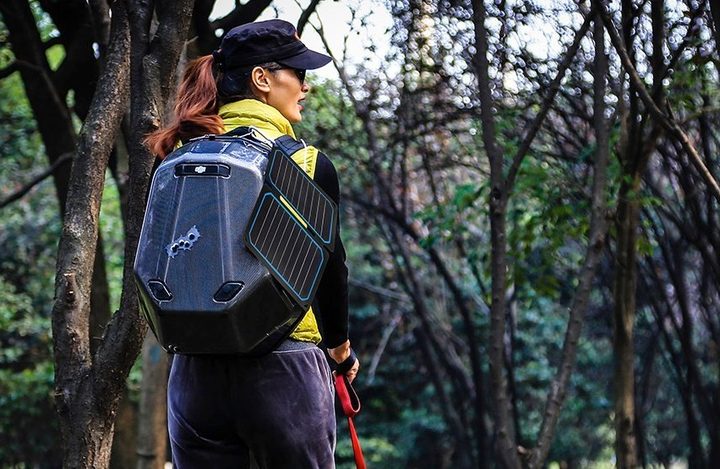
- Capacity — None (panel only)
- Outputs — 1 USB port (1.92A)
- Weight — 13 ounces
- Solar panel — 10W
While the Renogy E.Flex has no battery backup (meaning it’s only useful when the sun’s out), it is one of the cheapest panel-only options that gets both high marks for durability and charging capability. A 1.92A USB port should give you enough amperage to charge your phone in about the same time as traditional power, and even power your phone without draining the battery in full sunlight, something many other panel-only options — most of which are more expensive — cannot do. There is a 5-watt model available on Amazon for only $24, but it produces less than an amp of power to the USB ports, making it insufficient for many applications.
NekTeck 21W Solar Charger
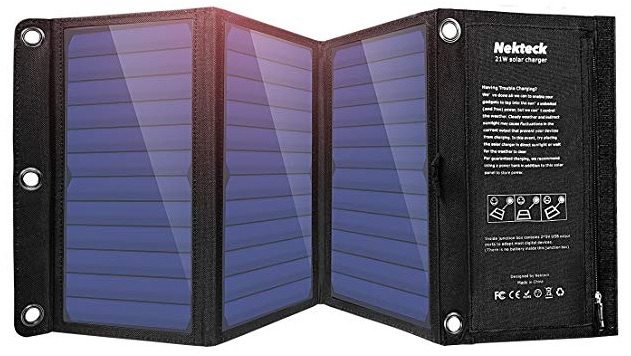
- Capacity — None (panel only)
- Outputs — 2 USB ports (up to 3A total)
- Weight — 1.3 lbs.
- Solar panel — 21W
Despite having no battery storage capabilities, Nekteck’s solar charge wows us with up to 21 watts of power production, which is more than enough to charge any portable device quickly. Unlike most solar-only chargers (ones without a battery), Nekteck’s model does allow for up to two devices to be charged at once. Just keep in mind you’re limited to 3 amps total, so charging two devices will take a good deal longer. Another nice feature is SmartIC, which will intelligently detect the type of device and deliver just the right amount of power to charge your phone, tablet, or GPS as quickly as possible.
Voltaic Arc 20W Solar Charger Kit

- Capacity –24,000 mAh
- Outputs — DC Output, USB Output (2A)
- Weight — 3.25 pounds including battery and solar panels
- Solar panel — 19.8 Watts
Unlike some of the clunkier, hard-shell builds on the market, the Arc 20 Watt Solar Charger easily fastens to a variety of awnings, packs, and tents, allowing for consistent charging throughout your adventure. This 20W kit also includes Voltaic’s V88 Universal Laptop Battery, which is designed with a DC Output, meaning you can charge most laptops at least once. The external battery also includes protection against short circuits and overcharging, so you don’t have to worry about frying your devices.
Panergy 18W Fast Charger with LED Flashlights

- Capacity –26,800 mAh
- Outputs — USB Output (up to 3A), Type-C (up to 3A)
- Weight — 1.11 pounds
- Solar panel — 1.5 Watts
This superior transportable power brick is an incredible addition to any nature lover’s survival pack. The Panergy solar charger offers 18-Watts of power, and a durable armor shell that will hold up well under most conditions the great outdoors will throw at you during a hike or camping trip. Moreover, the IPX1 weather shield can withstand most precipitation types, and the durable ABS material will keep the pack free from unwanted dust and debris. It can take up to 8 hours to charge up the battery, but once fully charged, the Panergy can capably charge both a Galaxy S10 and iPhone 11 at least six times over. Built with safety in mind, Panergy’s charger features a powerful LED allowing you to flash a distress signal from over 300 feet away. In addition, they’ve made the charger orange to repel insects.
Dizual 5,000 mAH Portable Solar Charger
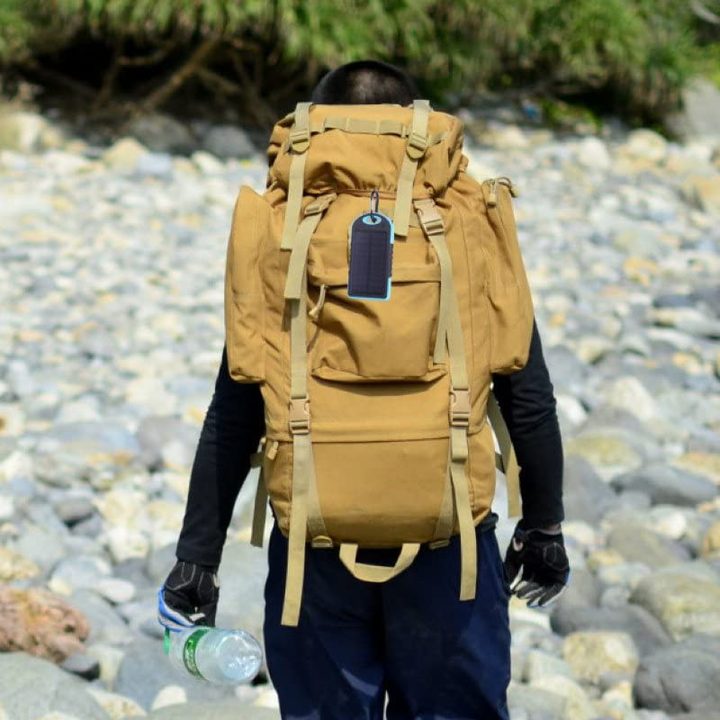
- Capacity — 5,000 mAH
- Outputs — Dual USB Output (up to 1A)
- Weight — 0.5 pounds
- Solar panel — 1.2 Watts
The affordable Dizual charger offers more than it costs. We fully back with charger and all of its great features. It comes with a backpack-ready design, including a lanyard to attach to your bag, protecting you from loss or damages.
The eco-friendly pack has a hard-nose ABS material, protecting it from falls and water damage (but don’t dip it in a lake). Rubber caps on the dual USB outputs keep dirt and debris out and protect it from damaged or clogged ports. The LED light lets you know how much power the pack has left.


