  1. Home
  2. Cars
  3. News

Mercedes-Benz and Bosch are starting an autonomous shuttle service in California

Add as a preferred source on Google
Image used with permission by copyright holder

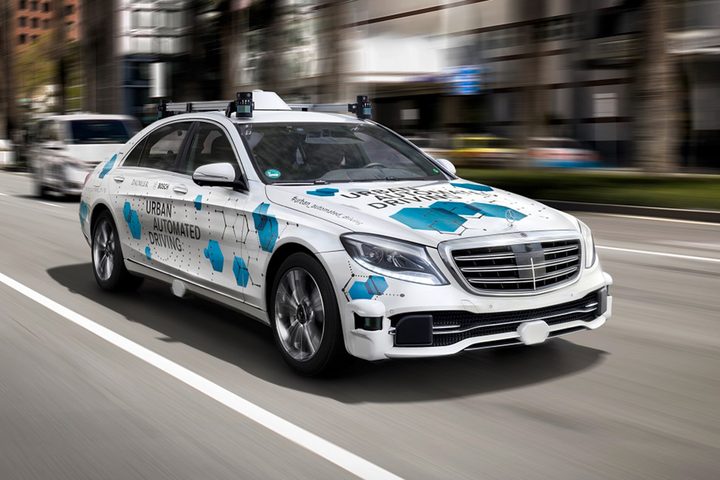
Mercedes-Benz parent company Daimler recently took what it referred to as a reality check when it comes to self-driving cars. They’re expensive to develop, complicated to get approved, and they’re farther away than many believe. These hurdles aren’t stopping the company from teaming up with Bosch to launch an autonomous ride-hailing service in California.

There are 30 vehicles initially participating in the pilot program, Digital Trends learned from a company spokesperson, and more could join the fleet over time. The prototypes are based on the S-Class, but they’re being fitted with a full suite of technology that allows them to drive themselves in a variety of conditions. Bosch stressed it keeps a safety driver behind the wheel at all times so a human can take over if something goes wrong, whether it’s an issue with the technology or a problem with road conditions. Both companies made it clear they aim to bring autonomous functions to production as soon as they’re ready.

Recommended Videos

The service works a lot like Uber or Lyft. Riders use a purpose-designed smartphone application to summon a ride to a designated pickup point. Once the car arrives, the rider hops in and travels to his or her destination without human intervention. Rides are available in West San Jose and downtown, along the San Carlos Street and Stevens Creek boulevard thoroughfares. Engineers will learn a lot by deploying the technology in California traffic, and commuters can be a part of it.

Sound cool? It’s a big step forward, but don’t expect a driverless S-Class to take you across downtown the next time you’re in San Jose; not yet, anyway. Only Bosch and Daimler associates are able to use the service, a spokesperson told Digital Trends. The program remains an experiment, so the two partners want it to run its course before letting normal riders hail an autonomous ride. “The idea is to open up the service to the public as soon as possible,” the spokesperson added.

As of writing, Alphabet-owned Waymo is the only company in America that operates a commercial ride-hailing service with autonomous cars. The service is about a year old. Bosch and Daimler could become the second firm in this space.

Ronan Glon
Ronan Glon is an American automotive and tech journalist based in southern France. As a long-time contributor to Digital…
Electric cars are getting more pocket-friendly globally, except for US buyers
The US EV market's 2025 decline wasn't about consumer disinterest. It was the predictable result of eliminating financial incentives.
Porsche Cayenne Coupe electric

In 2025, one in four cars sold anywhere in the world was electric. However, in the US, that figure is closer to one in ten, and it is not moving in the right direction. 

The falling EV prices globally have pushed sales to record levels. American buyers, on the other hand, are marching through 2026 with fewer incentives, higher prices, and a shrinking selection of affordable options. 

Read more
Lexus halts plans of an electric car based on the stunning LF-ZC concept and it’s such a bummer
Lexus finally designed a gorgeous EV and then sent it to timeout
LF-ZC concept

Toyota and Lexus may have just shelved one of the most exciting electric vehicle concepts shown in recent years. According to reports from Automotive News and Nikkei Asia, Toyota has halted development of the next-generation Lexus EV that was expected to be based on the futuristic LF-ZC concept.

For EV enthusiasts and Lexus fans, the news is particularly disappointing because the LF-ZC represented one of the clearest signs that Lexus was finally preparing to make a serious leap into the premium electric future.

Read more
Rivian thinks Apple CarPlay is already obsolete and AI is the reason why
Rivian’s AI push could change how you use cars in the future
Rivian R2 in Catalina Blue.

Rivian has once again defended its controversial decision to skip Apple CarPlay and Android Auto, but this time the company says the future of in-car technology is moving beyond smartphone mirroring altogether. According to Rivian’s software leadership, rapid advances in artificial intelligence could soon make the entire CarPlay debate irrelevant.

The comments come as Rivian continues expanding its own AI-powered vehicle software ecosystem instead of adopting Apple’s popular in-car platform. For years, the company has faced criticism from buyers who wanted CarPlay support, but Rivian now believes AI assistants will eventually replace many of the functions drivers currently rely on through their phones.

Read more