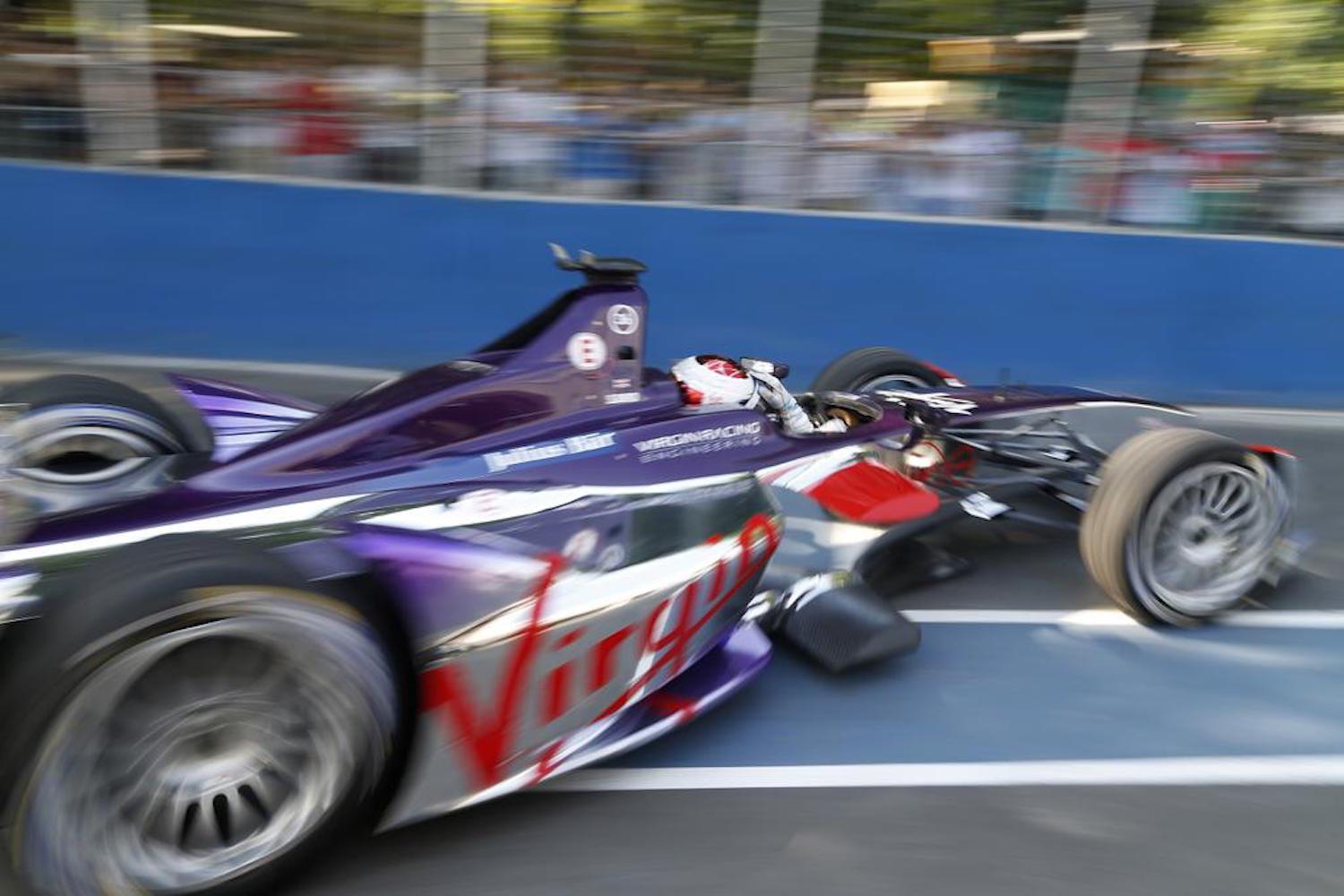
Formula E is moving ahead with previously-announced plans to let individual teams choose the powertrains for their electric cars, which should add some excitement to the second season of this emission-free racing series.
For its inaugural season, which wrapped up in London back in June, Formula E required all teams to use identical Spark-Renault SRT_01e electric cars, which kept the racing close and put a cap on costs, but made things a little less interesting.
For season two, the Federation Internationale de l’Automobile (FIA) is homologating eight manufacturers to provide powertrains to the 10 teams. “Powertrain” is defined here as the motor, inverter, gearbox, and associated cooling systems. Everything else is off limits.
That means all of the cars will still probably look the same, but will perform differently, owing to the powertrain changes. The FIA says that keeping aerodynamics identical across the board will help keep costs down; complex aerodynamics has been one of the factors behind the spiraling costs in the sanctioning body’s flagship series, Formula One.
These changes thus mean that Formula E could turn out to be less like Formula One, and more like IndyCar, where all teams use the same Dallara chassis, but with engines and some specific aero bits supplied by one of two manufacturers: Chevrolet or Honda.
Even that scenario could be good for Formula E, though. It introduces another variable, and more unpredictability can make for better racing. Having multiple powertrains creates unknown performance differences between cars and drivers, and not knowing what will happen is what makes things exciting.
Allowing manufacturers to build their own powertrains could also potentially increase Formula E’s role as a laboratory for technical innovation. The desire to win can be a powerful motivator for engineers, and racing is one of the best ways to torture-test a new component or system.
Carmakers are already involved in Formula E to some extent. In addition to building the chassis, Renault runs its own team in the series, as does Indian firm Mahindra, while Audi backs the ABT Schaeffler team. The ability to supply unique powertrains may attract other companies as well.
So far, eight of the 10 teams are expected to use their own powertrains. Dragon Racing and Venturi will share a powertrain developed by the French company, and Team Aguri will continue with the same powertrain used last year.
The first race of the new Formula E season takes place in Beijing October 17, and the action will reach the U.S. with a race in Long Beach, California later in the season. The new cars will be unveiled August 10.